Venezuela crisis deepens as Russia reassures Maduro amid mounting US pressure
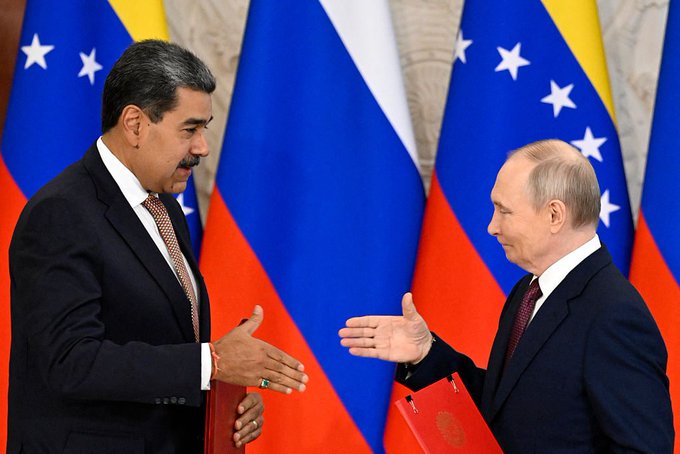
In a key strategic move on 11 December 2025, amid Venezuela Crisis, Russian President Vladimir Putin spoke by phone with Venezuelan President Nicolás Maduro. President Putin reaffirmed Moscow’s political backing for Caracas as pressure from Washington intensifies. The Kremlin said Putin expressed continued support for Maduro’s government and its course in safeguarding Venezuelan sovereignty, while both leaders affirmed intentions to advance economic and energy cooperation under their strategic partnership.
The call comes at a moment of heightened tensions in the Caribbean. The United States has ramped up military and law-enforcement actions — including the interdiction of a suspected sanction-evading oil tanker and regional naval and marine exercises — as well as diplomatic efforts to oust Maduro’s government. Russian reassurance follows what Moscow frames as growing external pressure, particularly from the Trump administration, which Russia characterises as seeking regime change in Caracas.
Venezuela crisis — latest developments
Military signalling and regional posturing
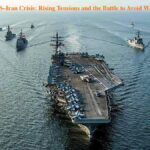
US Navy F/A-18E Super Hornets from the USS Abraham Lincoln carrier strike group executed simulated penetration and electronic-warfare flights near Venezuelan S-300 air defences in the Caribbean Sea, testing radar responses without entering sovereign airspace. Caracas condemned the operations as provocative, scrambling Su-30 fighters and lodging formal complaints with the United Nations. Analysts see the sorties as calibrated deterrence, reinforcing US commitments to regional stability amid sanctions and migration pressures.
In parallel, over 1,200 US Marines from the 2nd Marine Expeditionary Brigade conducted large-scale amphibious exercises at Camp Garcia, Vieques, Puerto Rico, involving LCAC hovercraft, MV-22 Ospreys and HIMARS rocket systems. Designed to validate rapid crisis response (humanitarian, counter-narcotics or disaster relief), the exercise reaffirmed the US forward presence amid Venezuelan instability and rising transnational crime. Local stakeholders welcomed the economic boost but raised environmental concerns over live-fire effects on coral reefs.
Seized tanker and legal implications
On 10 December, the United States seized the Guyana-flagged VLCC Skipper, laden with some 1.1 million barrels of Venezuelan Merey crude blended with Iranian condensates, in a high-profile interdiction roughly 200 nautical miles off the Venezuelan coast. The operation — coordinated by the FBI, Coast Guard, DHS and other agencies under the CAATSA sanctions framework — targets illicit networks allegedly funding Hezbollah and FARC remnants. President Donald Trump framed the move as starving Maduro’s “terror machine,” though he stopped short of military invasion plans. Venezuelan officials denounced the seizure as unlawful theft. Crude futures rose modestly on worries over supply flow disruptions.
Chevron and sanctions policy dialogue Amid Venezuela Crisis
Meanwhile, Chevron Corporation is in talks with the incoming Trump administration over safeguarding its Venezuelan oil concessions under a compliant general licence. With approximately 200,000 barrels per day (b/d) of production integral to US Gulf Coast refineries configured for heavy Orinoco blends, Chevron’s leadership argues that maintaining operations avoids market shocks amid PDVSA’s output slump. Recent licensing tweaks elevated US-bound exports to around 150,000 b/d, reflecting a pragmatic bridge in sanctions enforcement that complicates a total embargo approach.
Market pressure and deepening discounts
State oil firm PDVSA has been forced to double discounts on its heavy Merey crude to attract Asian buyers amid a glut of sanctioned Russian grades and Iranian barrels shipped via the dark fleet. December Asian cargoes traded $14–$15 per barrel below Dated Brent — nearly double year-ago differentials — as buyers extract concessions to offset logistical and war-risk premia on tankers operating under increased patrol scrutiny. Higher exports (estimated near 920,000 b/d) and reliance on Russian diluents have sustained output at around 1.17 million b/d despite rig shortages, but deep discounts continue to erode Venezuelan revenues.
Strategic implications of Russia’s reassurance
Putin’s public backing serves multiple purposes in the broader Venezuela crisis:
Diplomatic counterweight: By vocalising support for Maduro’s sovereignty, Moscow counters US narratives seeking regime change.
Economic ties: Both leaders emphasised advancing joint projects in energy and other sectors, signalling resilience of bilateral economic links despite sanctions.
Strategic signalling: Russia’s position underscores its global geopolitical reach — projecting influence in the Americas amid Western pressure — even as it stops short of overt military commitments.
Putin’s reassurance adds a geopolitical overlay to what has been widely framed in Washington as security and sanctions enforcement actions. The Kremlin’s response points to deeper geopolitical competition over influence in the Western Hemisphere, even as Russia’s capacity to provide tangible military support to Caracas remains debated in strategic circles.
What to watch next
Diplomatic escalation — Will Caracas and Moscow formalise new economic or defence arrangements?
Legal outcomes — Judicial forfeiture proceedings for the Skipper and similar interdictions.
Oil pricing — Continued volatility in heavy crude differentials and buyer diversification.
US policy shifts — Chevron licence renewals or tightening; official US designation of Maduro remains significant.
Military posture — Any changes in naval deployments or rules of engagement in the Caribbean.