US–China Rivalry in Pakistan: Arms, Influence and Strategic Leverage
The geopolitical prism of US–China rivalry in Pakistan has intensified dramatically through 2025. Washington’s approval of a $686 million defence package to upgrade Pakistan’s F-16 fleet — complete with advanced navigation, secure communications and mission systems — underscores a calculated move to maintain footholds in Islamabad’s military establishment while countering Beijing’s mounting influence.
At the same time, China’s strategic outreach goes far beyond isolated kit deliveries. Beijing has committed to infrastructure investment, joint energy projects, port development and deepening military cooperation — all embedded in the China-Pakistan Economic Corridor (CPEC), a $65 billion element of its Belt and Road Initiative.
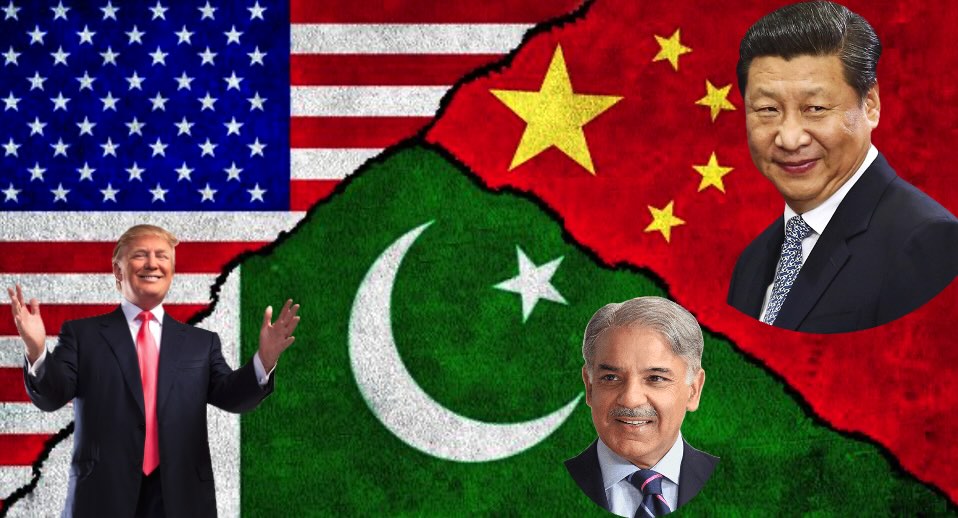
This rivalry manifests in multiple arenas: arms flows, economic dependencies, port geopolitics and future access to resources in the Arabian Sea and Afghanistan. The contest over Pakistan’s allegiance is a defining feature of South Asia’s evolving strategic landscape — and it shows no sign of abating.
China’s Deepening Military and Economic Footprint
Arms Dominance and Military Modernisation
China has emerged as Pakistan’s dominant military partner. According to defense trade data, China accounted for approximately 81 % of Pakistan’s arms imports over recent years, with total inflows exceeding $5 billion and a rising share of advanced systems.
Beijing’s deliveries include long-range air-defence systems, reconnaissance drones, guided-missile frigates and submarine forces. Notably, the Hangor-class diesel-electric submarines — eight ordered with at least two already completed — significantly strengthen Pakistan’s naval deterrent in the Arabian Sea.
This deepening partnership reflects strategic choice as much as necessity: China imposes no political conditions on arms sales, unlike Western suppliers, making it attractive to Islamabad’s security establishment.
Stealth Jets and Next-Generation Air Power Speculation
There are persistent reports — albeit officially denied — that Pakistan has pursued procurement of up to 40 Chinese J-35A fifth-generation stealth fighters, which would mark Beijing’s first export of such aircraft and upgrade Pakistan’s air force significantly.
Pakistan’s Defence Minister publicly rejected these reports as speculative, but analysts note that even discussions of such a deal signal Beijing’s willingness to offer cutting-edge platforms as part of a broader military partnership.
Infrastructure and Resource Deals
Beyond pure defence ties, China and Pakistan agreed in 2025 to expand cooperation on infrastructure, mining and offshore oil and gas exploration — including Gwadar Port upgrades and participation of Chinese firms in extractive projects.
These economic ties reinforce China’s leverage on Islamabad, intertwining debt and development assistance with strategic security outcomes — classic elements of Beijing’s broader regional policy.
Washington’s Countermoves — Defence, Aid and Strategic Positioning
F-16 Upgrade Package and Strategic Signalling
In December 2025, the US government authorised a $686 million upgrade to Pakistan’s existing F-16 fleet, encompassing advanced combat systems and secure data links that extend platform life into the 2040s.
This move serves dual purposes:
It ensures continued interoperability between Pakistan’s ageing Western platforms and US defence technology.
It signals that the US remains engaged in Islamabad’s security calculus even amid broader geopolitical shifts.
Economic and Geopolitical Levers
On the economic front, Washington has sought to resurrect engagement through IMF-linked funding and potential private sector involvement in energy and ports — including discussions around Arabian Sea port access and resource exploration. According to recent reporting, Washington aims to develop strategic logistics hubs and secure influence points traditionally within China’s expanding orbit.
Afghanistan and the Echoes of Bagram Airfield
US strategic interests extend beyond Pakistan’s borders. The legacy of the Bagram Air Base in Afghanistan, once a linchpin of American regional operations, still influences Pakistan’s calculus. Though formally closed, Bagram’s proximity and U.S. presence in Afghanistan remain factors in Islamabad’s security assessments, especially given fears of spillover instability and militant movements. Analysts see Washington’s engagement with Islamabad as partially aimed at mitigating security vacuums along these historic fault lines — a legacy of two decades of US operations.
Pakistan’s Bargaining Chips — Debt, Ports and Strategic Location
Economic Pressures and China’s Debt Influence
Pakistan’s economy has struggled under the weight of chronic deficits and external debt — including significant obligations to China tied to CPEC projects. Some estimates suggest Islamabad’s liabilities to Beijing may exceed $30 billion, eroding fiscal space while solidifying Beijing’s leverage.
This dynamic enables China to extract strategic concessions — whether in port infrastructure, resource rights or military cooperation — under the aegis of infrastructure financing.
Gwadar and the Arabian Sea Strategic Theatre
The significance of Gwadar Port cannot be overstated. Located near key Indian Ocean sea lanes, Gwadar offers China access and influence in a region where Beijing seeks a permanent foothold. Development projects, including airports and deep-water facilities, enhance this visibility.
Pakistan’s invitation to Chinese companies for offshore oil and gas exploration further embeds Beijing in core sectors of its economy, intertwining energy security with strategic dependency.
Regional Stability and India’s Strategic Dilemma
Two-Front Military Pressure
For India, the US–China rivalry in Pakistan creates a complex security challenge. Chinese submarine deployment and advanced surface combatants in the Arabian Sea increase maritime threats, while upgraded F-16s and potential Chinese stealth aircraft discussions complicate aerial balance along the India-Pakistan border.
Rising Defence Budgets
In response, Pakistan has raised its defence appropriations. For 2025, Islamabad approved a 20 % increase in its defence budget to approximately $9 billion, even as overall spending was cut by 7 % to prioritise military modernisation.
This underscores the extent to which military priorities now overshadow socioeconomic challenges, driven by perceived security imperatives and external sponsorship.
Indian Strategic Counterweights
New Delhi’s response has been to diversify defence relations and invest in platforms such as Rafale, SU57 jets, S-400/S-500 air-defence systems and collaboration with Western suppliers, signalling its intent to preserve conventional deterrence and strategic autonomy.
Strategic Implications — What Comes Next?
The unfolding US–China rivalry in Pakistan is not a transactional arms competition alone — it is a contest for influence over a pivotal state whose choices will shape security dynamics across South Asia and the broader Indian Ocean. If China’s economic and military leverage continues to expand unchecked, Islamabad may tilt further eastward, constraining Washington’s options and heightening Indian strategic anxieties.
At the same time, the United States’ renewed defence engagement and economic overtures aim to blunt that sway, reflecting a broader strategy to contain Chinese influence without direct confrontation.
The result is a strategic tug-of-war with Pakistan at the centre — a theatre where arms, debt and diplomacy intersect and where regional stability teeters between balance and escalation.