Russia’s USD Return Debate: Trump’s Peace Deal or BRICS Setback?
At the centre of this debate lies a proposed economic framework that could reshape global energy markets, weaken BRICS’ de-dollarization drive, and reinforce US monetary dominance. The plan is being presented as a pragmatic “sweetener” to facilitate peace talks with Washington. However, it also raises fundamental questions about Russia’s long-term financial sovereignty and the future cohesion of the BRICS bloc.
The Kremlin Memo and the $12 Trillion Economic Blueprint
According to reports citing internal Kremlin documents from early 2026, Moscow has outlined a “fossil-fuel first” economic package that could be worth up to $12 trillion over time. The proposal reportedly includes joint ventures in oil, liquefied natural gas, nuclear power, offshore exploration, aviation, and consumer markets.
A major focus is cooperation in critical minerals such as lithium, nickel, and palladium, which are essential for modern industrial and defence supply chains. Under the proposal, American companies would gain access to Russian energy fields and resource assets, while Russia would receive technology transfers, investment inflows, and improved access to Western financial systems.
Most significantly, the memo proposes a phased return to USD-based settlements for trade, including energy exports. This would mark a reversal of Russia’s post-2022 shift toward settlements in rubles, yuan, and rupees, which was driven by Western sanctions and asset freezes.
The proposal frames this shift not as ideological retreat but as economic necessity tied directly to conflict resolution.
Trump’s Strategic Calculations and Washington’s Interests
The Russian initiative aligns closely with the policy outlook of US President Donald Trump, who has consistently emphasised energy dominance, industrial revival, and protection of the dollar’s global role.
Trump has repeatedly warned BRICS countries against undermining the dollar and has used tariffs and trade pressure to defend US monetary influence. From Washington’s perspective, Russia’s return to dollar settlements would represent a major strategic victory.
It would reinforce the dollar’s dominance in global energy markets, weaken alternative payment systems, and limit China’s growing influence over critical resources. Domestically, Trump could present such a deal as evidence of successful deal-making and geopolitical leverage.
Reports indicate that Trump views the proposed framework as a “win” for US economic and strategic interests.
Backchannel Diplomacy and Abu Dhabi Negotiations
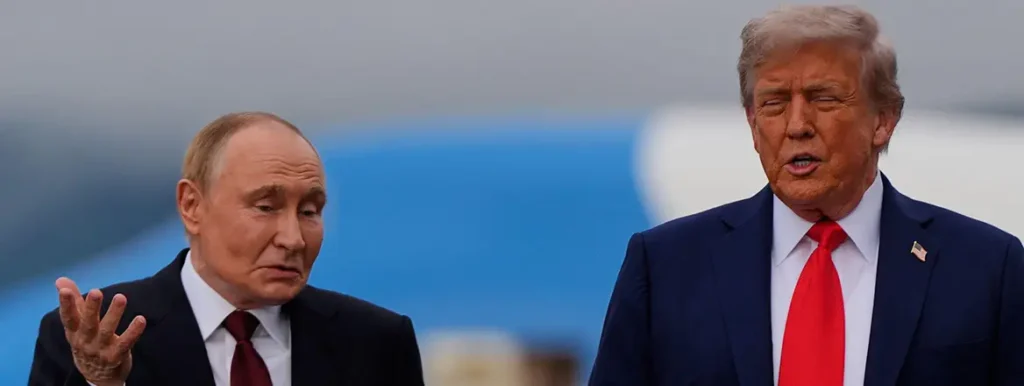
The initiative has advanced largely through informal diplomatic channels rather than formal summits. Russian investment official Kirill Dmitriev and US envoy Steve Witkoff are reported to have played central roles in early discussions.
Several meetings took place in Abu Dhabi and other neutral venues, reflecting the political sensitivity of the talks. These backchannel negotiations form part of broader efforts to shape a possible peace framework, with tentative timelines extending into mid-2026.
The discreet nature of these engagements highlights both sides’ caution and awareness of strong opposition from European allies and domestic political groups.
Putin’s Pragmatic Ambiguity
Russian President Vladimir Putin has so far avoided committing fully to the proposed framework. Publicly, he has reiterated that Russia never abandoned the dollar for ideological reasons but was forced to adapt to political realities.
Privately, reports suggest that Putin views the initiative as a strategic tool to divide Western alliances and weaken European influence. By keeping negotiations flexible, Moscow retains leverage over both Washington and Brussels.
This calculated ambiguity reflects Russia’s dual-track strategy: seeking partial reintegration where beneficial, while continuing to build financial insulation through alternative systems.
Ukraine’s Resistance and European Anxiety
Ukrainian President Volodymyr Zelenskiy has strongly criticised the economic dimension of the negotiations. He argues that sanctions relief and joint projects risk sidelining Ukraine’s sovereignty.
From Kyiv’s perspective, economic normalisation without full territorial restoration would legitimise Russian gains in Crimea and occupied regions. Zelenskiy has warned that such arrangements could weaken Ukraine’s bargaining position and undermine international legal principles.
Several European governments share these concerns. They fear that unilateral US-Russia engagement could fracture Western unity and dilute collective pressure on Moscow.
BRICS and the De-Dollarization Question
Within BRICS, de-dollarization has progressed steadily but unevenly. Around 60 to 67 per cent of intra-bloc trade now bypasses the dollar. For Russia’s bilateral trade with China and India, the figure exceeds 90 per cent.
The bloc has invested heavily in alternative systems, including digital currencies, BRICS Pay, mBridge for CBDC interoperability, gold-backed settlement mechanisms, and yuan-denominated financial instruments. Russia’s digital ruble was designed specifically to support sanctions-resistant commodity trade.
A Russian pivot back to the dollar would weaken these collective initiatives. It could slow institutional projects and embolden sceptical members. Brazil has already reduced its enthusiasm for a common BRICS currency following US trade pressure.
Nevertheless, structural momentum remains. Central banks continue to accumulate gold, and sovereign payment systems are expanding. State agency TASS has framed BRICS integration as a defensive response to Western “financial coercion.”
Markets, Media, and Viral Distortion
The debate intensified after viral posts on X claimed that a Putin–Trump meeting had triggered Russia’s exit from BRICS and caused a collapse in precious metals markets. These claims spread rapidly despite lacking official confirmation.
Market data cited by Reuters linked recent gold and silver price movements to strong US economic indicators and Federal Reserve policy expectations rather than geopolitical breakthroughs.
This episode illustrates how social media speculation increasingly shapes financial sentiment, often outpacing factual verification and amplifying geopolitical narratives.
Economic Pressure and Russian Pragmatism
Russia’s openness to dollar cooperation reflects mounting economic constraints. Sanctions have limited capital access, disrupted logistics, and increased transaction costs. Alternative systems provide partial insulation but remain less efficient for large-scale trade.
Re-entry into dollar-based settlements would ease liquidity pressures, reduce risk premiums, and improve trade financing. From Moscow’s perspective, this represents survival logic rather than ideological surrender.
Economic normalisation is being used as a bargaining instrument rather than a permanent realignment.
Media Bias and Competing Narratives
Western outlets have tended to portray the dollar-return initiative as evidence of BRICS weakness and US leverage. Russian and allied media emphasise sovereignty and resilience, downplaying Western influence.
This divergence reflects deeper ideological competition. For Washington, any Russian retreat from de-dollarization reinforces dollar dominance. For Moscow and Beijing, financial autonomy remains a strategic objective.
Legal and trade analysts note that de-dollarization works most effectively in bilateral contexts but remains difficult to scale globally. This creates space for pragmatic compromises without abandoning long-term ambitions.
A Tactical Shift, Not a Strategic Surrender
Current evidence suggests that Russia is pursuing tactical flexibility rather than abandoning de-dollarization. It continues to invest in digital currencies, alternative clearing systems, and regional trade networks even while engaging Washington.
This dual approach allows Moscow to hedge against uncertainty. If talks succeed, Russia gains access to Western capital. If they fail, alternative systems remain in place.
For BRICS, this episode highlights internal tension between long-term autonomy and short-term pragmatism.
An Unsettled Financial and Geopolitical Future
Russia’s proposed return to USD settlements marks a critical moment in the evolving global financial order. It demonstrates how war, sanctions, and economic pressure are reshaping monetary strategy.
For the United States, the initiative offers an opportunity to reinforce dollar dominance. For Russia, it promises temporary relief. For BRICS, it raises uncomfortable questions about unity and credibility.
No formal agreement has been signed. EU opposition, US domestic politics, and unresolved territorial disputes remain formidable barriers. Yet the very existence of these talks shows how far Moscow is willing to go to ease sanctions and stabilise its economy.
Rather than signalling the end of de-dollarization, this development exposes its limits. Financial sovereignty remains an aspiration, but economic reality continues to dictate political choices.
In an era of transactional diplomacy, ideology is giving way to calculation. Russia’s USD outreach is not surrender. It is a high-stakes gamble in a shifting multipolar order whose outcome remains uncertain.