JNU Seeks FIR Over Protest Slogans, Warns Universities Cannot Become ‘Laboratories of Hate’
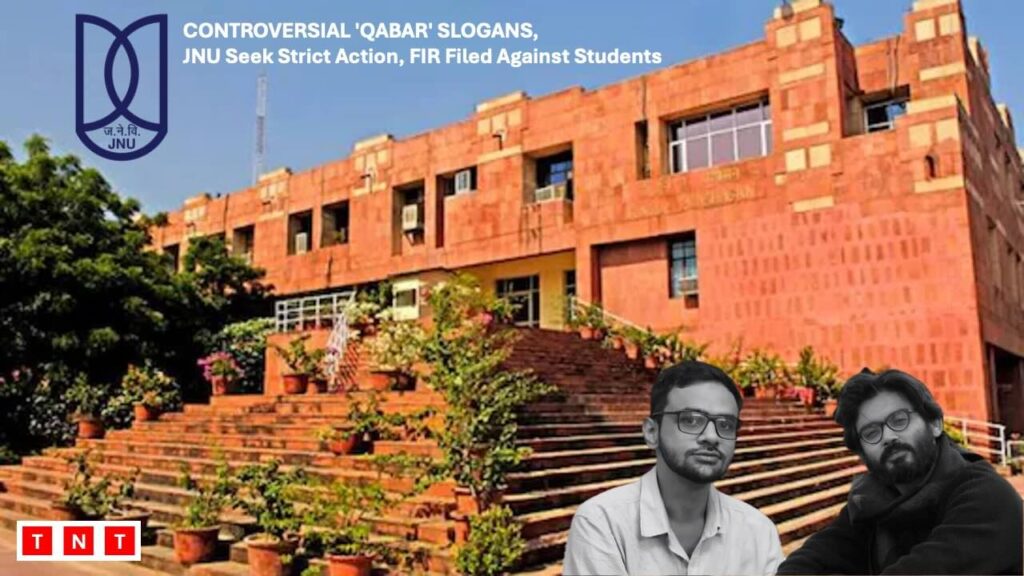
Jawaharlal Nehru University has sought police action against students accused of raising inflammatory slogans targeting Prime Minister Narendra Modi and Home Minister Amit Shah during a campus protest. The administration has also warned that universities cannot be allowed to become “laboratories of hate”, signalling a hardening stance on what it describes as hate speech disguised as dissent.
The controversy erupted during a demonstration linked to the sixth anniversary of the January 5, 2020 JNU violenceand the Supreme Court’s recent refusal to grant bail to former JNU students Umar Khalid and Sharjeel Imam. As a result, the episode has reignited a national debate on the boundaries between campus protest, political expression, and public order.
Protest Linked to 2020 Violence Anniversary and Bail Denial
The protest was organised late Monday night outside Sabarmati Hostel by the Jawaharlal Nehru University Students’ Union (JNUSU). The gathering marked six years since the violent clashes that shook the campus in 2020. In addition, it protested the Supreme Court’s decision to deny bail to Khalid and Imam in the Delhi riots conspiracy case.
During the programme, a section of students allegedly raised slogans that the university later described as “objectionable, provocative and inflammatory.” These slogans were directed at the Prime Minister and the Home Minister. Videos of the protest soon circulated widely on social media, intensifying political and administrative reactions.
University Seeks Police Action Under Bharatiya Nyaya Sanhita
Following the incident, JNU’s security branch submitted a written complaint to the Vasant Kunj (North) police station. The university sought registration of an FIR under relevant provisions of the Bharatiya Nyaya Sanhita (BNS), which has replaced the Indian Penal Code.
In its complaint, the administration argued that the slogans amounted to hate speech and showed direct contempt for the Supreme Court. The letter stated that the slogans were clearly audible, repetitive, and deliberate. Therefore, according to the university, they had the potential to disturb public order, disrupt campus harmony, and threaten the university’s security environment.
‘Laboratories of Hate’ Remark and Disciplinary Warning
In a strongly worded public statement, the JNU administration said universities are meant for learning, debate, and innovation. However, it stressed that ideological disagreement cannot cross into abuse or incitement. The statement warned that campuses cannot be permitted to be converted into “laboratories of hate.”
The administration also vowed the “strictest action” against students found to be involved. These measures may include immediate suspension and other disciplinary penalties under the university’s Code of Conduct. The competent authority, according to the statement, took serious cognisance of video evidence available in the public domain.
Furthermore, the university directed its security branch to fully cooperate with the police investigation. It also appealed to students and organisations to refrain from activities that could inflame tensions and to respect constitutional institutions and democratic norms.
Police Clarification on FIR Status
While JNU’s official social media statement suggested that an FIR had already been registered, Delhi Police clarified that no FIR had been filed as of Tuesday afternoon. Officials stated that the complaint remained under examination.
Nevertheless, the complaint reportedly includes names of several “prominent students” identified at the protest site. Among them is JNUSU president Aditi Mishra. Security personnel were present during the protest and monitored the gathering, according to officials familiar with the matter.
Prior Disputes and Escalating Tensions
Some students named in the latest complaint are already facing a separate police case. That complaint relates to alleged damage to a facial-recognition-based entry gate at the JNU library during a protest last year. Consequently, the current episode reflects a broader escalation in tensions between the university administration and sections of the student movement.
The administration’s decision to involve the police has therefore been interpreted by many as a decisive shift towards stricter enforcement of campus discipline.
Students’ Union Rejects Hate Speech Allegation
JNUSU president Aditi Mishra defended the protest, stating that students organise a demonstration every year on January 5 to remember the 2020 violence. She maintained that the slogans raised were ideological in nature and did not target any individual personally.
According to Mishra, the slogans represented legitimate democratic dissent against government policies and the Supreme Court verdict. She accused the administration of mischaracterising political criticism as hate speech to suppress student voices.
Political Reactions and National Debate
The episode has triggered sharp political reactions. Several BJP leaders alleged that the slogans amounted to a direct death threat against the Prime Minister and the Home Minister. They demanded stringent action against what they described as “anti-national” elements on campus.
On the other hand, opposition leaders and student groups questioned the move to criminalise protest slogans. They warned that branding universities as hotspots of disorder risks shrinking democratic space within higher-education institutions.
JNU’s History and the Wider Context
JNU has long occupied a contentious position in India’s political discourse. Over the past decade, it has been at the centre of repeated controversies over free speech, nationalism, and sedition. The 2016 “anti-national slogans” case, which led to sedition charges against student leaders including Kanhaiya Kumar and Umar Khalid, remains a key reference point.
The latest row comes just days after the Supreme Court refused bail to Khalid and Sharjeel Imam under the Unlawful Activities (Prevention) Act. Investigators have portrayed them as key mobilisers in a larger conspiracy linked to the 2020 Delhi riots. The court held that they stood on a different footing from co-accused who were granted relief.
As a result, Monday’s protest and the administration’s response underline how legal decisions, campus politics, and national narratives continue to intersect at JNU. The “laboratories of hate” warning, the push for police action, and the political fallout together signal that the debate over campus dissent versus public order is far from settled.