Japan–Philippines Missile Dialogue Marks a New Phase in Indo-Pacific Security
The unfolding Japan Philippines missile discussions involving the possible export of Tokyo’s Type 03 Chu-SAM system represent more than a routine defence outreach. They hint at a profound strategic shift, one in which Japan appears ready to step beyond its post-war boundaries, the Philippines accelerates its air-defence modernisation, and the regional order responds to China’s rapidly intensifying assertiveness in the South China Sea. As informal consultations progress, the prospective deal emerges as a defining moment for Indo-Pacific security cooperation.
Japan’s Missile System Enters the Export Spotlight
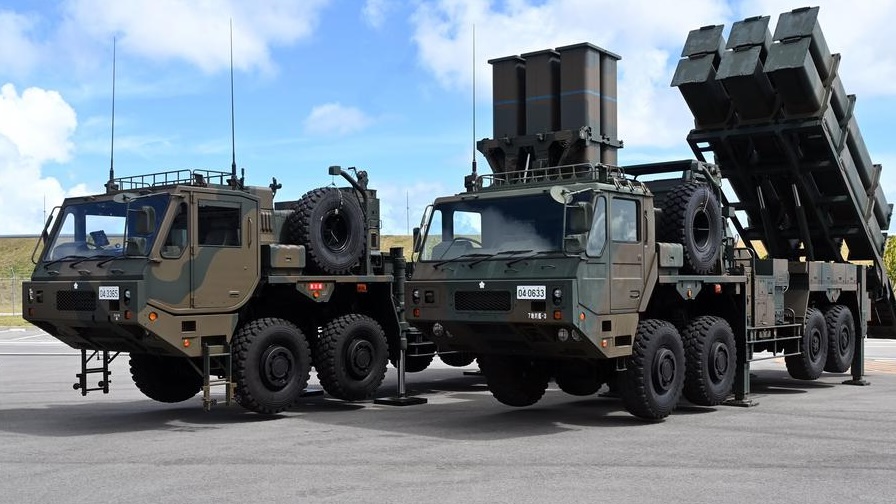
At the centre of the dialogue is the Type 03 Chu-SAM, a system that exemplifies Japan’s approach to layered and mobile air defence. Developed during the 1990s by Mitsubishi Electric to replace ageing MIM-23 Hawk batteries, the Chu-SAM occupies the essential middle tier between Japan’s short-range Tan-SAM and the long-range Patriot PAC-3 batteries. It was designed to counter modern threats with high reliability, all-weather performance and rapid reaction time.
Tokyo’s interest in potentially exporting this system marks the first serious consideration of lethal weapons transfer since World War II. This reflects a deliberate policy evolution shaped both by Japan’s security needs and by its shifting perception of regional responsibilities.
Capabilities That Appeal to Manila’s Air Defence Gap
The appeal for Manila stems not only from geostrategic urgency but also from system performance. The truck-mounted Chu-SAM carries six ready-to-launch missiles with a range of about fifty kilometres and the ability to intercept targets at altitudes up to ten kilometres. Its Mach 2.5 speed and multi-layered guidance—combining inertial navigation, data-link updates and active radar homing—ensure responsiveness against aircraft and cruise missiles.
Its sensor suite is pivotal. The active electronically scanned array radar tracks up to one hundred airborne objects simultaneously and can engage a dozen targets at once. Mobility through an 8×8 truck configuration enables dispersal and redeployment, allowing Philippine forces to adapt quickly to evolving air threats over Luzon and the West Philippine Sea. As a result, the system complements existing firepower, including the BrahMos anti-ship missiles already inducted from India, by filling the critical air-defence tier that Manila has long lacked.
Tokyo’s Policy Transformation Gains Momentum
This potential transfer is possible only because Japan is on the cusp of its most consequential defence export shift in decades. Under the existing Three Principles on Transfer of Defence Equipment, Tokyo restricts international sales to non-lethal equipment such as surveillance or rescue systems. The political coalition led by the Liberal Democratic Party and Nippon Ishin now seeks to remove the long-criticised “five category” rule that prevents lethal exports by default.
Notably, the government plans to achieve this through a National Security Council decision, avoiding the complexities of altering legislation. Critics argue that bypassing Parliament reduces transparency and increases the likelihood of decisions driven by defence industry interests rather than public mandate. Supporters counter that strategic realities demand speed, especially as Japan deepens its role in regional security and seeks to expand capacity through defence industrial cooperation.
This policy recalibration follows earlier exemptions, such as permission to export licensed Patriot components to the United States. The same doctrinal flexibility could now position Japan as a more active provider of stabilising military capability across the Indo-Pacific, including proposed transfers of decommissioned Japanese destroyers to the Philippines.
Philippine Requirements and the Expanding Indo-Pacific Security Web
For Manila, the requirement is immediate and strategic. Airspace over northern Luzon and the West Philippine Sea remains exposed in the face of intensified Chinese incursions and confrontations with Philippine patrol vessels. Acquiring a mid-range air-defence solution strengthens deterrence, reinforces sovereignty over contested maritime zones and supports joint operations with the United States under the 2025 Reciprocal Access Agreement with Japan.
Integration potential also strengthens the case. Philippine forces already operate systems such as SPYDER, and defence analysts suggest that Chu-SAM batteries could interface with U.S. and allied sensors, enhancing early-warning and interception coherence. This multi-national interoperability transforms any acquisition into a networked capability rather than an isolated platform.
Beijing’s Predictable Concern and Anticipated Reaction
China has already framed the prospective sale as destabilising and inconsistent with Japan’s pacifist constitution. Like previous protests against Japanese military deployments in its southwestern islands, Beijing is expected to issue formal objections and public commentary portraying Tokyo’s export liberalisation as a threat to regional peace. In Chinese state media narratives, the Philippines appears as a proxy through which Japan and the United States are undermining China’s core interests.
However, both Tokyo and Manila argue that their cooperation is defensive, consistent with international norms and necessary due to the scale of China’s maritime assertiveness. The gap between these interpretations will continue to drive diplomatic friction, especially once Japan formalises the export rule changes expected by mid-2026.
Credibility of the Emerging Development
The story’s factual foundation is strong. Multiple independent sources, including Kyodo News via Japan Today, Stars and Stripes and Army Recognition, corroborate the existence of informal talks, the policy timeline and system specifications. Defence forums and open-source analysts also highlight operational integration prospects. Chinese outlets such as Global Times adopt a predictable critical tone but do not contradict the technical or diplomatic context. The emerging picture is consistent: discussions are real, politically significant and likely to advance once Japan’s revised export framework takes effect.
A Regional Turning Point with Long-Term Consequences
The Japan Philippines missile consultations represent far more than a procurement question. They encapsulate a dramatic adjustment in Asia’s balance of security responsibilities. Japan’s reconsideration of its defence export posture, the Philippines’ accelerating modernisation under pressure from the West Philippine Sea and the broader Indo-Pacific effort to create resilient networks against coercion all converge in this moment.
The coming months will determine whether the Chu-SAM becomes Japan’s first exported lethal weapon system. Regardless of the eventual contract outcome, the strategic message is clear: Asia is entering a phase where old constraints give way to new alignments. For both Tokyo and Manila, the calculus has shifted decisively towards collective security, practical deterrence and a determination to prevent unilateral domination of the region’s air and maritime spaces.
If formal agreements follow the expected rule changes in 2026, this deal may well become a landmark in shaping the next generation of Indo-Pacific defence partnerships.
Moreover, Manila has already turned to BrahMos — the battle proven supersonic cruise-missile system from India — under a US$ 375 million contract signed in January 2022. The first batch of BrahMos missiles reached the Philippines in April 2024. Subsequent deliveries followed, with a second batch arrived in early Q4 of 2025.
In effect, the potential acquisition of the medium-range Type 03 Chu-SAM air-defence system would not stand alone, but rather complement the existing BrahMos capability — bringing Manila closer to realising a layered, sea-to-air defence architecture capable of countering both maritime and aerial threats in the contested West Philippine Sea.