Rafale Fighter Deal: DAC Approves AoN for 114 Jets, Ends MRFA Race
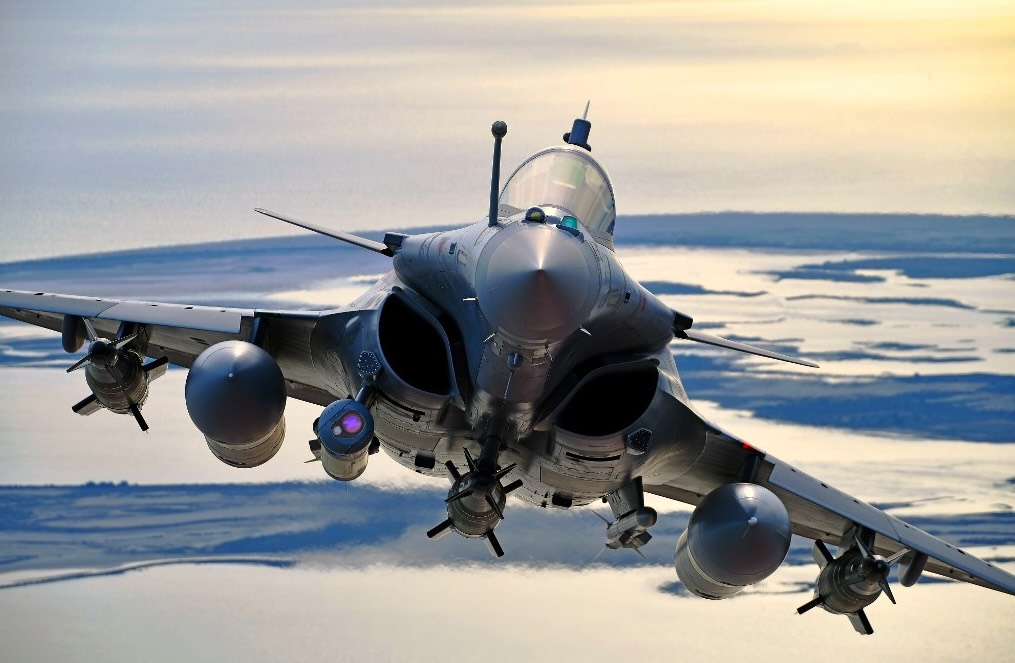
India has taken a decisive step towards strengthening its air power after the Defence Acquisition Council (DAC) approved the Acceptance of Necessity for procuring 114 Rafale multirole fighter jets on February 12, 2026. The decision ‘formally’ clears the initial stage of one of the country’s largest-ever defence acquisitions.
The approval explicitly names the French-made Rafale aircraft. As a result, it brings the long-running Multi-Role Fighter Aircraft (MRFA) competition to an end. Other contenders, including the F/A-18 Super Hornet and Eurofighter Typhoon, have been sidelined.
The Rafale Fighter Deal is estimated to be worth nearly ₹3.25 lakh crore, making it a landmark investment in India’s defence modernisation.
Background: Addressing IAF Squadron Shortages
The Indian Air Force continues to operate below its authorised strength of 42 fighter squadrons. At present, it fields around 30 squadrons, following the retirement of ageing MiG-21 and MiG-27 aircraft.
This shortfall has gained urgency amid persistent border tensions with China and evolving regional security challenges. The IAF requires modern platforms capable of long-range strike, air dominance, and network-centric warfare.
India inducted 36 Rafale jets under a government-to-government deal with France in 2016. These aircraft have since demonstrated strong operational performance.
The new procurement aims to bridge remaining capability gaps and restore squadron strength.
Approval Process and Next Institutional Steps
The Defence Acquisition Council, chaired by Defence Minister Rajnath Singh, granted the AoN after evaluating operational requirements and cost parameters.
The AoN represents the first formal stage in India’s defence procurement framework. It establishes the necessity and broad structure of a project before contractual negotiations begin.
Following this clearance, the proposal will move to the Cabinet Committee on Security, headed by Prime Minister Narendra Modi. Final approval from the CCS is required before contract signing.
Once approved, detailed negotiations on pricing, offsets, and production schedules will commence.
Deal Structure and Make in India Framework
Under the current plan, around 18 to 24 aircraft will be delivered directly from France in fly-away condition to meet urgent requirements.
The remaining 90 to 96 jets will be manufactured in India through technology transfer and industrial partnerships. This approach aligns with the Aatmanirbhar Bharat and Make in India initiatives.
The agreement is expected to ensure 50 – 60% indigenous content over time. Production may involve companies such as Hindustan Aeronautics Limited, Tata Advanced Systems, and Dassault Reliance Aerospace.
Offsets will require French firms to reinvest a substantial portion of the contract value into India’s defence ecosystem.
Therefore, the Rafale Fighter Deal also aims to strengthen domestic aerospace capabilities.
Weapons, Upgrades, and Operational Capabilities
The new Rafale fleet is expected to feature the advanced F4 configuration, offering enhanced connectivity, sensor fusion, and electronic warfare capabilities.
The package is likely to include:
- Meteor long-range air-to-air missiles
- SCALP cruise missiles
- Hammer precision-guided munitions
- Upgraded Spectra electronic warfare systems
- Integration with Indian weapons such as Astra and BrahMos
The deal will also cover simulators, training programmes, spares, and long-term maintenance support.
Existing Rafale aircraft may be upgraded to match the new standard.
Strategic and Diplomatic Significance
The approval reflects deepening defence cooperation between India and France. Paris has emerged as one of New Delhi’s most reliable defence partners over the past decade.
The timing coincides with French President Emmanuel Macron’s scheduled visit to India later in February 2026. Analysts view the decision as reinforcing bilateral strategic trust.
International studies, including those by the Stockholm International Peace Research Institute, highlight India’s growing dependence on select technology partners. The Rafale decision reflects a preference for proven platforms over experimental alternatives.
At the same time, it raises questions about balancing imports with indigenous development.
Challenges in Indigenous Engine Development
While local manufacturing will expand, India continues to face challenges in developing high-performance jet engines. Delays in indigenous engine programmes have constrained fighter development timelines.
Projects such as the Advanced Medium Combat Aircraft still rely on foreign propulsion systems. This dependence remains a strategic vulnerability.
Therefore, parallel investment in engine technology remains essential to long-term self-reliance.
Financial Impact and Delivery Timeline
The estimated cost of ₹3.25 lakh crore includes aircraft, weapons, infrastructure, training, and long-term support.
Deliveries of fly-away jets are expected to begin around 2030. Indian-assembled aircraft may follow from 2030–31 onwards.
Full induction is likely to extend into the mid-2030s, depending on production rates and negotiations.
Payments will be spread across multiple financial years to manage budgetary pressures.
Outlook for India’s Air Power Modernisation
The Rafale Fighter Deal represents a major milestone in India’s defence modernisation drive. It strengthens deterrence, improves operational readiness, and enhances technological depth.
However, full benefits will materialise only over the next decade. Production timelines, cost control, and technology absorption will determine long-term success.
As implementation progresses, the programme will remain under close public and parliamentary scrutiny.
For now, the approval signals India’s preference for capability certainty amid an uncertain regional security environment.