Hind Al-Owais Epstein Links Spark Scrutiny Over UAE Human Rights Messaging
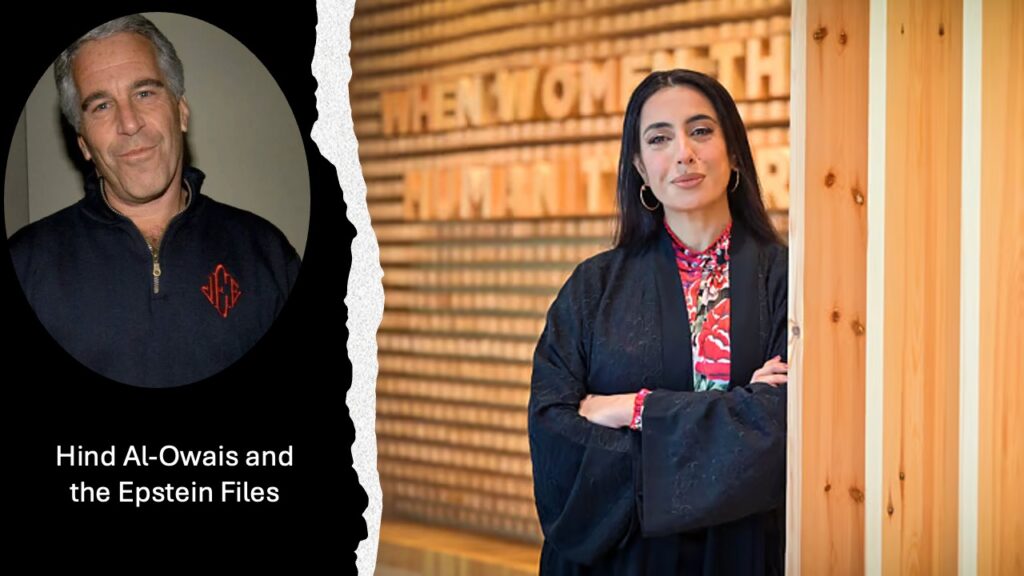
The Hind Al-Owais Epstein controversy has emerged as one of the most sensitive reputational challenges faced by the United Arab Emirates’ diplomatic establishment in recent years. A senior official known for championing women’s rights and human dignity, Al-Owais now finds her public image questioned following renewed attention to her correspondence with Jeffrey Epstein between 2011 and 2012.
The disclosures, drawn from previously released and newly highlighted Epstein files, have triggered debate about ethics, accountability, and the credibility of Gulf-state advocacy on gender and human rights.
Early Education and Professional Formation
Hind Al-Owais entered diplomatic service during a period when the UAE was rapidly professionalising its foreign policy apparatus. An Emirati national, she pursued advanced education abroad, earning a Master’s degree in International Affairs from the American University of Beirut and another in Public Policy from New York University.
She later undertook doctoral studies at NYU’s Steinhardt School. Her academic background in Beirut and New York aligned with the UAE’s strategy of cultivating globally trained officials capable of operating in multilateral institutions.
Rise Through UAE Diplomacy and Global Platforms
Al-Owais joined the Ministry of Foreign Affairs in the early 2000s. She served as Special Assistant to the Foreign Minister and later as Counsellor and Acting Deputy Permanent Representative at the UAE Mission to the United Nations.
In 2015, she became the first Emirati woman appointed as a senior adviser at UN Headquarters, working with UN Women under Deputy Executive Director Lakshmi Puri. The appointment was publicly celebrated as a milestone for Emirati women.
She later played a major role in Expo 2020 Dubai as Senior Vice President for International Participants, managing global engagement. More recently, she has served as Director of the Permanent Committee for Human Rights, representing the UAE in international forums.
Throughout her career, Al-Owais consistently promoted women’s empowerment, economic participation, and social inclusion. Her public speeches framed gender equality as both a moral and developmental imperative.
Epstein Correspondence and Renewed Allegations
The present controversy centres on documented email exchanges and calendar entries showing regular communication between Al-Owais and Jeffrey Epstein between October 2011 and May 2012.
Epstein had already been convicted in 2008 and was a registered sex offender during this period. The correspondence includes personal messages, meeting arrangements, and references to introducing Epstein to her sister.
Publicly cited excerpts include expressions of enthusiasm about introductions, coordination of in-person meetings in New York, and informal language referring to “girls” in scheduling contexts. A January 2012 calendar entry reportedly lists a meeting involving Al-Owais and her sister.
These records have circulated widely on social media, leading to accusations that she facilitated inappropriate access. Some online narratives have portrayed her as playing a role similar to that of Ghislaine Maxwell.
Context, Evidence, and Limitations
Available documents do not demonstrate that Al-Owais trafficked minors or engaged in criminal activity. The references appear to involve her and her adult sister, who is believed to have been in her twenties at the time.
Claims that a minor was involved remain unverified and appear to originate from speculative online interpretations rather than primary sources. No legal charges have been filed against Al-Owais in relation to Epstein.
The communications also predate her UN appointment by several years. There is no documentary evidence showing that Epstein influenced her career trajectory.
Nevertheless, Epstein’s established pattern of cultivating elite contacts for access and leverage makes any close association deeply troubling from an ethical standpoint.
Public Silence and Online Backlash
As of February 2026, Al-Owais has not issued a public statement addressing the revived scrutiny. This silence has fuelled speculation and criticism across social media platforms.
Commentators have contrasted her polished advocacy speeches with private correspondence, framing the issue as hypocrisy. Some critics link the episode to broader debates over elite accountability in the Gulf.
Supporters argue that networking in New York diplomatic circles was common and that reputational damage should not substitute for evidence-based judgment.
Media Coverage
Implications for UAE Soft Power and Human Rights Diplomacy
The Hind Al-Owais Epstein controversy extends beyond personal reputation. It touches on the UAE’s broader strategy of projecting itself as a modern, progressive, and gender-inclusive state.
Women’s empowerment has been central to the country’s soft power narrative. Senior female diplomats are presented as symbols of institutional reform and social advancement.
Allegations of ethical inconsistency undermine this messaging and provide ammunition to critics who question the sincerity of Gulf human rights initiatives.
For international partners and advocacy bodies, the case highlights tensions between image management and transparency.
Epstein’s Gulf Connections and Wider Patterns
The Al-Owais episode fits into a wider pattern of Epstein’s documented interactions with political and business elites from the Gulf region. Recent file releases in 2026 have renewed scrutiny of these networks.
Critics argue that such associations reveal vulnerabilities in elite oversight systems. Others caution against guilt by association in the absence of prosecutable evidence.
The debate reflects unresolved tensions between reputational accountability and legal standards.
A Career Overshadowed by Controversy
Hind Al-Owais’s professional trajectory exemplifies the UAE’s investment in female leadership and global engagement. Her rise through diplomatic and multilateral institutions mirrors state-led modernisation efforts.
However, the Epstein associations now cast a persistent shadow over her record of advocacy. Whether further disclosures or official responses emerge will shape public perception in the coming years.
For now, the episode stands as a reminder that personal networks, once overlooked, can resurface with profound consequences in an era of digital transparency.
The Hind Al-Owais Epstein controversy thus represents not only a personal reputational crisis but a broader test of credibility for Gulf diplomacy and human rights branding in the twenty-first century.