China Japan Tensions: Wang Yi Delivers Fiery Rebuke to Tokyo at Munich
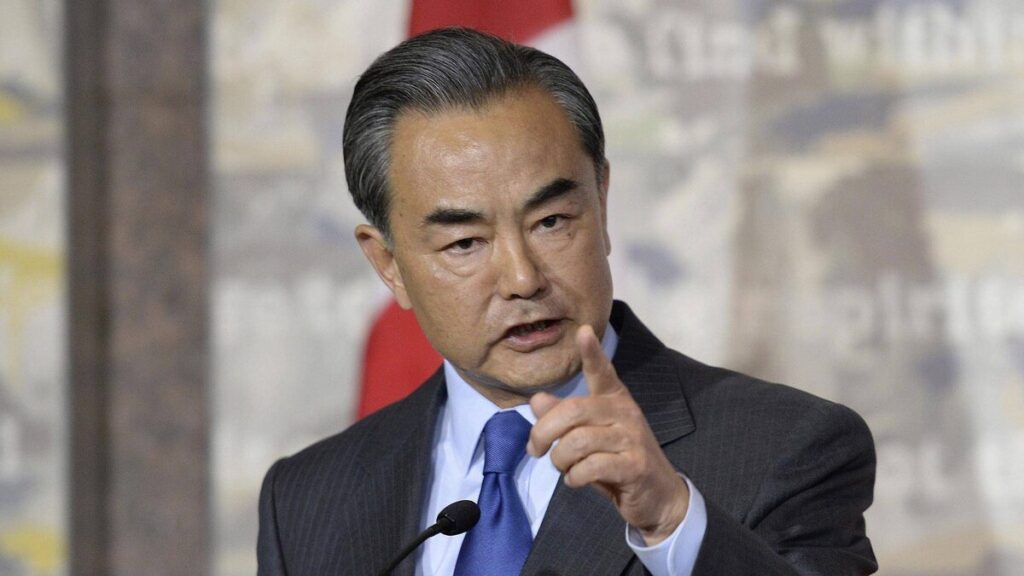
In the ongoing China Japan tensions, Chinese Foreign Minister Wang Yi delivered a sharply worded address at the Munich Security Conference in Munich in 2026. He warned that any revival of Japanese militarism would lead to swift and decisive downfall. Speaking during high-level discussions on global security, Wang linked Tokyo’s recent rhetoric on Taiwan to its imperial past. As a result, diplomatic strains between China and Japan have intensified.
Wang framed Japan’s position as a dangerous echo of history. He urged Tokyo to confront its wartime legacy or risk international isolation. His remarks drew significant attention from delegates and observers attending the forum.
The comments came during a panel on Asia-Pacific dynamics. They directly responded to earlier statements by Japanese Prime Minister Sanae Takaichi. In 2025, Takaichi suggested that a Taiwan crisis could pose an “existential threat” to Japan. She indicated that such a scenario might justify collective self-defence under its alliance with the United States.
Wang criticised these remarks strongly. He described them as unprecedented in eight decades. He argued that they violated China’s territorial sovereignty and challenged Beijing’s claim over Taiwan. “This is absolutely unacceptable to the Chinese people,” he stated.
Historical Reckoning and Lingering Shadows in China Japan Tensions
Wang expanded his critique beyond current policy. He accused Japan of failing to address its wartime atrocities adequately. He contrasted Tokyo’s approach with post-war reforms in Germany. Germany, he noted, enacted laws banning Nazi glorification and promoted historical accountability.
According to Wang, Japan continues to honour Class-A war criminals. He claimed this reflected unresolved ambitions related to Taiwan and regional influence. Therefore, he warned that the “spectre of militarism” still lingers in Japanese political thinking.
Addressing the Japanese public, Wang urged caution. He warned against manipulation by extremist ideologies and far-right forces. In addition, he appealed to the global community. He called on “peace-loving nations” to issue clear warnings against repeating historical mistakes.
These remarks emerged amid strained bilateral ties following Takaichi’s leadership in late 2025. Although Tokyo has expressed interest in dialogue, Beijing remains sceptical. Japanese Defence Minister Gen Nakatani had recently proposed renewed talks. However, China views such gestures cautiously due to Japan’s growing security partnerships.
Japan’s closer engagement with the Quadrilateral Security Dialogue, or Quadrilateral Security Dialogue, has further complicated relations. Consequently, mutual distrust continues to dominate diplomatic exchanges.
A Broader Vision: China’s Role in Regional Stability
Shifting his tone, Wang attempted to reassure regional partners. He rejected claims that the Asia-Pacific was sliding towards conflict. “Asia remains a region of overall peace,” he insisted.
He cited the recent settlement of a border dispute between Cambodia and Thailand as evidence of regional maturity. According to him, this demonstrated Asia’s capacity to resolve disagreements through dialogue.
Wang also described China as a “pillar of stability” in the region. He pledged continued commitment to diplomacy and multilateral engagement. Therefore, he presented Beijing as a responsible stakeholder rather than a disruptive power.
The Munich forum also addressed wider geopolitical shifts. These included growing US-China frictions and challenges to the existing world order. During the conference, Wang held talks with US Secretary of State Marco Rubio. Both sides reportedly described the meeting as positive and constructive.
However, Wang’s strong language towards Japan highlighted Beijing’s sensitivities over Taiwan. While China considers the island its territory, Western nations view it as strategically and politically significant. This divergence continues to fuel China Japan tensions.
Strategic Implications for East Asia
Analysts believe Wang’s address reflects a broader pattern of assertive Chinese diplomacy. It blends historical narratives with forward-looking strategic messaging. By invoking World War II memories, Beijing seeks to reinforce moral legitimacy while advancing present-day interests.
Such rhetoric resonates domestically. It also sends a warning to regional actors. However, it risks hardening positions in Tokyo and Washington. As a result, diplomatic flexibility may shrink further.
As the conference progresses, Wang’s remarks are expected to influence regional debates. They will likely shape discussions on defence cooperation, alliance structures, and crisis management mechanisms.
Whether Japan chooses to moderate its stance or strengthen its alliances remains uncertain. Either path will significantly affect East Asia’s security landscape. For now, China has drawn a firm line. It insists that history must guide present conduct. In this context, China Japan tensions will continue to be a defining factor in regional geopolitics.