Venezuela Nobel Peace Prize 2025: The Rebel in Hiding
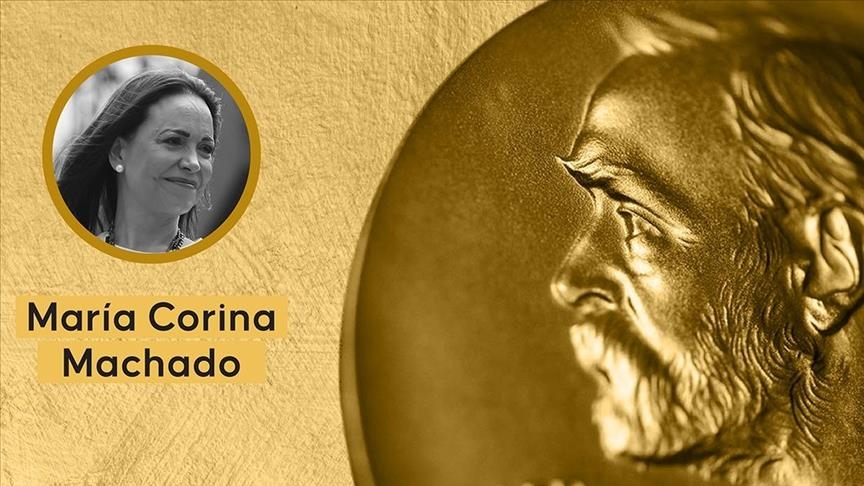
Yesterday, the Norwegian Nobel Committee named Venezuelan opposition leader María Corina Machado the winner of the 2025 Nobel Peace Prize, praising her role as a unifying, non-violent voice for democratic transition in Venezuela.
Although Machado has been forced to operate from hiding amid threats and arrests of dissidents, she did not stay silent. The Nobel Institute released video of a call informing Machado of the award, and the Institute subsequently posted an interview in which she accepted the prize as recognition of Venezuelans’ struggle for freedom.
Within hours Machado posted on her X account dedicating the prize to “the suffering people of Venezuela” — and explicitly to President Trump for what she called his “decisive support of our cause.” Her post read in part: “I dedicate this prize to the suffering people of Venezuela and to President Trump for his decisive support of our cause!”
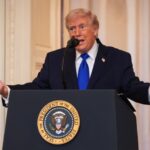
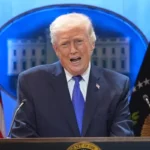
That dedication prompted an immediate reaction in Washington. President Donald Trump told reporters that Machado had phoned him and — in his telling — said: “I’m accepting this in honor of you, because you really deserved it.” Trump combined praise for Machado with a pointed rebuke of the Nobel Committee, with White House aides saying the Committee “place politics over peace.”
Machado’s Message: A Prize for the People — and a Thank-you to Trump
In her interview with the Nobel Institute, Machado said she accepted the prize not as a personal honour but as recognition of “the millions of Venezuelans that are anonymous and are risking everything they have for freedom, justice and peace.” She repeated that theme in social posts, stressing the award was for the country’s pro-democracy movement.
Her explicit thanks to Trump — and her public dedication of the award to him — has proven decisive in how different capitals interpret the Committee’s choice. Supporters see it as a brilliant amplification of Venezuela’s plight; critics see it as evidence that the prize has been drawn into current geopolitical battles.
Putin and Russian Media: From Quiet Alarm to Sharp Critique
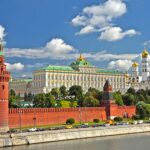
Moscow’s immediate reaction mixed caution with criticism. Russian state outlets framed the decision as politicised and argued the Nobel Committee’s credibility is at stake when the prize intersects with active geopolitical rivalries. President Vladimir Putin and Kremlin aides have used the moment to point to perceived politicisation of the award and to praise alternative diplomatic actors (not least Trump) for recent ceasefire initiatives — a line repeated in Russian media commentary.
That rhetoric has two goals: to undermine the legitimacy of a laureate aligned with U.S.-friendly actors, and to rally Moscow’s regional partners by portraying the prize as a Western intervention. Russian outlets warned the Nobel decision risks destabilising Latin American politics rather than helping solve Venezuela’s crisis. TASS
Maduro’s Reaction and the Risk of a New Crackdown
Caracas has denounced the award as a foreign provocation. State media have framed the Nobel Committee’s decision as interference; Maduro loyalists described Machado as a traitor and suggested the prize vindicates government warnings of an external plot. Human rights groups and past reporting indicate the Maduro government has repeatedly relied on arbitrary detentions and legal pressure to suppress dissent; international NGOs have warned the award could provoke further repression.
At the same time, other observers warn that international attention may offer Machado and her movement greater protection — or at least a higher diplomatic cost to punitive actions against opposition figures.
U.S. Reaction: A Strategic Boost (and a Diplomatic Headache)
Western capitals were swift in congratulating Machado and underlining concerns about Venezuela’s democratic backsliding. U.S. officials hailed the choice as an affirmation of civic courage; yet the White House’s public lines — including criticism that the Committee “places politics over peace” — also revealed discomfort that a prize so closely entwined with U.S. policy goals might be read as overtly partisan. Trump’s Oval Office remarks — and aides’ denunciations of the Nobel Committee — gave the episode additional political heat.
U.S. & Western Influence Versus Russia: A Plain-English Comparison
In short: the West (led by the U.S. and the EU) aims to pressure for democratic transition in Venezuela using sanctions, diplomatic isolation of the Maduro government, high-profile support for opposition figures and symbolic instruments like international awards. Russia’s policy has been to prop up Maduro with arms sales, loans, energy deals and diplomatic cover at the U.N., using Venezuela as a geopolitical foothold in Latin America. The Nobel Prize strengthens Western soft-power arguments and elevates an opposition figure allied with U.S. support — but it also risks hardening Moscow’s and Caracas’s reactions, pushing them to double down on security assistance, propaganda and denials of wrongdoing.
Why the Prize Is So Controversial — and What Might Happen Next
The Nobel Committee argues its choice was moral: to honour a non-violent champion who kept democratic aspirations alive. Critics counter that, by awarding a leading opponent who publicly thanked a sitting U.S. president and whose politics align with Western aims, the Committee has blurred the line between celebration and geopolitics. That debate is more than academic: it shapes whether international pressure becomes leverage for negotiation — or a pretext for more repression and sharper proxy confrontations.
Possible near-term outcomes include:
a spike in international diplomatic activity around Venezuela, with greater pressure on Maduro;
stepped-up propaganda and security cooperation between Caracas and partners such as Moscow or Beijing; and
intensified public mobilisation by the opposition, buoyed by the prize’s symbolic power.
Conclusion: A Prize That Illuminates and Polarises
The Venezuela Nobel Peace Prize 2025 has turned an already fraught national struggle into a headline international contest. Machado — operating from hiding yet speaking directly to the Nobel Institute, her followers and even President Trump — now stands at the centre of a renewed global debate about democracy, sovereignty and the limits of symbolic acts. Whether the Nobel will hasten a peaceful transition or harden the regime’s repression remains to be seen. For now, the prize has done what the Committee often intends: it made a small country’s conflict impossible to ignore on the world stage.