Second US Tanker Seizure Off Venezuela Ignites Shadow Fleet Crisis
U.S. forces have boarded and stopped a second merchant vessel in international waters off Venezuela, transforming Donald Trump’s promised “blockade” of sanctioned oil tankers into an active campaign that is rippling through the opaque world of so‑called shadow fleets. The latest US tanker seizure not only intensifies pressure on Nicolás Maduro’s government but also drags shipowners, insurers and Asian buyers into a confrontation that hinges on contested readings of international law.
Second Ship Stopped In Under Two Weeks
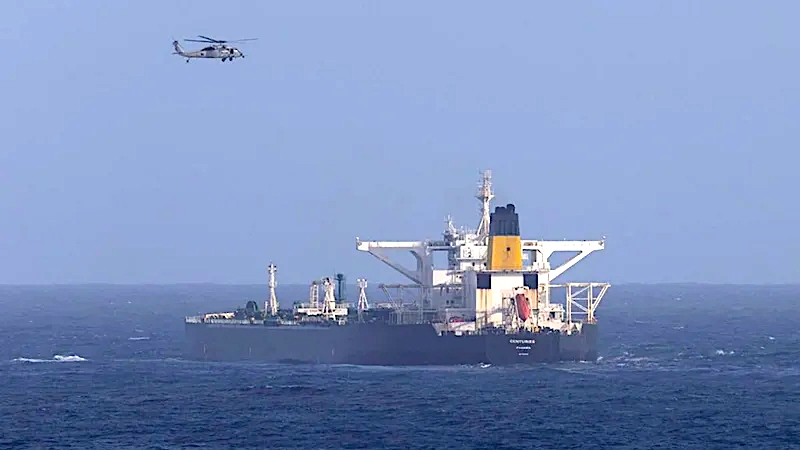
U.S. officials say a Navy and Coast Guard team intercepted a second merchant vessel in international waters off Venezuela around 19–20 December, barely days after commandos seized the crude tanker Skipper in a dramatic helicopter assault. One official has described the latest operation as a “consented boarding”, claiming the ship voluntarily stopped and allowed U.S. forces on board as part of a sanctions‑enforcement mission.
The second vessel has been identified in several media reports as the Centuries, a Panama‑flagged oil tanker with Chinese ownership links that was suspected of moving Venezuelan crude subject to U.S. sanctions. Caracas has denounced the action as “piracy” and “theft” of Venezuelan oil, accusing Washington of disappearing the crew and violating freedom of navigation on the high seas.
How The First Seizure Set The Stage
The escalation began on 10 December when U.S. forces seized the 332‑metre tanker Skipper off Venezuela’s coast, using helicopters to fast‑rope armed teams onto the deck in a made‑for‑television operation. The ship was not where public tracking services showed it to be, highlighting how shadow‑fleet vessels routinely manipulate transponder data and “go dark” to hide their routes.
After that seizure, President Trump announced that the United States would impose a de facto blockade on all sanctioned oil tankers going in and out of Venezuela, framing the move as part of a broader campaign to “get the oil back”. U.S. think‑tank assessments say the first Skipper operation was already a signal of tougher sanctions enforcement, and that follow‑on seizures were likely if Washington wanted to disrupt Maduro’s key revenue flows.
Shadow Fleets And The Murky Ownership Trail
What makes this story more than a simple U.S.–Venezuela spat is the ownership web behind the seized tankers, which shows how sanctions‑hit oil moves through a global, deniable network. Both the Skipper and the Centuries sit at the intersection of ageing ships, offshore shell companies and flags of convenience that characterise the shadow fleet used for Russian, Iranian and Venezuelan crude.
In the Skipper’s case, shipping and satellite‑tracking data show that:
The vessel is registered to Marshall Islands‑based Triton Navigation Corp.
Nigeria’s Thomarose Global Ventures Ltd appears as the beneficial cargo owner, vessel manager and operator, according to commercial data platforms such as Kpler and MarineTraffic.
The U.S. Treasury placed Triton Navigation on its sanctions list in early November, accusing it of serving a Russian oil magnate, Viktor Artemov, who allegedly runs a global smuggling network moving Iranian crude through obscurely registered tankers.
Investigations have traced the Skipper’s voyages between Iran, Venezuela and Asian waters, often with its transponder switched off or manipulated, which is a hallmark of dark‑fleet behaviour. Analysts note that Washington tolerated the ship’s activity for several years despite Treasury sanctions, suggesting that the sudden seizure reflects a political decision to escalate rather than a new discovery of its role.
The Centuries, by contrast, is reported as Chinese‑owned but Panama‑flagged, underlining the extent to which non‑U.S. and non‑Venezuelan entities are exposed to U.S. enforcement when they carry barrels linked to sanctioned regimes. Industry monitors describe it as part of a broader fleet of older tankers re‑routed into high‑risk trades after Western sanctions restricted legitimate shipping from carrying Russian and Iranian oil.
Trump’s Strategy Around Venezuela
Cargo Details of Seizures
The first US tanker seizure involved the Skipper, which carried approximately 1.8 million barrels of Venezuelan heavy crude oil when it departed Puerto José on 4–5 December, though it offloaded around 200,000 barrels to another vessel near Curaçao before interception. The second seizure targeted the Centuries, a Panama-flagged VLCC that had loaded about 1.8 million barrels of crude at a Venezuelan port earlier in December, with some reports estimating up to 2 million barrels on board at the time of boarding. Altogether, the approximate value Crude seized is more than USD 200 million.
Trump’s Oil‑First Strategy
The US tanker seizure campaign off Venezuela fits squarely into Trump’s stated belief that the United States “should have kept the oil” in previous wars and interventions, a line he has repeated while unveiling new actions against Maduro. In recent months, the administration has sent a large naval force to the Caribbean and Atlantic approaches, describing it as the biggest regional build‑up in generations and explicitly linking it to both counter‑narcotics and sanctions enforcement.
Officially, Washington presents the maritime operations as:
An extension of U.S. sanctions on Venezuelan oil exports under the International Emergency Economic Powers Act and related OFAC regulations.
A component of an “armed conflict” against drug cartels and transnational criminal networks, in which Maduro is cast as a narcoterrorist actor facing federal charges.
This framing allows the administration to blend economic coercion with military tools at sea, even without a formal declaration of war against Venezuela. It also feeds into domestic messaging that a tougher stance will starve Maduro of oil income and hasten political change in Caracas.
Can The US Legally Seize These Tankers?
The legality of the US tanker seizure moves on two planes: what U.S. law allows and what international law accepts.
Under U.S. law, the government has given itself broad powers to target “property” linked to sanctioned regimes and organisations, whether that property is money in a bank or a ship on the high seas. The Coast Guard’s governing statute explicitly authorises it to conduct inquiries, searches and seizures on the high seas to enforce U.S. laws, which officials say covers tankers accused of violating sanctions.
Legal scholars note, however, that citing U.S. domestic law does not automatically satisfy international law standards on freedom of navigation and the sovereignty of flag states. Under the UN Convention on the Law of the Sea, ships on the high seas generally fall under the exclusive jurisdiction of their flag state, with narrow exceptions for piracy, slave trading, unauthorised broadcasting and stateless vessels.
Some experts argue Washington is trying to fit shadow‑fleet tankers into that “stateless” category by pointing to inconsistent flag usage, fraudulent registration and transponder manipulation. If a ship is effectively stateless or operating under false flags, it becomes more vulnerable to interdiction, giving the U.S. a stronger case for seizing it even in international waters.
Others counter that treating a commercially trading vessel as stateless based on sanctions‑evasion behaviour stretches existing rules and risks normalising unilateral ship seizures under the banner of domestic law. In their view, the practice looks less like standard law‑enforcement and more like a powerful state imposing its regulatory writ on global commons that are meant to be open.
Caracas’ Piracy Charge And The Regional Context
Venezuela’s government has denounced both the Skipper seizure and the second US tanker seizure as “acts of piracy”, accusing the U.S. of unlawfully diverting cargoes that belong to the Venezuelan people. Officials in Caracas frame the operations as a continuation of economic warfare that has already crippled the country’s refining sector and fuel supplies, now extended to outright confiscation of oil at sea.
The dispute unfolds against a history of maritime tension in the region. A decade earlier, Venezuelan forces detained a U.S.‑chartered survey ship operating in waters claimed by Guyana, an incident that foreshadowed how contested boundaries and resource claims can quickly draw in outside powers. Today, while the tanker seizures occur in international waters rather than disputed zones, Caracas argues they contribute to a pattern of U.S. encroachment on Venezuela’s economic space.
Neighbouring governments are watching closely, wary of incidents that could involve their own flagged vessels or nationals caught on board ships suspected of carrying sanctioned oil. For Caribbean and Latin American states that rely heavily on maritime trade, the spectre of great‑power interdictions in nearby sea lanes is deeply unsettling.
Risks For Shipowners, Insurers And Asian Buyers
For shipowners and insurers, the key message from the US tanker seizure of the Skipper and the Centuries is that Washington is willing to cross a threshold that many in the industry long hoped would remain theoretical. By physically boarding and redirecting tankers in international waters, the U.S. is raising the compliance risk for any company touching barrels connected, even indirectly, to sanctioned networks.
Analysts say the likely consequences include:
Higher insurance premiums, or outright refusals, for older vessels associated with shadow‑fleet routes to Venezuela, Iran or Russia.
Greater hesitation among Asian refiners and traders, particularly in China and India, to buy Venezuelan crude that has travelled on opaque shipping chains.
A possible reshuffling of the shadow fleet as owners try to re‑flag vessels, shift routing away from U.S.‑patrolled corridors or move operations toward jurisdictions perceived as less risky.
From a market perspective, think‑tank assessments suggest that a single US tanker seizure will not significantly alter global oil prices, but a sustained campaign could tighten supply from high‑sulphur Venezuelan blends that feed certain refineries. Over time, the deterrent effect on shadow‑fleet operations could be more important than the direct loss of individual cargoes.
How Far Can The Blockade Go?
U.S. sources quoted by international media say that, after the Skipper, Washington prepared lists of additional ships believed to be hauling Venezuelan crude in violation of sanctions, along with contingency plans for more seizures. The stopping of a second tanker appears to validate those reports and suggests that Trump’s blockade rhetoric is being turned into a rolling interdiction strategy rather than a one‑off show of force.
The durability of this strategy will depend on several factors. Domestically, the administration must weigh the political appeal of tough enforcement against the legal challenges and potential blowback if crews or foreign nationals are harmed. Internationally, Washington will need to manage the reactions not only of Venezuela but also of major stakeholders whose ships or companies become collateral targets, including China, Nigeria, Russia and Gulf states.
For now, the US tanker seizure operations off Venezuela have made the shadow fleet more visible than ever before, turning anonymous hulls into frontline assets in a sanctions war that is playing out on the world’s sea lanes as much as in diplomatic backrooms. How the next few boardings unfold will tell shipowners, courts and governments whether this is a limited campaign to send a message – or the start of a new normal in which the law of the sea is increasingly written, and enforced, from Washington.