US President Trump Escalates Global Rhetoric After Venezuela Strike — Greenland, Cuba and Iran in Crosshairs
Trump’s expanded warnings trigger global reactions; moral authority of Western interventionism suddenly in question
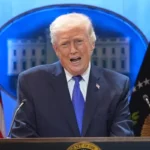
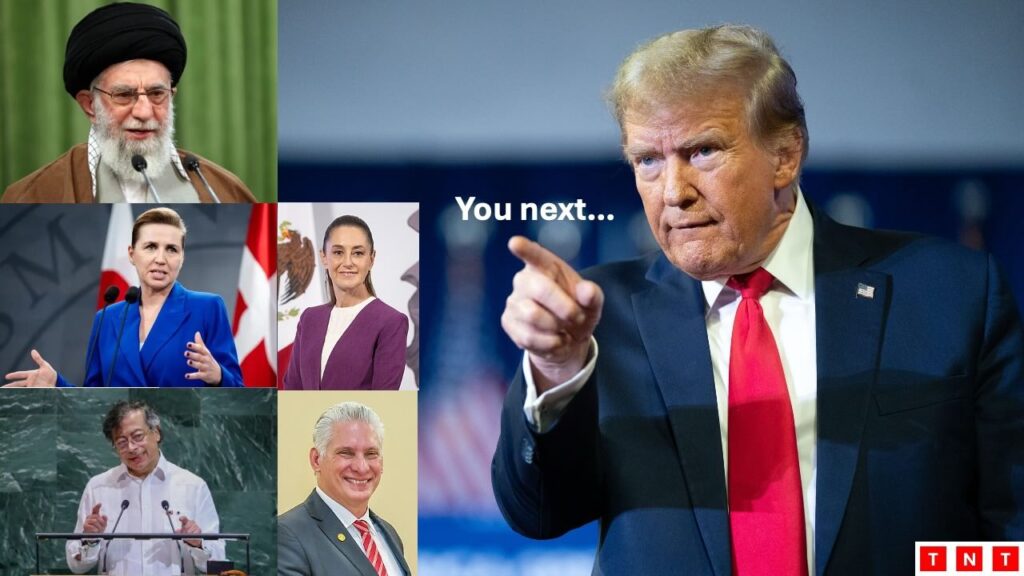
In the wake of the United States’ controversial military operation that led to the capture of Venezuelan President Nicolás Maduro, US President Donald Trump has sharply broadened his foreign policy rhetoric, issuing explicit warnings to several countries and territories across multiple regions — including Colambia, Maxico, Greenland, Cuba, and Iran. The comments have triggered immediate rebukes from global leaders, heightened geopolitical tensions, and rekindled longstanding debates about American interventionism.
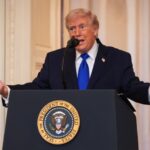
Trump’s remarks, made during press encounters aboard Air Force One and in subsequent interviews, framed his warnings as rooted in national security and ideological conflict. However, leaders in the targeted countries and their allies have denounced the language as threatening, undiplomatic, and incompatible with established norms of international cooperation.
Greenland: Strategic Ambition Meets Allied Resistance
President Trump reiterated that the United States “needs Greenland from the standpoint of national security,” citing what he described as an increasing presence of Russian and Chinese vessels in Arctic waters. He suggested that Denmark — Greenland’s sovereign power — is unable to secure the territory effectively, implying that Washington might consider stronger measures to assert control.
This rhetoric has sparked fierce diplomatic pushback. Greenland’s Prime Minister Jens-Frederik Nielsen said such comments are “entirely unacceptable” and assert that Greenland is a democratic nation, not a geopolitical object. Denmark’s leaders also warned that any aggressive moves could strain NATO alliances and violate international law.
European capitals, from Finland to France to the United Kingdom, have publicly backed Denmark’s stance on sovereignty, emphasising that territorial integrity must be respected within the framework of global alliances.
Cuba: Economy in the Spotlight, Not Military Action — For Now
While Trump suggested that Cuba may be “ready to fall” following Venezuela’s political upheaval — largely because of its economic reliance on Venezuelan oil exports — he stopped short of proposing direct intervention on the island. Instead, high-ranking US officials, including Secretary of State Marco Rubio, characterised the Cuban government as “in trouble” and implicitly warned Havana about the consequences of continuing close ties with Maduro’s regime.
Cuban officials, for their part, have downplayed the warnings as wishful thinking, arguing that external pressure and decades of sanctions have not significantly altered Havana’s political trajectory so far.
Iran: Protest Response Under Scrutiny
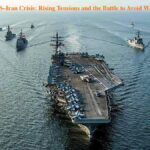
Trump’s warnings to Iran have taken on an increasingly confrontational tone, shaped not only by concerns over internal unrest but also by his blunt public message on social media. In a post on Truth Social, the US President wrote: “If Iran shoots and violently kills peaceful protesters, which is their custom, the United States of America will come to their rescue. We are locked and loaded and ready to go…”
Unlike his remarks on Greenland or Cuba, the focus here has been less on territorial control and more on internal security, human rights, and potential intervention if Tehran violently suppresses dissent. This language signals a readiness to act should the Iranian government escalate its response to widespread demonstrations driven by economic hardship and political grievances. At the same time, it serves as a deliberately provocative signal to protesters themselves — an implicit assurance that Washington is watching closely and stands prepared to intervene in their support if circumstances warrant.
Iranian officials have rejected these warnings as reckless interference in sovereign affairs, pledging to resist external pressure and maintain autonomy. Tehran has cautioned that any attempt by Washington to intervene could destabilise the entire region and might provoke serious retaliation.
This latest escalation compounds already strained US–Iran relations — shaped by sanctions, nuclear tensions and regional rivalries — and raises profound questions about the boundary between diplomatic condemnation and threats of military involvement.
Wider Diplomatic Backlash and Regional Reactions
Beyond formal statements from Greenland, Denmark, Cuba, and Iran, broader international responses reflect a mix of alarm and strategic caution. Latin American leaders — including Colombia and Mexico — have pushed back against what they view as unilateral threats, with Colombian President Gustavo Petro warning against foreign interference and Mexican officials underscoring national sovereignty.
European allies have also expressed concern that Trump’s rhetoric undermines the unity of NATO and violates shared principles of alliance cooperation, especially regarding Arctic nations like Denmark and Finland.
Analysts say the aggressive tone may be intended to project strength and deterrence, but there is growing worry in capitals worldwide that such expansive language, especially following military action against a sitting president, could destabilise global diplomatic norms and provoke retaliatory alignments.
Moral Collapse of the Rules-Based Order
Amid these geopolitical tremors, a deeper moral critique has emerged, challenging the credibility of Western advocacy for international law.
Critics argue that the same powers that demand strict adherence to legal norms appear to abandon them when convenient. This contradiction was articulated eloquently by commentator Palki Sharma, whose analysis crystallises growing global unease:
“All should uphold international law … it may make for a good speech at a Model United Nations, but who violated international law? Who kidnapped a president? Who carried out unilateral air strikes? The fact is this is complete moral bankruptcy. When the West now asks China to stay away from Taiwan or Russia to end the war in Ukraine, forget a moral high ground — they don’t have any ground left to stand on.”
Sharma further highlights that even within Latin America, where sentiment is divided, most governments have condemned the US action. Mexico called it a violation of the UN Charter, Brazil warned it could lead to violence and lawlessness, and Cuba denounced the operation as criminal aggression. While some leaders like Argentina’s Javier Milei labelled it a moment of liberation, the predominant regional view is that unilateral military interventions are unacceptable.
Importantly, Sharma stressed that this critique does not romanticise Nicolás Maduro. His regime’s record of rigged elections, suppression of dissent and economic mismanagement is widely acknowledged. Yet, she insisted that domestic failures do not justify bombing a capital or seizing a head of state without broad international support.
“By capturing him, she concluded, “the United States has once again torn apart the rules-based order. They have proven a long-standing theory in geopolitics: might makes right.”
This moral critique underscores a growing schism — not only between the United States and much of the global South, but also within the very ideals Washington claims to defend.
What Lies Ahead: A Crossroads for Global Order
President Trump’s expanded warnings have now placed multiple regions under diplomatic strain, from the Arctic to the Caribbean to the Middle East. Whether these warnings will translate into concrete policy — beyond rhetoric — remains uncertain. What is clear is that the moral authority underpinning calls for international law and multilateral order is now under intense scrutiny.
If the United States continues to act unilaterally, global institutions may face deeper challenges. Sovereign nations, already wary of great power competition, could accelerate alternative strategic alignments, further complicating an already volatile geopolitical environment.