Urban Naxalism in India: Networks, Protests, Campus Flashpoints and the 2025 Pattern
A Growing Debate Over Urban Naxalism in India
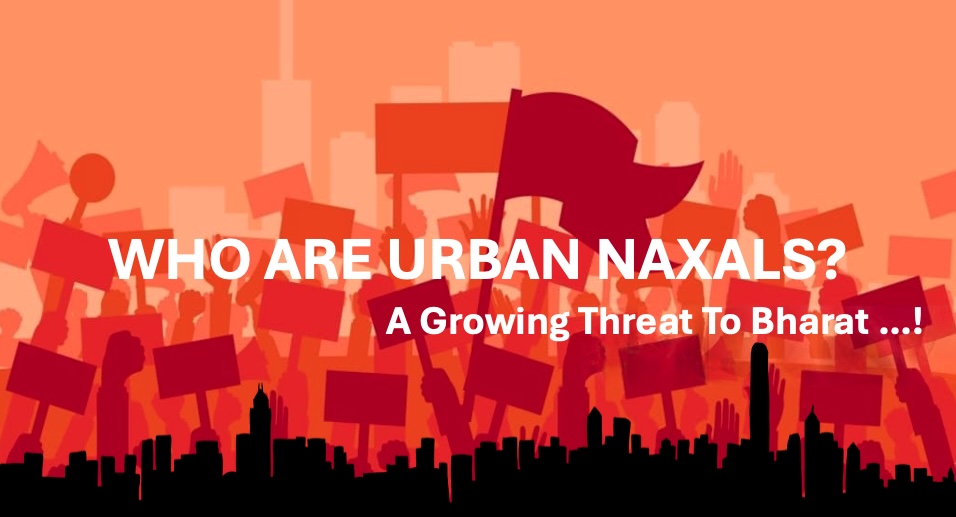
Urban Naxalism, described by investigating agencies as the city-based support system of the banned CPI Maoist insurgency, remains one of India’s most contested public-security debates. Officials argue that the insurgency’s survival depends on its urban nodes, which allegedly enable funding, logistics, narrative-building, and legal cover for underground cadres operating in remote forests. The ecosystem is said to comprise three tiers: overground workers, front organisations, and small urban units that manage logistics or facilitate operations when required.
According to investigators, these urban structures offer resources that rural Maoist groups cannot procure easily within forest zones. Cities provide funding, digital reach, media engagement, and legal assistance—elements that security agencies say have kept the insurgency alive despite large territorial losses over the past decade.
Origins and Evolution — From Bhima Koregaon to Today’s Urban Web
The term “Urban Naxal” gained widespread visibility after the 2018 Bhima-Koregaon violence and the Pune Police investigations that followed (Elgar Parishad/Bhima-Koregaon Case). Seized documents, which later formed part of police chargesheets, included alleged references to funding links between certain urban activists and Maoist commanders in forest belts. There were also mentions of recruitment efforts in top universities and a purported plan to attack the Prime Minister. These allegations remain the subject of ongoing legal scrutiny but played a major role in expanding the public debate.
Since then, the National Investigation Agency and state police units have mapped more than 150 front organisations and around 2,000 urban sympathisers, according to official statements. These networks are believed to operate across major metros, including Delhi, Mumbai, Hyderabad, Kolkata, Bengaluru, and Thiruvananthapuram.
Modus Operandi — A Pattern of Infiltration and Narrative Control
Investigators describe a recurring pattern in which certain groups allegedly piggyback on genuine public movements—ranging from protests on environmental and citizenship issues to demonstrations around caste and labour rights. According to agency officials, these groups attempt to insert Maoist slogans or imagery into protests to shape narratives, recruit sympathisers, or provoke confrontation.
University campuses have frequently figured in official investigations. Institutions such as JNU, DU, HCU, TISS, and FTII have been cited in various reports as potential recruitment spaces for extremist sympathisers. Cultural events, solidarity meetings, and academic seminars have also been monitored closely by authorities for what they describe as “ideological signalling.”
A Volatile Weekend: JNU Vandalism and the India Gate Protest
JNU Flashpoint on 22–23 November 2025
Hours before the India Gate demonstration escalated on 23 November, a separate incident at Jawaharlal Nehru University added fuel to the ongoing debate. According to the JNU administration’s statement, a group of students associated with left-leaning student organisations such as AISA and SFI vandalised a newly installed ₹50-lakh facial-recognition gate outside the Central Library. The structure was uprooted and damaged during the protest.
The administration described the act as “criminal hooliganism” in an official note. Members of ABVP, the right-leaning student organisation on campus, publicly alleged that this incident mirrored the same disruptive pattern seen at India Gate the next day, referring to it as part of a broader ecosystem involved in urban extremist signalling. These claims remain allegations but reflect the deep polarisation visible across campuses.
Same Weekend, Same Groups, Same Pattern
Observers noted that both protests originated from legitimate grievances—clean air at India Gate and surveillance concerns at JNU—but ended with property damage, political slogans, and accusations of Maoist-inspired messaging. Security officials described the back-to-back incidents as part of an emerging trend, though they stressed that any definitive link would depend on further investigation.
Not Spontaneous Riots — Calculated Disruptions, Say Officials
According to initial police reports and agency assessments, the events at India Gate and JNU were not viewed as spontaneous flare-ups. Officers involved in managing the protests claimed that disruptions appeared coordinated, with messaging on social media platforms amplifying themes of “campus anarchy” and portraying police action as oppressive.
The vandalised gate at JNU, built using public funds, became a symbol in the debate. Analysts argue that such incidents overshadow pressing campus issues, including budget cuts of nearly 30 per cent reported earlier in the year. Officials suggest that if any formal extremist link emerges—similar to past cases such as Elgar Parishad—the matter could attract deeper scrutiny from agencies like the NIA.
Legal observers also pointed to the ongoing Supreme Court hearings in cases related to the 2020 Delhi riots, where questions about student-political networks and campus involvement resurfaced. The reference does not imply guilt; instead, it highlights how campus-based mobilisation remains under the national spotlight.
How the India Gate Protest Escalated — Missing Details in Viral Posts
Social media commentary emerging after the India Gate incident focused heavily on police action, describing it as excessive or “barbaric.” Several posts circulated clips of scuffles and criticised the enforcement of the no-protest zone. Street interviews aired by news outlets echoed similar sentiments, with some participants referring to protesters as “comrades,” while others accused the authorities of suppressing voices calling for cleaner air.
However, critical elements of the escalation were often absent in the viral posts.
Maoist Imagery at an Environmental Protest
Police reports and video footage reviewed by multiple newsrooms showed that, amid banners demanding clean air, a faction of protesters unfurled posters of slain Maoist commander Madvi Hidma, who carried a ₹1 crore bounty and was linked by authorities to major attacks, including the 2010 Dantewada ambush and the 2021 Sukma-Bijapur encounter. Chants such as “Lal Salaam” and “Hidma amar rahe” were clearly heard in the video clips.
Investigators believe this episode resembled previous instances in which unrelated protests were allegedly hijacked by extremist sympathisers for symbolic signalling. With Hidma having been killed earlier that month in an encounter in Andhra Pradesh, officials suspect that the posters served as a tribute or provocation. Students from left-leaning organisations denied such characterisations but acknowledged that “unaffiliated outsiders may have joined the protest.”
Pepper Spray on Police — A First in Delhi
Police statements also noted that, during attempts to enforce restrictions around the high-security India Gate area, certain participants allegedly used chilli or pepper spray directly on officers. This move, described by officials as “unprecedented in Delhi’s protest history,” led to scuffles, barricade breaches, and more than 22 arrests under charges related to assault, unlawful assembly, and public-safety violations. No major injuries were reported.
The Urban Naxal Framework — Allegations, Not Hyperbole
The phrase “Urban Naxal” resurfaced across X after the India Gate incident. Political leaders from the ruling party described the protesters as “professional disruptors” and accused them of using environmental issues as a façade for ideological signalling. They also argued that large-scale pollution protests were rare during earlier dispensations but had intensified recently, a claim contested by student groups.
Right-leaning commentators demanded that police examine antecedents of those arrested and look for possible extremist links, while left-leaning users accused them of exaggeration. Some neutral observers online pointed out that the Maoist slogans and posters provided “unnecessary ammunition” to those pushing for a crackdown.
Shrinking Rural Footprint, Persistent Urban Footprint
According to the Ministry of Home Affairs, the number of Naxal-affected districts declined from 96 in 2010 to 41 in 2024. While this reflects major gains in rural areas, officials argue that urban sympathisers continue to play roles in funding, propagation, and recruitment.
In this context, the Hidma posters at India Gate were viewed by authorities as a symbol rather than a coincidence. They suggested that such imagery acts as an ideological signal to existing networks and may serve to inspire fringe supporters in cities.
Debates Over NSA, Oversight and Accountability
Many citizens on social media called for strong measures, including the National Security Act (NSA), to prevent further disruptions. Analysts note that the NSA has previously been used in cases involving Maoist-linked suspects, though civil liberties groups caution against its overuse.
Senior officials have confirmed that UAPA and intelligence-based scrutiny are being applied to assess whether any extremist elements were involved in the protest escalation. They emphasise that these reviews target patterns, not ordinary citizens rallying for environmental reform.
The Core Issue — Pollution Is Real, Hijacks Are Harmful
Delhi’s air quality remains a severe public-health concern, and environmental protests play an important role in pushing accountability. However, when legitimate demonstrations devolve into symbolic tributes to insurgent commanders or confrontations with police, the broader message risks dilution.
Investigators argue that these incidents highlight a deeper challenge within India’s urban protest culture: discerning between genuine activism and deliberate provocations by fringe elements. Students, activists, and residents interviewed after the incident expressed frustration that a crucial environmental cause was overshadowed by extremist imagery.
Accountability Must Be Firm; Dissent Must Be Civil
Urban extremist signalling continues to complicate India’s internal-security landscape at a time when rural Maoist influence is steadily contracting. The incidents at JNU and India Gate underscore a recurring pattern: legitimate civic issues being eclipsed by fringe elements that resort to intimidation, vandalism or violent disruption.
Law-enforcement and security officials insist that acts of destruction, coordinated disruptions, or assaults on public property cannot be excused under the banner of protest. When taxpayer-funded infrastructure is torn down, or officers are assaulted in the line of duty, the response, they argue, must be uncompromising and driven by strict enforcement of the law. Order cannot be maintained if groups are allowed to cross the line from agitation to aggression with impunity.
At the same time, student bodies and rights groups maintain that dissent itself must not be criminalised and that peaceful demonstrators should not be bracketed with extremist networks. This tension — between the right to protest and the need to protect public safety — lies at the heart of current debates.
Most policy analysts agree on one point: strong action against rioters and orchestrated agitators must be paired with open dialogue for peaceful stakeholders. India’s democratic framework works only when differences of opinion are expressed without tearing down public property, sabotaging institutions, or allowing ideological provocations to hijack genuine causes. Protecting the space for democratic dissent requires both zero tolerance for violent disruption and a willingness to engage with those acting in good faith.