UN Sanctions on Iran Reimposed: What It Means for Global Oil and India’s Strategy
Introduction
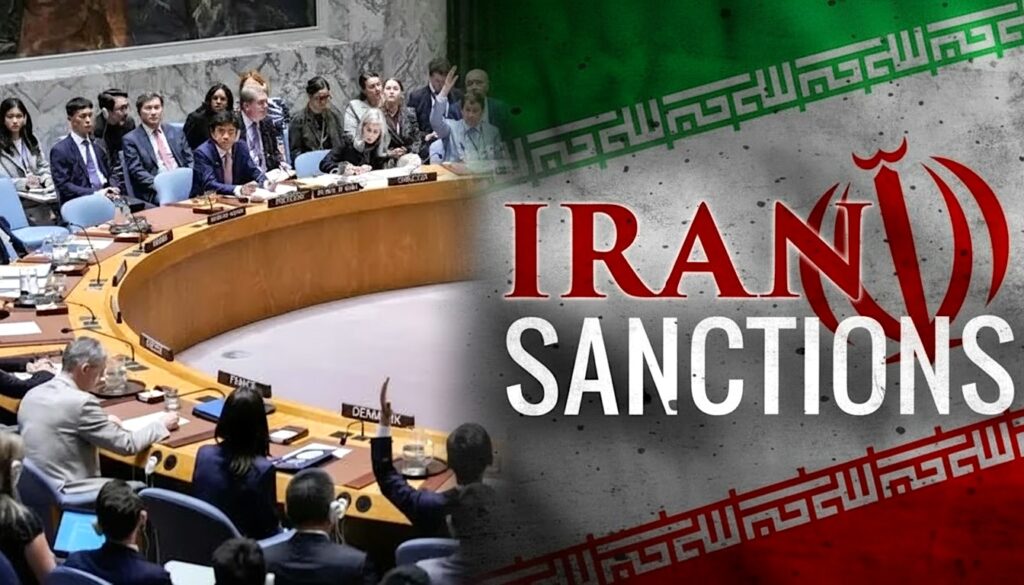
September 28, 2025, the UN sanctions on Iran have officially returned. The decision, triggered through the snapback clause of the 2015 Joint Comprehensive Plan of Action (JCPOA), reinstates a decade-old sanctions framework that was lifted in 2016. European powers, citing Tehran’s breaches of nuclear limits, pressed the Security Council to act.
The sanctions will lock Iran’s overseas assets, halt weapons transactions with Tehran, and curb progress on its ballistic missile program. Although Russia and China objected, their efforts were in vain since the snapback mechanism cannot be vetoed.
This development is not merely about Iran. It reshapes global energy markets, regional geopolitics, and India’s strategic calculations. This INSIGHT report examines the historical background, the legal mechanics of the sanctions, their global effects, India’s vulnerabilities, and Iran’s own challenges.
Historical Context and Timeline
1979: U.S. sanctions begin after the Iran hostage crisis.
2006–2010: UN sanctions via Resolutions 1737, 1747, 1803, and 1929 expand restrictions on nuclear material, arms, and the IRGC.
2015: JCPOA signed between Iran and P5+1; Resolution 2231 endorses the deal.
2016: Sanctions lifted as Iran complies with initial commitments.
2018: U.S. withdrawal under President Trump leads to unilateral sanctions.
2019–2025: Iran breaches JCPOA limits, enriches uranium up to 60%, and reduces IAEA cooperation.
September 2025: Security Council vote on sanctions relief fails; snapback is triggered, restoring the pre-2016 framework.
This timeline underscores how fragile nuclear diplomacy has been and how snapback has become the central enforcement tool.
Global and Regional Impacts
Oil Markets Under Pressure
The sanctions cut Iran’s oil exports by 1–1.5 million barrels per day. Brent crude now trades at around $85 per barrel, creating higher energy costs for import-dependent economies such as India, Japan, and China.
Strategic Chokepoints and Shipping
The Strait of Hormuz, which handles 20% of global oil flows, faces higher security risks. Insurance premiums and freight costs have already increased, particularly for Asian buyers.
Regional Geopolitics
Iran’s threats of retaliation through proxies in Iraq, Lebanon, and Yemen risk escalating tensions in the Middle East. Russia and China stand to gain as Iran leans eastward, while Israel and Saudi Arabia prepare for heightened security challenges.
India’s Stakes in the Gulf
Loss of around 400,000 barrels per day of Iranian oil (the 2016–2018 average) could inflate India’s annual oil bill by $5–7 billion.
The Chabahar Port, backed with $500 million of Indian investment, faces uncertainty unless specific exemptions are granted.
Nearly 8 million Indian expatriates in the Gulf remit $80 billion annually. Any flare-up could reduce remittances by 5–10%.
India’s diplomatic offer to mediate places it in a sensitive balancing act between Iran, Israel, and the United States.
Iran’s Domestic Fallout
Iran faces halved oil revenues, inflation climbing towards 50%, and worsening electricity blackouts. Social unrest, similar to the 2019 protests, looms over Tehran. At the same time, the regime may double down on its regional influence through Hezbollah and other proxies.
Incremental Impact and Suspension-Era Focus
Unlike fresh sanctions, these are a reactivation of the 2006–2015 framework. The biggest losers are those who entered Iran during the 2016–2025 suspension, including energy firms, shipping companies, and infrastructure investors.
Nations such as the United States, which had no economic re-entry, remain unaffected. The ripple effect is therefore specific to suspension-era participants like India and China.
Countries Defying or Circumventing Sanctions
China
Secures discounted oil under a 25-year partnership signed in 2021.
Expands Belt and Road projects in Iran despite restrictions.
Circumvents sanctions using non-SWIFT systems and state-owned firms.
Russia
Strengthens military and energy cooperation with Tehran.
Uses cryptocurrencies and its SPFS financial system to maintain trade.
Turkey
Continues trading in natural gas, gold, and consumer goods.
Uses lira–rial swaps and informal routes to bypass sanctions.
North Korea
Cooperates with Iran on military technology and illicit exchanges.
Relies on smuggling and Chinese intermediaries.
United Arab Emirates (UAE)
Dubai serves as a re-export hub with trade worth $18.3 billion in 2024.
Uses free trade zones and cash transactions to shield flows.
Factors Enabling Defiance
Geopolitical Alignment: Iran, Russia, China, and North Korea resist Western dominance.
Economic Incentives: Discounted oil and trade profits outweigh risks.
Weak Enforcement: UN lacks U.S.-style secondary sanctions.
Alternative Systems: Barter, cryptocurrency, and non-SWIFT networks enable continuity.
Limitations and Risks
The U.S. can still impose secondary sanctions on non-compliant firms.
Turkey and the UAE face risks from Saudi and Israeli pushback.
Iran’s ability to sustain exports may decline if production falters.
Conclusion and Outlook
The UN sanctions on Iran mark a rollback rather than a new escalation. For India, the challenge lies in managing higher energy costs, protecting Chabahar, and safeguarding its diaspora in the Gulf. For Iran, the outlook is harsher: a possible 6–8% GDP contraction, inflation, and social unrest.
Meanwhile, China and Russia anchor Tehran’s survival, while Turkey, North Korea, and the UAE act as secondary enablers. The world must now watch how the sanctions are enforced, whether exemptions are granted, and how Iran reacts with its nuclear programme.
As this sanctions saga unfolds, one lesson is clear: energy security, strategic balance, and diplomatic agility will decide who bears the greatest cost.