The Ukraine War: How Western Aid, Nepotism, and Corruption Turned a Defensive Fight Into a Global Quagmire
The Ukraine war has become one of the world’s most corrosive geopolitical crises. It began with Russia’s invasion of Ukraine in February 2022. But it now resembles a global quagmire driven by corruption, vested interests, and relentless bloodshed. Many analysts argue that elites have stretched what was once a defensive struggle far beyond its strategic lifespan. They treat the conflict as an income stream, not a national tragedy. Western governments keep sending billions, yet observers say large sums never reach the battlefield, the power grid, or ordinary citizens. Instead, the money fuels a parallel war economy that rewards insiders while Ukrainians carry the burden.
The geopolitical aftershocks of Ukraine war are unmistakable. The conflict forces nations to pick sides, upending older partnerships and creating new rivalries. India–U.S. relations show this shift. After years of strategic convergence, the relationship entered open frictions in 2025. The United States imposed tariffs of up to 50% on Indian exports, linking the decision to India’s continued energy ties with Russia. New Delhi condemned the move, and domestic anger grew. Many Indians felt Washington had punished India for defending its own strategic autonomy. The exchange of sharp public statements created what several commentators call the closest thing to a verbal Cold War between the two countries in decades.
Other alignments are also shifting. India continues its balancing act — keeping energy and defence links with Russia, adjusting its China policy, and widening trade partnerships. This posture reflects a broader refusal to accept a U.S.–Europe–led geopolitical binary. Western unity shows similar strains. Disputes over burden-sharing, sanctions, defence spending, and long-term financing for Kyiv have deepened divides from Washington to Warsaw. European governments argue over frontline security, budgets, and political priorities. Ukraine war – a regional war has pushed the world into a new era where neutrality, leverage, and autonomy carry as much weight as formal alliances.
Power equations far beyond Europe have also changed. Azerbaijan’s quick rise as a key conduit for Caspian gas has strengthened the Baku–Ankara axis and increased Europe’s dependence on the Southern Gas Corridor. Russia’s deeper alignment with China stands out as one of the war’s most consequential outcomes. Both countries have expanded trade, currency cooperation, and strategic coordination. Moscow’s military exchanges with North Korea — including what Western intelligence describes as ammunition and missile transfers — show how battlefield pressures and sanctions are driving Russia into strengthening of controversial partnerships. Even within Europe, governments are reassessing their security assumptions and political dependencies.
At the core of this geopolitical reshaping lies an unprecedented flood of foreign money. The United States has committed about $182.8 billion since 2022. Global commitments exceed $360 billion in total assistance. Experts who study wartime corruption warn that such immense, rapid flows create clear vulnerabilities. Policy circles often cite estimates that 15% to 30% of wartime spending risks diversion or misuse. These numbers remain unverified, yet they reflect the concerns of diplomats, auditors, and investigators who have seen similar patterns in Iraq and Afghanistan.
Confirmed cases inside Ukraine are already alarming. Anti-corruption agencies uncovered a wave of scandals from 2024 onward. NABU and SAPO opened 370 investigations in the first half of 2025. One of the most explosive involved Energoatom, the state nuclear company. NABU alleges that a $100 million kickback scheme operated through inflated contracts linked to nuclear plant protection works. Senior officials were implicated. Many analysts describe the fallout as Ukraine’s most destabilising political crisis since the invasion. Public morale, already strained by blackouts, fell even further.
Defence procurement remains a major weak point. Earlier scandals — overpriced food supplies, questionable weapons contracts, and embezzlement linked to mortar shells — triggered high-profile resignations, including that of former Defence Minister Oleksii Reznikov. Ukrainian media reports and anti-corruption filings show that each new revelation erodes public trust and strengthens critics inside and outside the country.
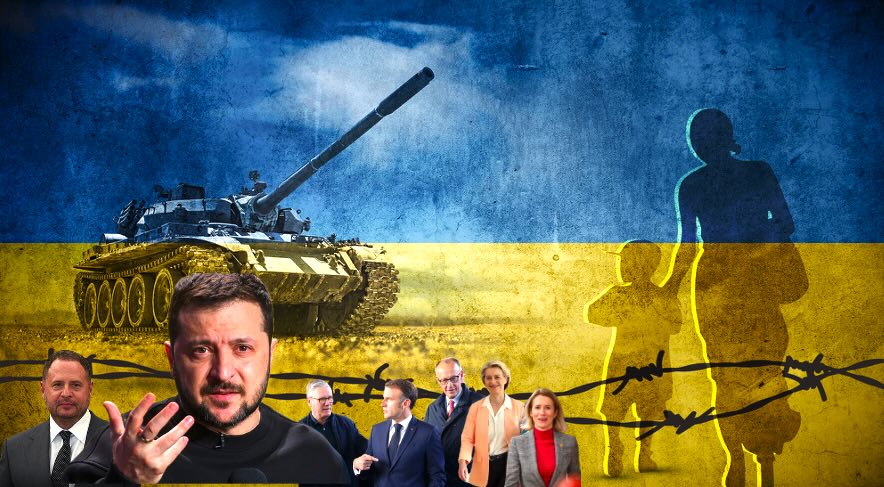
The pressure has now reached President Volodymyr Zelenskyy’s inner circle. Raids have targeted senior figures, including his influential chief of staff, Andriy Yermak, in connection with the Energoatom affair. Investigations continue, and Yermak’s resignation underscores the crisis. Several analysts believe these scandals could shape the blame game once the Ukraine war ends, with Zelenskyy potentially becoming a target for accusations over territorial losses, battlefield setbacks, or a forced settlement.
Western governments are not passive actors. The EU’s long-term Ukraine Facility, worth up to €50 billion through 2027, aligns closely with European commercial interests. Critics argue that European defence firms have become major beneficiaries of the conflict. Leaders in Brussels and other capitals view Ukraine as a proxy to contain Russia without risking their own soldiers. Proposals to repurpose frozen Russian assets show how deeply the war has become tied to wider geopolitical restructuring rather than a purely defensive cause.
The human toll continues to rise. British intelligence assessments suggest combined casualties may approach one million across both sides. Ukraine does not release official casualty figures, but Western estimates point to severe battlefield losses. Civilian deaths also rise steadily, with the UN reporting over 12,000 killed and the number growing as infrastructure strikes continue. Ukraine is believed to have lost close to 20% of its territory, and Russia shows no sign of giving up those areas.
Observers warn that with each passing month, Ukraine’s economic collapse deepens. Reconstruction estimates now reach hundreds of billions. Many experts fear that wartime corruption will cripple rebuilding efforts. When funds for infrastructure disappear into shell companies, inflated contracts, or kickback networks, Ukrainians pay twice — first through destruction, then through theft.
This editorial highlights an uncomfortable truth: corruption, geopolitical opportunism, and wartime profiteering have prolonged a conflict that should have moved toward a negotiated settlement much earlier. Peace initiatives — including the U.S.-linked 28-point plan now circulating — offer potential paths. But no proposal can succeed unless Ukraine and its Western partners confront the entrenched networks of patronage and profit that surround the war economy.
Until leaders place accountability above political or personal gain, the Ukraine war will remain a self-perpetuating machine — consuming land, money, and human lives while rewarding the few who profit from chaos. The world’s taxpayers fund it. Ukrainians bleed for it. And powerful actors, in Kyiv and in Western capitals, continue to benefit in the shadows.