Nvidia H200 Chips: Washington Considers Relaxing AI Export Restrictions to China
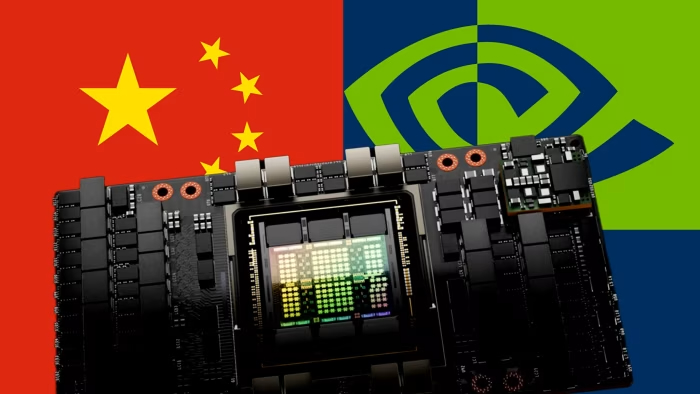
A potential shift in Washington’s semiconductor export policy has emerged as the U.S. administration debates whether to allow Nvidia to sell its high-performance H200 artificial intelligence chips to China. The internal review, taking place within the Commerce Department, comes at a moment when U.S.–China relations are experiencing a cautious and temporary easing.
The ongoing discussions highlight the intersection of technology leadership, national security, and economic competition in a global race where advanced AI chips underpin both commercial innovation and strategic power.
Current Restrictions: Why Nvidia Cannot Sell the H100 and H200 to China
Since 2022, the U.S. has enforced stringent export controls on top-tier AI chips destined for China. These restrictions aim to prevent Beijing from gaining access to systems that could enhance:
- Military decision-making systems
- Surveillance networks
- Strategic computing capabilities
Under the present framework, Nvidia is prohibited from exporting its H100 and H200 GPUs — the company’s most powerful data-centre processors. Chinese customers have access only to downgraded variants such as the H20, a model with significantly reduced performance and limited market adoption.
The controls form part of a broader U.S. national security strategy that seeks to restrict China’s advancement in next-generation AI and supercomputing.
Diplomatic Thaw and Policy Reassessment
The Busan Agreement’s Influence
The possibility of easing export rules coincides with a recent U.S.–China agreement in Busan, which helped reduce bilateral economic friction. This diplomatic progress appears to have opened a small window for limited cooperation in technology areas previously seen as off-limits.
Nvidia’s Lobbying and Global Pressures
Nvidia has repeatedly argued that the restrictions are eroding its competitive position in China — the world’s largest semiconductor market.
Its concerns include:
- Declining market share
- Rapid advancements by Chinese rivals
- Lost opportunities in generative AI and cloud infrastructure sectors
International competitors, including firms from South Korea and Europe, continue to operate in China with fewer constraints, adding to the competitive pressure on U.S. companies.
Parallel U.S. Legislative Actions
While considering relief for Nvidia, Washington is also pushing forward legislation that would forbid CHIPS Act beneficiaries from purchasing Chinese chipmaking equipment. This approach attempts to reinforce American autonomy in semiconductor supply chains, even as selected export restrictions are reconsidered.
Concerns and Political Opposition in Washington
Not all American policymakers support a potential relaxation. Critics argue that permitting sales of the Nvidia H200 could:
- Enable improvements in Chinese supercomputing clusters
- Strengthen surveillance technologies
- Undermine U.S. technological dominance
- Reduce the effectiveness of existing sanctions
China-focused policymakers insist that national security risks outweigh commercial benefits, warning that even one step of technological access could accelerate China’s domestic AI advancements.
Industry advocates, however, counter that excluding U.S. firms from the Chinese market only encourages faster investment in locally designed alternatives and closer partnerships with companies such as Huawei.
What the H200 Means for China’s AI Race
Technical Advantage
The H200 GPU offers approximately twice the performance of the currently export-permitted H20. Its advantages include:
- Dramatically improved memory bandwidth
- Superior data-processing speeds
- Enhanced capability for large-scale AI model training and inference
If approved, reintroducing the H200 to China’s market could reshape the balance of both American and Chinese AI capability development.
Strategic Impact
U.S. officials are divided on potential outcomes:
Pro-export argument: Allowing sales keeps Chinese firms tied to American technology, ensuring long-term U.S. influence.
Anti-export argument: It may inadvertently help China build stronger domestic AI ecosystems, ultimately weakening U.S. leverage.
This policy dilemma lies at the heart of the current review.
Geopolitical Significance and the Global Tech Race
The review of Nvidia H200 exports is part of a larger recalibration of U.S.–China economic and technological interaction. Each regulatory shift is carefully analysed for implications on:
- Global security
- Semiconductor supply chains
- International AI research
- Emerging industrial alliances
Additional U.S. legislative proposals aim to ensure that CHIPS Act funding does not indirectly benefit strategic competitors such as China, Russia, Iran, or North Korea. This further illustrates the fragile balance between open markets and security-based protectionism.
A Test Case for the U.S.–China “Tech Truce”
The debate over whether to allow sales of Nvidia H200 chips to China captures the uncertainty of the evolving technological détente between the two global powers.
The outcome will shape:
- Nvidia’s future in the world’s largest AI market
- China’s access to critical computing power
- The strategic trajectory of the U.S.–China technology rivalry
As Washington weighs commercial benefits against national security risks, this decision will serve as a defining moment in the unfolding semiconductor and AI power struggle.