Venezuela appeals to Russia, China and Iran For Help
CARACAS / WASHINGTON — The waters of the southern Caribbean are now the theatre of a tense geopolitical standoff, as the Venezuela government appeals to major powers for military aid and the United States ramps up naval and air power in the region. At the heart of the crisis lie competing narratives: Washington says it is fighting drug-trafficking; Caracas says it is under threat of regime change.
U.S. Buildup Near Venezuelan Shores
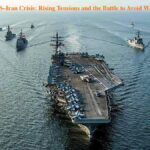
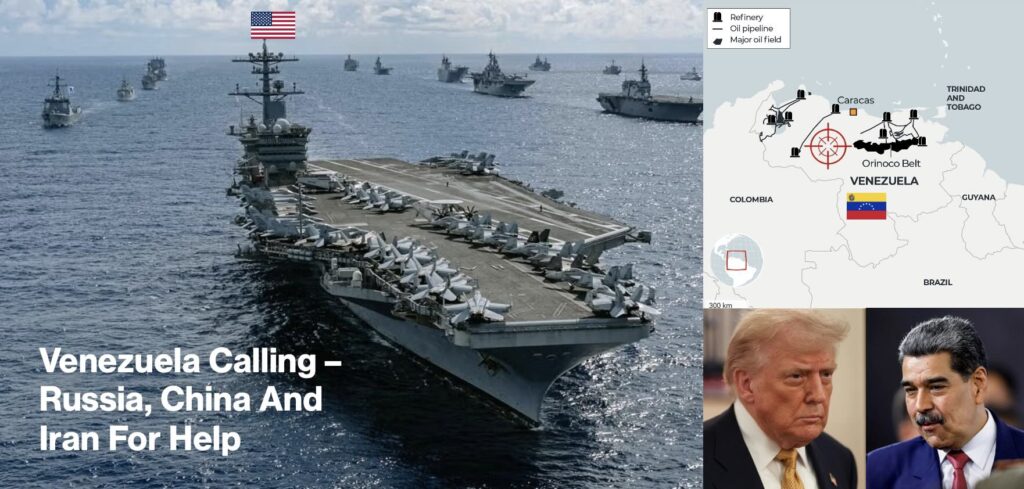
In recent weeks the Pentagon announced the deployment of its premier carrier, the USS Gerald R Ford strike group, into the Caribbean theatre — a decision that analysts say signals a readiness to strike land-based targets, not just sea-borne drug vessels.
The U.S. has also carried out lethal strikes on vessels off Venezuela’s coast, claiming they were linked to narco-trafficking networks. Venezuelan President Nicolás Maduro has repeatedly decried the operations as an “illegal” attempt to rewrite the region’s power balance.
Venezuela Turns to Russia, China and Iran for Help
Faced with what Caracas calls growing U.S. threats, President Maduro has dispatched letters to Moscow and Beijing and reached out to Tehran, requesting military assistance. According to U.S. government documents obtained by the Washington Post, Venezuela is seeking advanced radar systems, aircraft repairs, potentially missiles from Russia, and expanded defence cooperation with China and Iran. The move underlines how Venezuela views itself in a geopolitical bind — sandwiched between domestic crisis, a powerful neighbour and deficient defence infrastructure.
Russia’s Calculus: Wants Revenue, Avoids Another Front
Russia finds itself walking a tightrope. On the one hand, it sees a chance to bolster its global reach, sell arms and secure revenue as its war in Ukraine drags on. On the other, it is already stretched thin. Moscow publicly condemned a U.S. strike on an alleged drug vessel near Venezuela and expressed solidarity with Caracas, but stopped short of committing combat troops. Reuters Experts point out that while Russia could help with radar systems, aircraft maintenance and missiles, a full-scale engagement would expose it to a direct confrontation with the U.S. — an uncomfortable prospect while the war in Ukraine continues.
China and Iran: Behind the Scenes or On the Frontline?
Beijing’s role so far appears pragmatic rather than confrontational: supplying infrastructure upgrades and defence technology rather than boots on the ground. China has historically avoided military entanglements outside its core region, especially ones that might provoke Washington. Meanwhile Iran, experienced in supplying drones and asymmetrical warfare systems, may offer Venezuela less conventional tools. Analysts caution that Iranian involvement would significantly raise the stakes and possibly catalyse a broader regional response.
How Close Is The Region to War?
Despite the military hardware and rhetoric, a full-scale U.S. invasion of Venezuela remains unlikely — for now. The logistics are daunting, the terrain difficult and regional political costs high. Instead, what is more plausible are targeted strikes or raids, covert operations, and a sustained campaign of diplomatic, economic and military pressure aimed at destabilising Maduro’s regime rather than outright conquest.
Key markers to watch include: U.S. ground combat units inside Venezuela, Russian or Chinese forces deployed on Venezuelan soil, or direct military clashes between U.S. and Russian/Chinese forces. Until then, it remains a tense showdown rather than a declared war.
Geopolitical Stakes and the Oil Factor
The stakes extend far beyond Caracas’ borders. If Venezuela becomes a theatre for great-power competition, the Western Hemisphere may see a strategic shift long avoided since the Cold War. With Caracas rich in oil and strategically placed, a destabilised Venezuela could ripple through global energy markets and alliances. The U.S. insists it is targeting narcotics, but many analysts argue that the drug war framing serves as a cover for broader geopolitical objectives.
What Comes Next?
For now, Venezuela is scrambling to shore up its defences, Russia is debating how much to commit, China remains cautious, and Iran may opt for asymmetric support. The U.S. retains overwhelming advantage in power projection, but the very deployment of its carrier strike group so close to Venezuelan shores demonstrates how seriously Washington now views the challenge.
As tensions simmer, the region watches – and Latin America’s “Zone of Peace” rhetoric is being tested in a dramatic new way.
Relevant Readings:
US Osprey Flights and Aircraft Carrier Deployment Near Venezuela: A Pressure Tactic
The Hidden Contest for Venezuela’s Oil & Gold: America’s Positioning from Drug War to Resource War
Narco-Wars on the High Seas: How Trump’s Drug War Against Venezuela Risks a New Caribbean Crisis
Venezuela’s Oil, Gold and Power: The Silent War Beneath the Soil