Trump Attack on Ilhan Omar Reignites Debate on Race, Faith, and Immigration in America
The latest Trump attack Ilhan Omar episode has drawn the United States back into a heated discussion on race, immigration, and the treatment of minority lawmakers. Donald Trump revived a long-running and repeatedly debunked allegation about Congresswoman Ilhan Omar, while also mocking her religious attire and questioning her role in American public life. His comments have intensified political polarisation and triggered strong responses from advocacy groups.
Trump’s New Remarks and Their Context
Fresh Insults Target Heritage and Faith
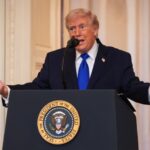
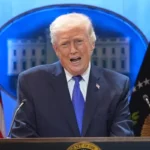
Addressing supporters during a public event, Trump claimed once again that Ilhan Omar had “married her brother,” repeating a rumour dismissed by every credible investigation. He also mocked her hijab, describing her as “always wrapped in her swaddling hijab,” drawing cheers from his audience.
Trump challenged Omar’s suitability for public office and attacked her Somali heritage. He alleged that Somalia remained “a decadent, backward, crime-ridden nation,” and said she should “stop complaining about America.” His remarks combined cultural stereotyping with a renewed call to “permanently ban migration from all Third World countries.”
These statements align with his long-standing political strategy that frames immigrant lawmakers as ungrateful and unpatriotic.
The ‘Married Her Brother’ Allegation Revisited
A Claim Without Evidence
The rumour that Ilhan Omar committed immigration fraud by marrying her brother has been the subject of repeated fact-checking by Reuters, AP, Snopes, and major U.S. news organisations. No verifiable evidence has ever emerged to support the allegation.
Omar has dismissed the claim as “absurd and offensive.” Nevertheless, Trump’s repeated use of the accusation ensures that it remains a staple of political attacks against her. The persistence of the rumour demonstrates how misinformation becomes a tool for political mobilisation.
Reactions and Impact Across Communities
Advocacy Groups Warn of Rising Hostility
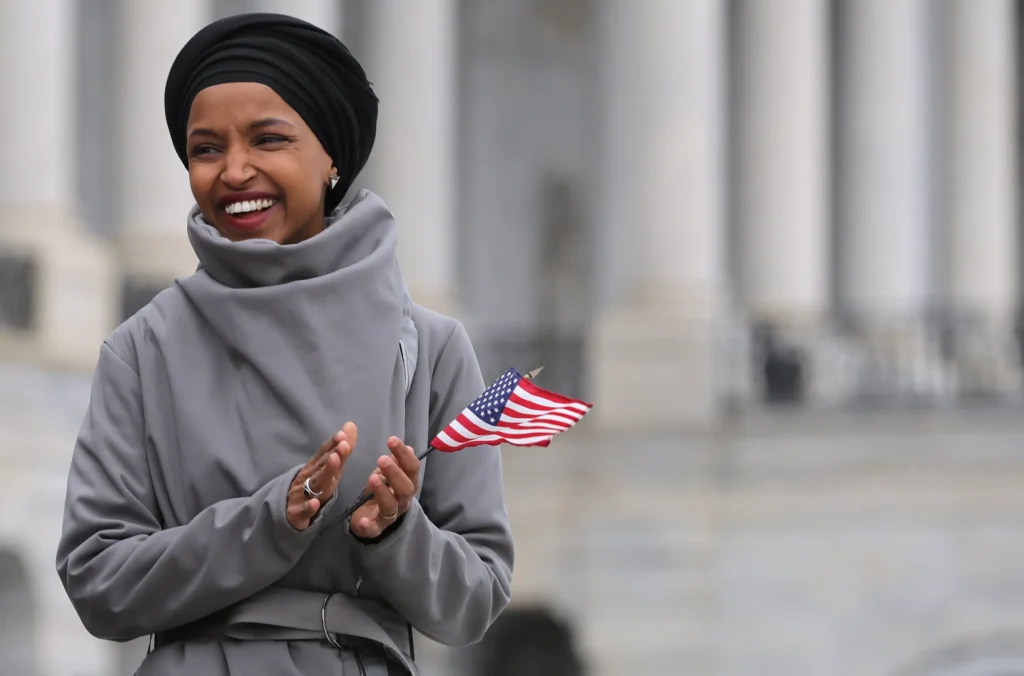
Omar, a U.S. citizen since age seventeen, has faced hostility since entering Congress in 2018. She responded quickly to Trump’s latest outburst, arguing that his rhetoric fuels anti-immigrant and anti-Muslim sentiment. Civil rights groups echoed her concerns. They warned that such statements normalise bigotry and may place Muslim Americans at greater risk.
Fact-checking organisations have restated that accusations targeting Omar are baseless. They caution that political leaders repeating falsehoods lend legitimacy to disinformation ecosystems.
Polarisation Among Voters
Trump’s remarks resonate strongly with sections of his voter base that remain sceptical of immigration and critical of multiculturalism. However, they energise opposition groups who see his rhetoric as racist and dangerous. The clash amplifies America’s broader culture war over identity, nationalism, and religious freedom.
Omar’s Political Journey and Broader Context
From Refugee to Congress
Omar’s rise, from a Kenyan refugee camp to a seat in the U.S. House of Representatives, remains one of the most notable immigrant success stories in contemporary American politics. She represents Minnesota’s 5th district and advocates for progressive policies such as climate action, student debt relief, and immigration reform.
India, Kashmir, and Global Reactions
Her criticism of India’s human rights record, remarks on Hindu nationalism, and her controversial 2022 visit to Pakistan-administered Kashmir have already placed her at the centre of international debates. Indian officials and diaspora groups accuse her of echoing Pakistani narratives, while Omar insists she only highlights global injustices.
Trump often uses these controversies to present her as hostile to U.S. allies and as a figure representing “divisive politics.”
A Broader Political Strategy at Play
Targeting Women of Colour in Congress
Trump’s attack on Ilhan Omar fits a pattern of targeting female lawmakers of colour, including Alexandria Ocasio-Cortez, Rashida Tlaib, and Ayanna Pressley. He frames their criticism of U.S. policies as ungrateful and unpatriotic. Critics argue that this strategy deliberately inflames racial tensions to rally his political base.
Shaping the Immigration Debate
Trump’s promise to restrict migration from “Third World countries” forms a major pillar of his political messaging. By invoking Omar’s background, he seeks to strengthen his argument for tougher border controls and ideological screening.
Political analysts note that such remarks help him dominate news cycles and reinforce his outsider-versus-establishment narrative.
What It All Signifies
The latest Trump attack Ilhan Omar controversy brings familiar themes back into America’s political arena: identity, religion, immigration, and truth in public discourse. Trump’s remarks energise supporters and infuriate opponents. They also highlight the challenges faced by minority lawmakers navigating a volatile political environment. As the election season intensifies, these confrontations will likely continue shaping debates on what America stands for—and who gets to define it.