A New Strategic Era: Trump, MBS Seal Sweeping U.S.–Saudi Defense & Economic Reset in Washington
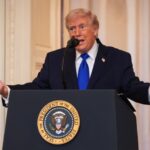
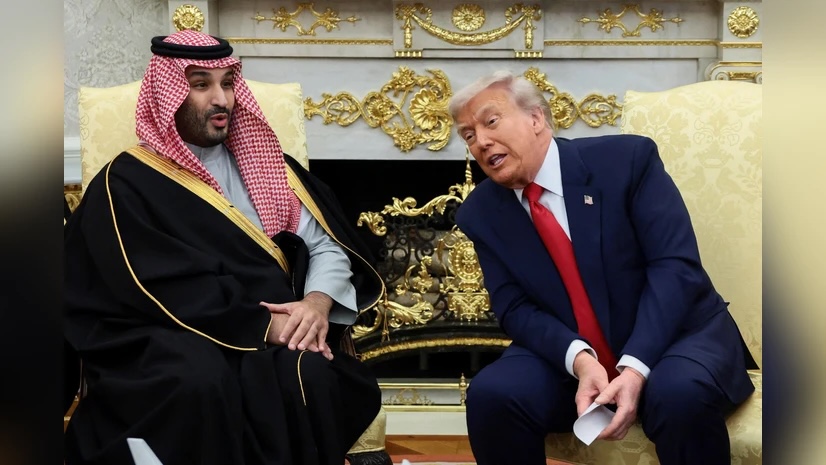
Washington, D.C. — In a visit being described as the most consequential by a Saudi crown prince to the United States in years, Crown Prince Mohammed bin Salman (MBS) and U.S. President Donald Trump have announced a sweeping strategic-defense and economic partnership that could significantly reshape the U.S.–Saudi relationship.
Over the past few days, a cluster of high-stakes deals has emerged — spanning critical minerals, energy, heavy armour, next-generation combat aircraft, and unmanned systems — all wrapped in a Strategic Defense Agreement (SDA) that both sides cast as a reset and upgrade of ties.
Critical Minerals: A Rare Earths Bet Beyond Oil
At the heart of the partnership is a landmark deal in rare earths and critical minerals, aiming to reduce global dependence on China’s dominance in processing. Saudi Arabia’s Mining Company, Maaden, and U.S. based MP Materials have signed a memorandum of understanding (MoU) to build a vertically integrated rare-earths value chain in the Kingdom.
The planned facility will cover the full downstream chain: exploration, separation, refining, and magnet production — critical for everything from electric vehicles and renewable energy to semiconductors and defence electronics.
According to Maaden, this aligns tightly with Saudi Vision 2030, which envisions mining as a pillar of economic diversification.
Strategically, the U.S. Department of Defense (DoD) will have a stake in the joint venture — MP Materials and the DoD together will hold 49%, while Maaden retains a minimum of 51%, giving the U.S. a significant oversight role.
This move is being explicitly framed as a way to “harden Western supply chains” against geopolitical risk by reducing overreliance on Chinese refiners. While exact dollar estimates on the project haven’t been publicly confirmed, Saudi officials have long spoken of “trillions” of dollars’ worth of untapped mineral resources in the Kingdom.
Energy Reinforced: $30 Billion in U.S.–Saudi Energy Deals
In Washington, the parties also announced $30 billion in new or expected energy-sector agreements. According to Aramco CEO Amin Nasser, these include investments across conventional oil and gas, petrochemicals, and low-carbon or transition technologies.
The framing is dual: for Saudi Arabia, this supports its Vision 2030 goal of economic diversification; for U.S. firms, it promises long-term roles in Saudi upstream and downstream energy projects and technology exports.
Strategic Defense Agreement: Tanks, Alliance, and Burden Sharing
Perhaps the most headline-grabbing is the Strategic Defense Agreement (SDA), under which the U.S. has cleared the sale of nearly 300 M1 Abrams main battle tanks to Saudi Arabia.
The White House’s fact sheet emphasizes that the tank sale will help Riyadh “build up its own defense capabilities” while preserving American manufacturing jobs. Analysts see it as part of a broader burden-sharing arrangement, bolstering Saudi ground forces while consolidating Washington’s role as its primary security partner.
In tandem, Trump announced that Saudi Arabia is being designated a Major Non-NATO Ally (MNNA) — a status that grants military and economic privileges, including access to advanced defence technologies and stockpiling rights.
F-35 Deal: Political Gamble, Tactical Reset
Arguably the most controversial announcement: Trump confirmed U.S. approval of F-35 fighter jet sales to Saudi Arabia, a long-standing wish for Riyadh.
According to reports, Saudi Arabia has requested up to 48 F-35 aircraft. Trump characterised the jets as “pretty similar” to those bought by Israel.
However, officials suggest that the configuration delivered to Saudi Arabia will likely be less advanced than Israel’s F-35I “Adir,” particularly in software or sensor capabilities — a measure presumed meant to preserve Israel’s Qualitative Military Edge (QME).
The decision is politically charged. Critics cite Riyadh’s human-rights record, its involvement in Yemen, and the unresolved issues of Jamal Khashoggi. There are also concerns in Israel over any erosion of its air superiority, even if the jets sold to Saudi Arabia are downgraded.
Game-Changer Next Generation Drones
The SDA’s reach extends into next-gen unmanned aerial systems. Reports indicate that General Atomics Aeronautical Systems (GA-ASI) is in advanced talks with Riyadh for up to 200 MQ-9B Reaper / SeaGuardian drones, along with around 200 “Gambit” Collaborative Combat Aircraft (CCA) / loyal-wingman drones.
These CCA drones represent a shift in airpower doctrine: they are highly autonomous craft meant to fly alongside manned fighters (such as the F-35), conducting missions like ISR (intelligence, surveillance, reconnaissance), jamming, decoy, or even strike operations.
GA-ASI’s president, Dave Alexander, has said the package would involve local manufacturing in Saudi Arabia, creating U.S. jobs and transferring advanced technology to Saudi defence firms.
Broader Tech, Nuclear, & AI Collaboration
Beyond hardware, Trump and MBS inked or announced cooperation in several high-technology domains:
Civil Nuclear Energy: A framework for nuclear energy cooperation was established, aimed at long-term collaboration in the nuclear fuel cycle.
AI / Data Centers: An AI Memorandum of Understanding was announced, laying groundwork for U.S.–Saudi collaboration on data centres, advanced chips, and possibly sovereign data infrastructure.
Critical Minerals & Defense Tech: The rare-earths MoU (with MP Materials) dovetails with defense ambitions, offering a steady domestic source for materials critical in advanced electronics, missiles, sensors, and more.
Saudi Arabia’s air and missile defence posture, already heavily integrated with U.S.-origin systems like Patriot and THAAD, could increasingly rely on localised production — including via Saudi Arabian Military Industries (SAMI)— of components such as power units or subsystems, enabled by technology transfer under the SDA.
Strategic Implications: A High-Stakes Rebalancing
For Saudi Arabia
The package paves the way for a fifth-generation air force, heavy armor reinforcements, and a layered defense architecture with both manned and unmanned systems.
It embeds Saudi Arabia in critical-mineral supply chains, giving it a strategic industrial future beyond oil.
Local production and advanced partnerships (in AI, nuclear, defense) align with Vision 2030’s goal of economic diversification.
For the United States
The deals are pitched as a way to pull Riyadh further back into a U.S.-led orbit, limiting the appeal of China and Russia.
The SDA helps to secure long-term business for U.S. defense firms and ensures that Saudi Arabia remains dependent on American maintenance, training, and technology.
The arrangement strengthens U.S. strategic posture in the Gulf and potentially broadens the burden-sharing of regional security.
Regionally
Israel: While the F-35 deal raises alarms, Washington seems to have balanced it by preserving Israel’s technological edge through configuration controls. Nevertheless, Saudi Arabia’s arrival into the F-35 club is a major shift.
Iran & Proxies: A Saudi arsenal that includes stealth fighters, loyal-wingman drones, and modern tanks significantly raises the cost for adversaries.
Gulf Dynamics: Other GCC states may recalibrate their own defence and industrial policies in response, potentially seeking similar high-tech partnerships.
Political Framing & Risks
Trump has cast the SDA as a signature success of his “America First” diplomacy: Saudi Arabia will pay, U.S. factories will benefit, and the Kingdom will be formally tied to Washington as a Major Non-NATO Ally.
However, this bonanza comes with risks:
Human rights scrutiny: Critics are already warning that strategic investment should not wash away accountability for past abuses, including the Khashoggi killing.
Congressional hurdles: Some of these arms deals (especially for F-35s) may face strong scrutiny in Congress, particularly from lawmakers concerned about the regional balance, Israel’s QME, and technology security.
Export controls & technology leakage: The sale of advanced systems like F-35s and wingman drones naturally raises questions about how technology will be safeguarded, especially given Saudi Arabia’s growing ties with other global powers.
A Turning Point
Crown Prince Mohammed bin Salman’s Washington trip signals more than just a transactional visit — it appears to be the launch of a new chapter in U.S.–Saudi relations, one built on deep strategic defense alignment, high-tech cooperation, and shared economic ambition.
For Saudi Arabia, it’s a bold bet on future warfighting, industrialization, and geopolitical weight. For the United States, it’s a recalibrated alliance: not only securing a key regional partner, but also locking in critical supply chains and influence in a volatile Middle East.
Whether this reset will survive domestic criticism, strategic blowback, and the tests of implementation remains to be seen. But one thing is clear: both countries are placing very big chips on a shared future — one less dependent on oil and more anchored in technology and defense.