The Day Washington Walked Away from NATO
Moscow/Brussels, 3 December 2025 — The transatlantic alliance absorbed one of its sharpest shocks in decades today as the U.S. bypasses NATO and entered direct negotiations with Russian President Vladimir Putin, leaving Europe’s capitals stunned and publicly sidelined.
The rupture unfolded with extraordinary clarity. At the very hour NATO’s thirty-one foreign ministers assembled in Brussels, U.S. Secretary of State Marco Rubio stayed back in Washington, skipping a meeting that no American chief diplomat has boycotted in more than twenty years. The United States — long the strategic anchor and financial backbone of NATO — sent only Deputy Secretary Christopher Landau to fill the empty seat.
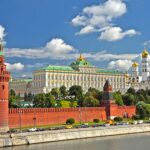
Across the continent, President Trump’s personal envoy Steve Witkoff walked into the Kremlin for a four-hour session with Putin. Russian state media broadcast images of the two men seated in the ornate Alexander Hall, reviving memories of Cold War-era diplomacy conducted far from European oversight. Kremlin spokesman Dmitry Peskov called the talks “substantive and constructive.” His follow-up message carried a sharper edge: “Certain European governments are doing everything to derail a realistic settlement.”
A Leaked Peace Plan That Split the West
At the core of the crisis is a 28-point draft peace plan for Ukraine, revealed by Reuters on 19 November. European diplomats later confirmed that the document was crafted almost entirely by Witkoff and Russian negotiator Kirill Dmitriev. Brussels, Paris, Berlin, and London were barely consulted.
The draft required Ukraine to:
- Permanently surrender all of Donetsk and Luhansk,
- Accept severe restrictions on its future armed forces, and
- Abandon any attempt to join NATO.
Europe reacted with disbelief and then anger. Within days, EU capitals drew up their own 28-point counter-proposal. It demanded security guarantees for Kyiv and a full Russian withdrawal to pre-2014 borders. Moscow rejected those terms immediately.
Diplomatic sources say Witkoff and Putin today discussed a 19-point American–Russian compromise, a more compact version of the original plan but still carrying most of Russia’s core demands.
Europe Watches the War Being Negotiated Without Europe
The atmosphere inside NATO headquarters was one of quiet panic. For Eastern Europe — nations that view Russia as an immediate threat — the feeling was closer to fear.
One senior diplomat from the region said bluntly:
“We woke up to discover the war might be settled without us — and possibly against us.”
A Western European minister was even more direct:
“America is reminding everyone who pays the bills. Washington and Moscow will decide; Europe will endorse or be excluded.”
The frustration stems not only from exclusion, but from exposure. Without the United States, Europe lacks the military muscle to enforce its own red lines in any final settlement.
The White House Stands Firm
The White House did nothing to soften the blow. Minutes after Witkoff’s plane departed Moscow, it issued a statement declaring that President Trump “will not allow endless bureaucracy in Brussels to prolong a war that should have ended years ago.”
The message landed with the force of a warning. Washington intends to drive the process, with or without Europe’s participation.
European Commission President Ursula von der Leyen, attending NATO’s ministerial session as an observer, told reporters that “any durable peace must respect Ukraine’s sovereignty and Europe’s security.” Yet officials acknowledged privately that the EU currently lacks the leverage to shift the conversation if the U.S. chooses a bilateral path with Moscow.
A Historic Crack in Post-War Western Unity
As night settled over Brussels, NATO’s headquarters — normally a symbol of Western cohesion — felt unusually hollow. Diplomats lingered in the corridors, whispering assessments that would have been unthinkable a year ago.
One long-serving alliance official summed up the mood in a single sentence:
“We just watched the post-1945 order crack in real time.”
Whether that crack becomes a fracture may depend on how far Washington pushes its direct engagement with Moscow — and whether Europe can rediscover a united voice before events outrun it.
A New Strategic Reality Emerges
The day’s events exposed a historic fault line in transatlantic politics. The U.S. bypasses NATO at a moment when the future of Ukraine — and the balance of power in Europe — hangs in the balance. Europe stands shocked, divided, and increasingly aware of its military dependence. Russia sees opportunity. Washington sees urgency. And the rest of the world sees an alliance questioning its own cohesion.
2026 may determine whether NATO adapts — or whether the old architecture of the West continues to fracture, piece by piece.