Toxic Cough Syrup and Tragedy: The Alarming Drug Regulatory Failure Exposed
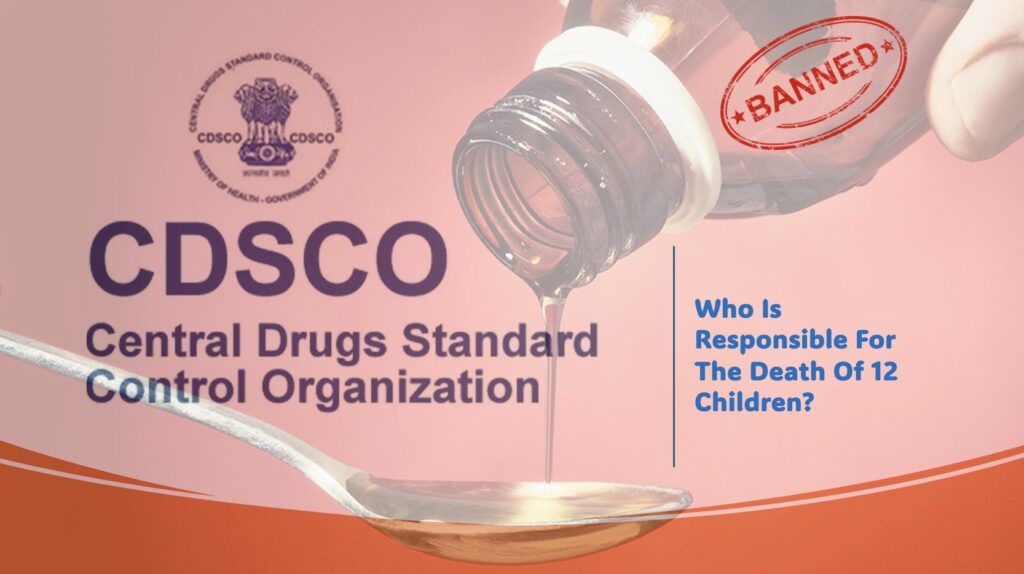
The recent tragic deaths of 12 children in Madhya Pradesh, India, following consumption of a contaminated cough syrup, Coldrif, have shocked the nation. As per media reports, laboratory tests revealed the syrup contained dangerously high levels (46-48.6%) of diethylene glycol (DEG), a toxic industrial chemical commonly used in antifreeze and brake fluids. The children developed acute kidney failure, leading to fatal outcomes. Coldrif was manufactured by Sresan Pharmaceuticals in Tamil Nadu and prescribed by Dr. Praveen Soni, a local doctor in Chhindwara district. Immediately after confirmation, the state government banned Coldrif and suspended the prescribing doctor, while registering FIRs against both the pharmaceutical company and medical practitioner. Compensation schemes were announced, and multi-state raids and investigations are ongoing to curb further harm.
Background Investigations
The deaths began emerging in early September 2025 in Parasia tehsil of Chhindwara district. Children below five years showed initial cold and fever symptoms and were treated with various cough syrups including Coldrif. Within days, their condition deteriorated with reduced urine output and acute kidney injury, confirmed by biopsy as acute tubular damage caused by toxin ingestion. Initial probes ruled out other causes such as water contamination or infections.
Laboratory analysis by Tamil Nadu and Madhya Pradesh drug control departments confirmed adulteration of the syrup with DEG well beyond permissible limits. The regulatory bodies responded by launching risk-based inspections across pharmaceutical manufacturing units producing similar drugs in multiple states. Five affected children remain hospitalised under close care as investigations continue.
Government Regulatory Framework and Enforcement Challenges
India’s drug regulatory framework, governed by the Drugs and Cosmetics Act (1940), delegates authority between the Central Drugs Standard Control Organization (CDSCO) and State Drug Regulatory Authorities (SDRAs). CDSCO provides policy direction, product approvals, and clinical trial oversight, while SDRAs issue licenses, conduct factory inspections, sample testing, and enforce compliance locally. Drug Inspectors in these bodies have legal powers to investigate, seize, and prosecute under the law.
Despite this robust legal framework, critical enforcement gaps plague the system. Recent reforms such as mandatory Good Manufacturing Practices (GMP) certification, joint central-state pre-licensing inspections, and surveillance mechanisms have been implemented. However, enforcement remains weak particularly in tier 2 and 3 cities and rural areas. Many doctors prescribe medicines from local or own-brand pharmaceutical companies that escape rigorous scrutiny, often linked to inadequate manufacturing controls.
Systemic problems such as insufficient drug inspector strength, bureaucratic inertia, corruption, and political interference reduce effective monitoring. Regular irregular audits and poor coordination between central and state bodies allow substandard and dangerous medicines to circulate, costing lives needlessly.
Accountability, Punishment, and the Call for Reform
Accountability for regulatory failure extends beyond manufacturers and prescribing doctors to government agencies mandated to protect public health. Drug inspectors and officials who neglect duties or enable malpractices should face strict penalties. Yet, current penalties for violations, including fatalities, are insufficient and inconsistently enforced. Fines are low, and jail terms are rarely applied. This lack of deterrence fosters impunity.
In the MP case, prompt suspension and arrest of the prescriber and FIR registration against the manufacturer symbolise initial accountability. However, accountability of the responsible corrupt officers within regulatory agencies is not reported. The broader failure of regulatory enforcement and delayed detection of adulteration highlight systemic weaknesses demanding comprehensive reform.
Urgent reforms include:
Increasing drug inspector strength with adequate training and independence to conduct regular, unannounced checks.
Unifying the regulatory framework to centralize standards, inspections, and accountability, eliminating overlaps and gaps.
Strengthening legal provisions to impose stringent criminal penalties for violations causing serious harm or death, ensuring swift judicial actions.
Digitizing the pharmaceutical supply chain for traceability to prevent circulation of adulterated drugs.
Mandatory pre-market and periodic laboratory testing of pediatric and high-risk medicines.
Enhancing public awareness among doctors and consumers about the risks of locally marketed unregulated pharmaceuticals.
Protecting whistleblowers reporting drug safety violations from retaliation.
A Wake-Up Call: Reforming India’s Drug Oversight for Patient Safety
The cold, hard truth behind the Madhya Pradesh cough syrup tragedy reveals profound flaws in drug regulation and enforcement across India. This preventable loss of young lives demands not just empathy and compensation, but decisive government action to overhaul inspection, accountability, and legal frameworks around medicine safety. Without urgent reforms, such tragedies will recur, undermining public trust in the healthcare system.
India’s pharmaceutical industry is a global powerhouse, but it must be anchored in uncompromising patient safety standards enforced by a strong, transparent, and unified regulatory regime. The government must ensure that all stakeholders—manufacturers, doctors, inspectors—are held strictly accountable to uphold the sanctity of life and health.