India’s Su-57 Interest: A Timeline of Hype, Headlines, and Shifting Narratives
India’s alleged interest in Russia’s Su-57 fifth-generation fighter jet has followed a familiar script. Unverified claims from Moscow trigger headlines in India. Analysts and so-called defence pandits then amplify these claims into near-certainties. Reality eventually returns when the Indian Air Force signals caution. This cycle has repeated with unusual intensity over the last three months. It even reversed twice in the past two days due to President Putin’s planned Delhi visit in early December 2025. These swings reveal more about pressures shaping India’s defence discourse than about New Delhi’s actual procurement priorities.
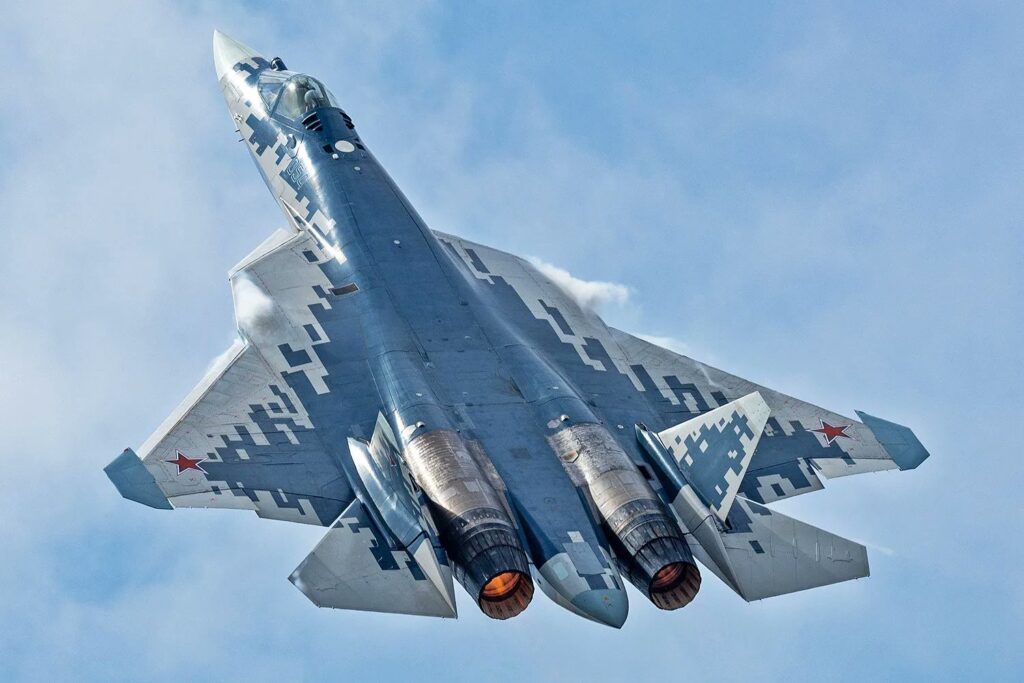
At the heart of this narrative whiplash lies the Dubai Airshow of November 2025. Russia gave the Su-57 its most exuberant export push yet, complete with thrust-vectoring displays that dominated the social media clips of the event. But airshow theatrics do not translate into defence commitments, and India has historically insulated its major acquisitions from this spectacle-driven momentum. The problem is that much of the media ecosystem—especially defence portals and panelist-driven commentary—treats any promotional signal from Moscow as evidence of an imminent deal.
A closer look at the reporting timeline shows how quickly hype builds and how abruptly it collapses.
The Timeline of Headlines and Hype (September 01 – November 28, 2025)
September: The Quiet Spark
The cycle began on September 01, when India Today reported on Russian assessments for potential Su-57 production in India. Followed by another similar news by Times of India. No confirmation from the MoD, none from the IAF—yet it provided the first ember.
Early November: HAL Enters the Frame
Between November 07 – 17, portals reported that Russia had submitted documents to HAL and that domestic readiness stood at “50%.” These claims flowed exclusively from Moscow. Neither HAL nor the MoD endorsed the numbers.
Mid-November: The Dubai Effect
Between November 19–21, the Su-57 narrative ballooned:
- “Unrestricted technology transfer”
- “All Indian demands acceptable”
- “Joint production on the table”
- “Export-ready variant showcased”
- “India as the preferred partner”
Dubai’s optics created a momentum that newsrooms could not resist. For a few days, the Su-57 was portrayed as the answer to India’s 5th-generation fighter gap—despite the absence of any Indian confirmation.
Late November: From Acceleration to Abrupt Deceleration
By November 22, sceptical voices entered the discussion. Analysts emphasised India’s priorities: Rafale expansion, TEDBF development, AMCA timelines, and the inefficiency of betting on a platform still undergoing iterative upgrades.
On November 27–28, the tonal shift was unmistakable:
Reports highlighted that India was focused on acquiring additional S-400 and S-500 squadrons.
The Su-57 was described as “off the radar.”
IAF’s Sees Su-57 as a Strike Platform, Eyes Kinzhal Hypersonic Missile Integration
Commentaries noted that the IAF viewed it primarily as a strike platform, not a frontline air-superiority solution.
Three weeks of hype ended exactly where New Delhi had stood all along: evaluating options, making no commitments.
What This Whiplash Reveals
(1.) Russian Signals Are Treated as Indian Intent
Each time Moscow floats an offer, the Indian defence conversation inflates it into action. Russian press notes and Rosoboronexport statements are repackaged as “exclusive developments.” The result is performative reporting that prioritises velocity over verification.
(2.) Silence from the MoD Becomes Narrative Filler
India’s Ministry of Defence rarely comments on exploratory talks. This silence becomes a blank canvas that analysts colour at will. Speculation grows into assumed intent simply because no official denial is issued.
(3.) Expert Commentary Shifts with the Headlines
The same voices who declare the Su-57 a “game-changing acquisition” on Monday invoke “strategic autonomy” on Thursday to explain why India is reluctant. This elasticity erodes public trust and blurs the line between analysis and improvisation.
(4.) Procurement Timelines Are Rarely Scrutinised
Major defence purchases follow defined processes—RFI, RFP, trials, cost negotiations—but the media rarely presses for clarity. A single feasibility document to HAL becomes “HAL nears readiness.” Instead of questioning Moscow’s narrative, the coverage adopts it.
(5.) India’s Actual Priorities Remain Consistent
While the media oscillates, New Delhi does not. India’s airpower roadmap has remained stable:
Expansion of Rafale squadrons
Rollout of AMCA, LCA Mk2
Naval aviation through Rafale-M and indigenous TEDBF
Hypersonic and engine collaborations with Western partners
Continued S-400 induction
Within this structure, the Su-57 occupies a peripheral—not central—position.
Looking Beyond the Noise
The Su-57 saga is not just about one aircraft. It exposes the widening gap between India’s structured, methodical defence planning and the media’s appetite for immediacy. Russia will continue to pitch the Su-57 because India represents a prestigious export opportunity. And India will continue to evaluate it because every major power keeps all options on the table.
But until reporting centres on verifiable timelines, procurement policy, and long-term force planning, the cycle of hype will keep returning—loud, brief, and unproductive.
If the defence commentary ecosystem wants credibility, it must pivot from echoing press releases to demanding answers that matter: timelines, costs, integration burdens, lifecycle expenses, and doctrinal fit. Otherwise, the Su-57 will remain what it has been throughout 2025—a headline generator rather than a strategic decision.