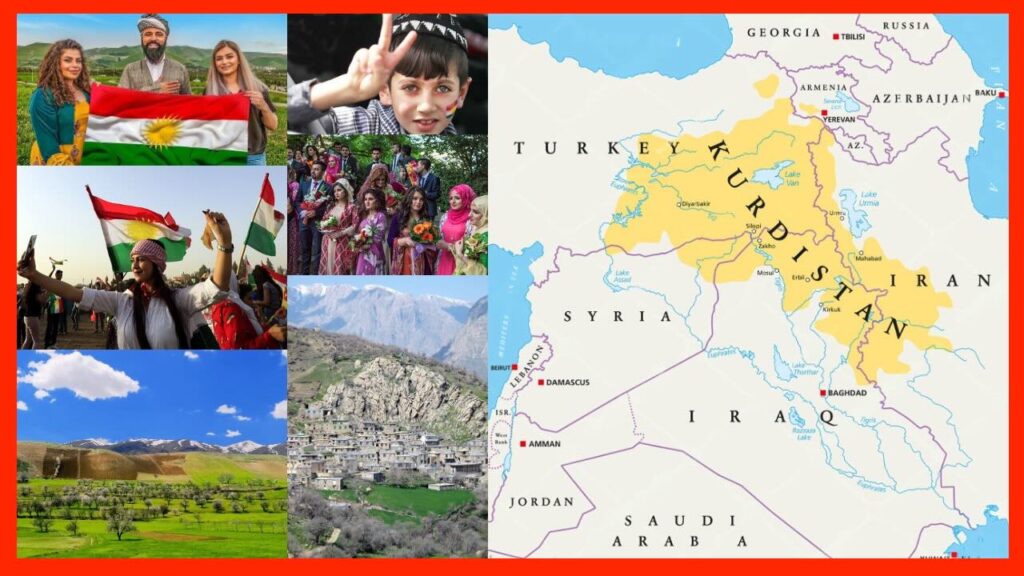
Why Kurdistan Still Has No Country: History, Geography, and Geopolitics
The Kurdish independence struggle is one of the longest unresolved political questions of the modern world. For more than a century, the Kurds have pursued statehood through revolts, negotiations, alliances, and sacrifices. Yet, in 2026, they remain the world’s largest stateless nation.
With a population estimated between 30 and 45 million, a distinct language group, and a strong cultural identity, the Kurds possess many of the attributes of a nation. However, history, geography, and geopolitics have repeatedly denied them sovereignty. Their story is not one of absence of identity, but of absence of opportunity.
Historical Roots and Broken Promises
The Kurds trace their origins to Indo-Iranian peoples who inhabited the Zagros Mountains and northern Mesopotamia. Ancient Assyrian records mention early Kurdish ancestors as far back as the third millennium BCE.
During the medieval period, Kurdish political influence reached its peak under Saladin, whose Ayyubid dynasty ruled territories from Egypt to Syria. His legacy continues to shape Kurdish historical consciousness and pride.
From the sixteenth century onwards, Kurds lived under Ottoman and Persian rule, enjoying limited autonomy through tribal systems. However, centralisation steadily reduced this space. After the First World War, hopes of independence emerged with the Treaty of Sèvres. These hopes collapsed after resistance led by Mustafa Kemal Atatürk, resulting in the Treaty of Lausanne in 1923.
Lausanne divided Kurdish lands between four states. This diplomatic decision, taken without Kurdish participation, remains the single most damaging moment in Kurdish political history. It transformed a homeland into a patchwork of minorities.
The twentieth century brought repeated repression. The most brutal episode occurred under Saddam Hussein, whose Anfal campaign devastated Kurdish communities in Iraq during the 1980s.
Culture, Language, and Collective Identity
Kurds belong to the Indo-Iranian branch of the Indo-European family. Their main dialects include Kurmanji, Sorani, Gorani, and Zaza, written in different scripts depending on state boundaries.
Islam is the dominant religion, but significant minorities exist. The Yezidi community suffered genocide at the hands of Islamic State in 2014, reinforcing Kurdish vulnerability.
Cultural life remains vibrant. Nowruz celebrations, traditional music, epic poetry, and handicrafts reinforce shared memory. Figures such as Leyla Qasim symbolise resistance.
However, ideological divisions between tribal conservatism, leftist movements, and nationalist factions continue to weaken political unity.
A Homeland Without Borders: Where the Kurds Live
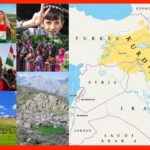
The Kurdish homeland, historically known as Kurdistan, stretches across four modern states. It spans southeastern Turkey, northwestern Iran, northern Iraq, and northeastern Syria.
These regions share geography, culture, and language. However, political borders imposed after 1918 fractured this continuity. No single Kurdish region enjoys territorial depth, economic independence, and military security simultaneously.
The largest Kurdish population lives in Turkey, followed by Iran, Iraq, and Syria. Large diaspora communities also exist in Europe, especially in Germany, as well as in North America.
This fragmentation remains the core structural weakness of Kurdish nationalism. It prevents the emergence of a unified political centre.
Iraq: Autonomy Without Sovereignty
The most advanced Kurdish political entity exists in the Kurdistan Region of Iraq. It has its own parliament, government, and security forces.
The 2017 independence referendum reflected overwhelming popular support for statehood. However, Baghdad’s military response, international rejection, and economic pressure quickly neutralised the outcome.
Leaders such as Masoud Barzani and Nechirvan Barzani now prioritise stability and reform over secession.
Economic dependence on federal oil agreements and Turkish export routes limits strategic autonomy. Political rivalries further weaken institutional capacity.
Iraqi Kurdistan demonstrates that autonomy is possible. It also demonstrates how fragile that autonomy remains.
Syria: The Rise and Retreat of Rojava
During Syria’s civil war, Kurds established self-rule through the Autonomous Administration of North and East Syria, protected by the Syrian Democratic Forces.
Rojava attracted global attention for its emphasis on local democracy and gender equality. For a time, it appeared to offer a new model of Kurdish governance.
However, after political changes in Syria post-2024, government forces reclaimed most Kurdish-held territory. A 2026 agreement integrated SDF units into state structures.
Cultural rights were recognised. Political autonomy disappeared. Rojava’s experiment has effectively ended.
Turkey: From Insurgency to Political Integration
Turkey hosts the largest Kurdish population. For decades, conflict between the state and the Kurdistan Workers’ Partydefined Kurdish politics.
In 2025, imprisoned leader Abdullah Öcalan called for disarmament. The organisation dissolved soon afterwards.
President Recep Tayyip Erdoğan promoted a “terror-free Türkiye” process focused on reintegration and development.
Armed separatism has largely ended. The Kurdish question in Turkey is now political rather than military.
Iran: Discontent Without Direction
Iranian Kurds remain economically marginalised and politically restricted. Groups such as PJAK conduct occasional attacks.
However, strong state control and lack of international backing prevent sustained mobilisation. Kurdish protests usually merge with broader national unrest.
Statehood remains a distant prospect.
Why the Kurdish Moment Keeps Failing
Despite numbers and culture, Kurdish nationalism suffers from persistent weaknesses.
Leadership remains fragmented. Rival parties pursue competing agendas. Geography remains hostile to sovereignty. Governance standards remain uneven. Economic dependence persists. Generational fatigue has set in.
Many young Kurds now prioritise employment and stability over revolutionary politics. Nationalism survives emotionally but weakens politically.
As a result, demographic strength does not convert into state power.
The Geopolitical Reality: Useful but Unacceptable
Geopolitics is the decisive obstacle to Kurdish statehood.
Turkey, Iran, Iraq, and Syria view Kurdish independence as an existential threat. Any successful Kurdish state would encourage separatism within their borders. Therefore, they cooperate to suppress it.
Major powers also prefer stability. The United States uses Kurdish forces tactically but avoids long-term commitments. Russia defends state sovereignty. Europe fears regional fragmentation.
Energy routes, refugee flows, and security cooperation discourage border changes.
In strategic terms, Kurds are repeatedly instrumentalised in crises and abandoned afterwards. Independence remains useful to others, but unacceptable to all.
The Road Ahead
In 2026, Kurdistan’s independence remains improbable. The high point passed with the 2017 referendum and the rise of Rojava.
Today, Kurdish progress depends on negotiation, institutional reform, and political inclusion. Pragmatism has replaced revolutionary ambition.
Unless dramatic geopolitical shifts occur, full sovereignty will remain unattainable. However, sustained engagement within existing states can still secure language rights, development, and political participation.
For over a century, Kurdish survival has depended not on borders, but on resilience. In a fractured Middle East, that resilience remains their strongest asset.