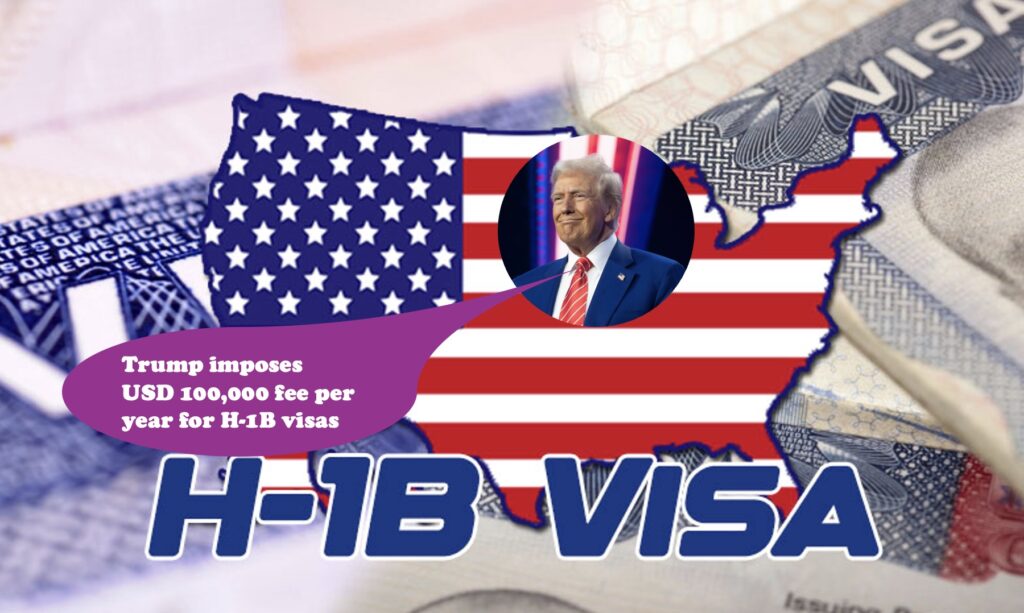
The $100,000 H-1B Visa Fee: A New Chapter for Indian Tech Talent and Industry
The US government’s announcement of a $100,000 annual fee on H-1B visas is rewriting the rulebook, especially for the Indian professionals and the IT industry that supports them. This landmark move is sparking unrest across boardrooms and workforce corridors alike. But beyond the headlines lies a story of resilience, strategic reinvention, and shifting global tech tides.
Who Really Pays the Price? Understanding the Visa Fee Responsibility
Before diving into the repercussions, especially keeping the initial media reactions in view, it’s crucial to clarify one fundamental point: the visa fee is paid exclusively by the employer, not the employee. Indian workers themselves won’t see an immediate financial hit, but the cascading effects come as companies juggle the steep new costs. This distinction shapes how businesses rethink their hiring strategies and employee retention plans. Understanding who shoulders the cost offers a lens into the unfolding drama.
The Indian Workforce in the US: Walking a Tightrope
With Indians holding about 73-75% of all H-1B visas, the workforce faces a wave of uncertainty. Current employees are safe for now, yet companies may become more cautious in renewing visas or sponsoring new hires. While the fee applies across the board for all nationalities, the inevitable consequence is a squeeze on the overall number of foreign professionals.
However, it is worth noting that Indian professionals still offer a relative cost advantage because this additional cost applies to all nationalities. Indians’ median wages, hovering around $123,600, often undercut those of other foreign workers. Also, Indians lead others in terms of technical superiority and language skills. This might preserve Indian talent’s place on the US tech stage, even if the total quota shrinks. Employers are thus caught in a cost-benefit bind, balancing expensive visa sponsorships with their need for skilled labour.
Indian IT Giants: The Balancing Act Between Costs and Growth
The Indian IT powerhouses—Tata Consultancy Services, Infosys, Wipro, Cognizant, and others—face an unprecedented challenge. This new fee hikes sponsorship costs astronomically, risking a margin erosion of 6-7% or more. Several firms battle to rechart operational models.
Many have started investing in local US hiring as a hedge against visa costs, although recruiting American tech talent cannot be accomplished overnight or without significant financial outlay. Offshoring remains an attractive strategy: shifting more jobs to Indian cities like Bengaluru or Hyderabad can offset the increased visa costs, while automation and AI investments promise long-term resilience.
A key pressure point is the sudden timeline of implementation, which has disrupted ongoing projects and forced hasty strategic pivots. In response, firms are reinventing their business models—blending onshore, nearshore, and offshore strategies with technology acceleration.
Offshore Employers and the Shifting Tech Landscape
Interestingly, companies that already predominantly offshore to India, employing fewer professionals onshore, are likely to find themselves at a competitive advantage. The visa fee amplifies the benefits of offshore delivery models by avoiding the direct visa cost burden.
India’s domestic IT sector could thus see a growth spurt as US companies increase offshore workflows. But this also challenges how these companies collaborate globally, especially with leaner onsite operations. The value of seamless cross-border teams will be tested as visa constraints tighten.
Who Bears the Brunt Beyond High-Tech?
High-tech firms may weather the storm, absorbing costs through margin management or innovation. Yet smaller entities, educational institutions, and low-salary sectors reliant on foreign visas may buckle. The impact on these groups could be severe—curbing their ability to hire skilled workers and possibly nudging some towards informal employment solutions.
The fee hike risks segmenting the labor market more sharply, privileging well-funded organisations over others and possibly igniting ethical and legal debates around immigration and labour practices.
Why Do Indians Dominate H-1B Visas?
This dominance is not just about cost. Indian workers bring valuable skills, strong English language proficiency, and reliable recruitment channels. India’s deep pool of STEM graduates and a well-established diaspora support system fortify this position. Despite not being the lowest paid, the combination of quality, volume, and cultural fit makes Indians a go-to choice for US employers.
Conclusion: A New Era Beckons
The $100,000 H-1B visa fee will reshape the contours of skilled migration and global tech operations. Indian professionals will face tougher paths but maintain relative advantage thanks to cost and skill. Indian IT companies must innovate rapidly to survive, recalibrating hiring, delivery, and technology strategies.
Above all, this phase challenges all stakeholders to rethink models for mobility, collaboration, and innovation. The future belongs to those who adapt—and Indians, in the U.S. and at home, are poised to rise to this challenge.