SPECIAL REPORT | GEN Z REVOLUTIONS 2025
From Madagascar’s digital coup to Nepal’s lightning-fast uprising and Bangladesh’s fading revolt, Tattvam News Today [TNT] has traced how a connected generation is reshaping politics from Africa to South Asia.
Now, in this episode, we turn to Sri Lanka—where the earliest spark of Gen Z anger erupted in early 2022, the longest struggle of the four, and paradoxically, the only one that has since found relative stability.
Three years after the Aragalaya protests toppled a dynasty, Sri Lanka stands as a rare case where youthful revolt matured into cautious democratic reset—offering lessons to neighbours still trapped between outrage and order.
Sri Lanka Gen Z Movement: From Aragalaya Revolt to Democratic Reset
Collapse, Outrage and the Long Road of Aragalaya
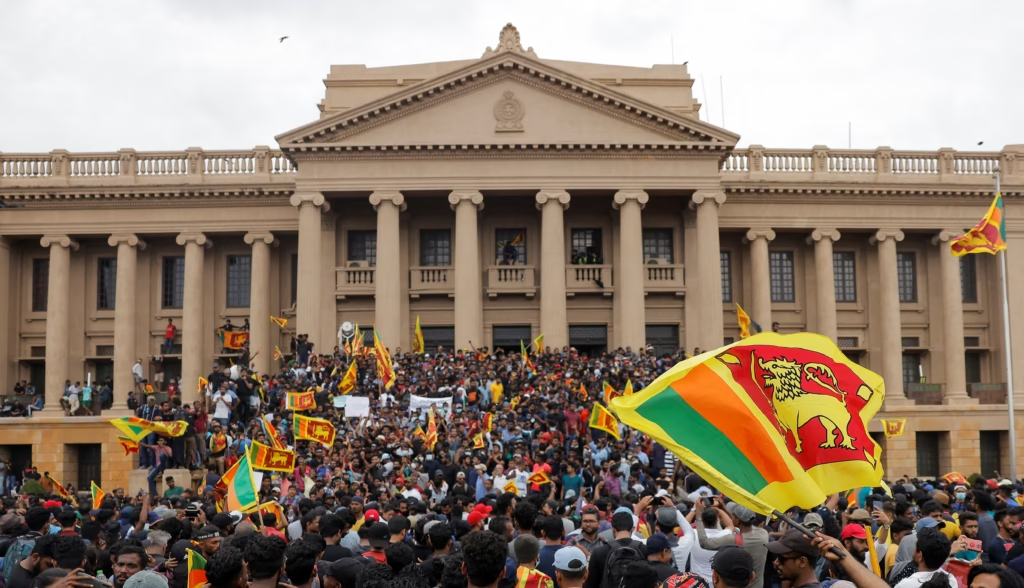
Colombo | October 21, 2025 — The Sri Lanka Gen Z movement was born not in a single flash of anger but through five months of relentless street mobilisation from February to July 2022, when an economic implosion turned daily life into survival. Fuel queues stretched for miles, power cuts darkened cities, and inflation shredded household budgets. When President Gotabaya Rajapaksa banned fertiliser imports and the rupee collapsed, frustration burst into the Aragalaya (“struggle”)—a spontaneous, youth-driven revolt.
Students, professionals and families organised online through encrypted groups and hashtags like #GoHomeGota and #OccupyGalleFace, naming their main camp after Colombo’s oceanfront promenade. By April, tens of thousands occupied the area, building volunteer-run clinics and libraries that became the movement’s moral signature.
As shortages worsened, protests swelled nationwide. On 9 July 2022, demonstrators stormed the president’s official residence. Rajapaksa fled first to the Maldives, then Singapore, resigning by email on 14 July 2022—a constitutional first.
Power transferred not through a coup but a parliamentary process under Article 40. Lawmakers elected veteran Ranil Wickremesinghe president on 20 July 2022, while the military secured key sites yet stayed outside governance. The continuity averted state collapse even as faith in the old political class evaporated.
Pace of Revolt Across the Gen Z World
The tempo of Sri Lanka’s Aragalaya stood apart from the other Gen Z uprisings that reshaped late-2020s politics.
In Madagascar, anger over hunger and unemployment built for about three weeks, ending with President Rajoelina’s flight on 10 October 2025 after army intervention.
In Nepal, outrage over a September 4 2025 social-media ban triggered mass protests that toppled Prime Minister K. P. Sharma Oli within five days—the fastest youth-led regime change on record.
Bangladesh’s quota-protest revolt endured roughly six weeks from early June to late July 2024, forcing Sheikh Hasina’s resignation.
By contrast, Sri Lanka’s five-month campaign was a slower, grinding confrontation born of economic ruin rather than a single decree. That longer arc gave the Sri Lanka Gen Z movement unusual civic maturity and global visibility, even as exhaustion tested its resolve.
From Street Energy to Sustained Civic Pressure
The fall of the Rajapaksas did not dissolve the movement. Many activists redirected momentum into civic projects—budget-transparency drives, digital-governance campaigns and environmental collectives. The so-called Aragalaya generation now measures influence in procurement dashboards and municipal reforms rather than slogans.
Yet sustaining pressure proved hard. The IMF’s March 2023 rescue package demanded steep fiscal cuts. Rising taxes and joblessness eroded enthusiasm, splintering youth networks between reformists inside institutions and radicals who saw co-option in compromise.
Geopolitics of the Collapse
When Sri Lanka’s reserves vanished, foreign relations turned into survival economics.
Beijing—once Colombo’s largest lender—hesitated to deliver a quick bailout, offering limited credit lines and technical talks instead of cash. Its delay became emblematic of opaque, project-tied debt.
By contrast, India moved within weeks, extending about US $4 billion in fuel, food and medicine credits that kept hospitals and transport functioning. The swiftness of New Delhi’s aid reframed regional perceptions: where Chinese loans had financed grand infrastructure, Indian support kept the lights on.
The IMF’s Extended Fund Facility then anchored stabilisation, pushing governance reforms and debt transparency. For many young Sri Lankans, the lesson was twofold—foreign alignment can shape domestic survival, and sovereignty must rest on accountability rather than secrecy.
The Military’s Contained Role
Unlike in Madagascar, Sri Lanka’s armed forces did not seize power. They guarded infrastructure, imposed curfews during July’s chaos, and ensured a constitutional transfer. That restraint—rare in crises of this scale—helped preserve democratic form. Still, their quiet presence reminded citizens that stability was negotiated as much as it was earned.
Youth’s Strategic Crossroads
Between 2022 and 2025, Sri Lankan youth faced three choices:
1️⃣ enter institutions to reform from within,
2️⃣ build alternative political formations, or
3️⃣ retreat into fatigue.
Some pursued the first path—joining civic-tech NGOs that digitised procurement and budget data. Others rallied behind nascent movements like the Transparency Collective or the Youth for Accountability Network, seeking seats in upcoming local elections. Their challenge is scale: moral credibility is high, but electoral machinery remains weak.
What the Aragalaya Generation Demands Now
Today’s agenda mixes technocratic reform and lived need—affordable energy, green jobs, and transparent spending. Activists call for a Citizen Audit Act, stronger anti-corruption courts, and quotas for youth in public administration. Many see 2025’s elections as a referendum on whether protest ideals can survive governance realities.
Lessons and Regional Echo
Across four countries, the Gen Z revolts revealed divergent rhythms but shared DNA: digital coordination, moral clarity and impatience with patronage.
Madagascar’s youth were overtaken by the military; Nepal’s transitioned lightning-fast to reformist politics; Bangladesh’s optimism drifted into technocratic control; and Sri Lanka’s prolonged struggle sought a middle path—an attempt to fuse outrage with institution-building.
Its success will depend on whether young Sri Lankans can sustain civic discipline beyond protest. The next year’s polls and IMF milestones will test if the island’s first digital generation can convert its five-month street revolution into a decade of accountable governance.