Islamabad Mosque Bombing and Pakistan’s Enduring Sectarian Crisis
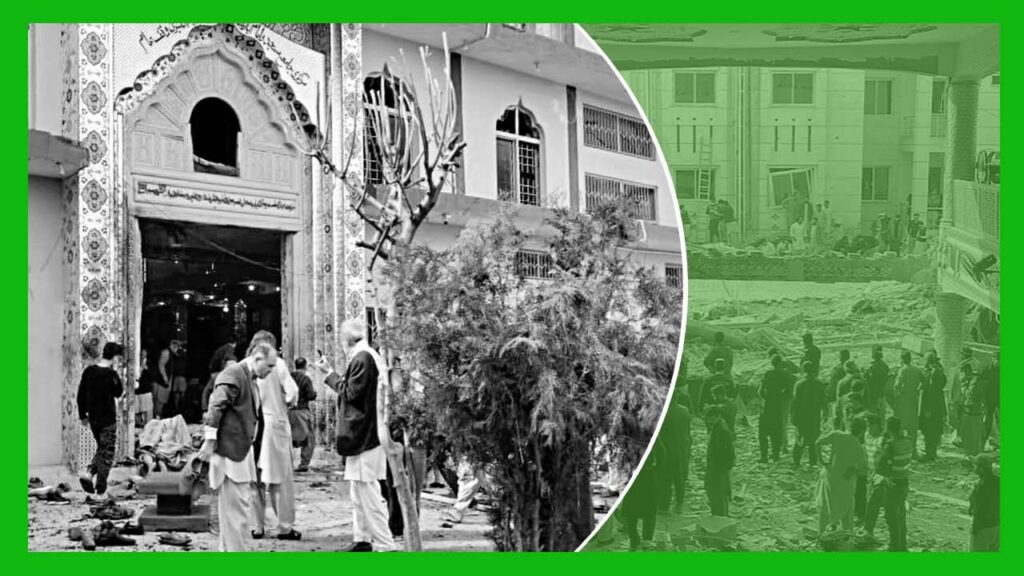
On February 6, 2026, a devastating suicide bombing struck the Khadija Tul Kubra Mosque in Tarlai Kalan on the southeastern outskirts of Islamabad. The attack occurred during Friday prayers. It killed at least 31 people and injured over 169. Some reports suggested that the death toll could rise to 69 as critically injured victims succumbed later.
The Islamic State (ISIS) claimed responsibility through its Telegram channels. The group openly stated that it had targeted Shia worshippers, whom it considers heretics and apostates. This incident once again exposed Pakistan’s deep-rooted problem of Pakistan sectarian violence, which continues to claim innocent lives.
ISIS usually announces such attacks through its semi-official Amaq News Agency or Nashir News Agency. It spreads statements rapidly through encrypted Telegram groups. These messages often describe the attacker as a “soldier of the caliphate”. They include multilingual text, infographics, and sometimes videos. The organisation releases such content within hours to maximise propaganda impact.
For lone-wolf or affiliate-led attacks, ISIS often uses a post-facto strategy. It claims responsibility even without direct operational links. This approach helps the group project an image of global reach.
Eyewitnesses reported that the bomber was confronted at the mosque entrance before detonating an explosive vest. Some versions mentioned initial gunfire. This was one of the deadliest attacks in Islamabad in over a decade. It revived global concerns over religious extremism in Pakistan.
The Sunni-Shia Divide: Roots and Global Ramifications
The Sunni-Shia split dates back to the 7th century. It emerged after a dispute over leadership following the death of Prophet Muhammad. Sunnis, who form around 85–90 per cent of Muslims globally, believe leadership passed to elected caliphs. Shias, constituting about 10–15 per cent, hold that authority should have remained within the Prophet’s family, beginning with Ali.
This theological disagreement evolved into political and social rivalry over centuries. As a result, tensions hardened into recurring conflicts.
In modern times, the divide intensified after Iran’s 1979 Islamic Revolution. The revolution strengthened Shia political identity. It also triggered a Sunni backlash, especially from Saudi Arabia, which promotes Wahhabi ideology.
In Iraq, post-2003 instability led to massive Sunni-Shia clashes. Tens of thousands died. ISIS targeted Shia shrines and gatherings. In Yemen, Shia Houthi rebels fight a Sunni-led coalition. In Syria, Sunni militants opposed the Shia-aligned Assad government.
These conflicts exported radical ideologies beyond the Middle East. Pakistan became a major recipient. Local political fragility and weak institutions allowed these narratives to flourish.
Sectarian Violence in Pakistan: A History of Bloodshed
Pakistan is a Sunni-majority country, with about 80–90 per cent Sunnis and 10–20 per cent Shias. Sectarian tensions intensified from the 1980s onwards. General Zia-ul-Haq’s Islamisation policies played a major role. The Afghan jihad and the Iranian Revolution further radicalised society.
Between 1987 and 2007, nearly 4,000 Shias were killed in targeted attacks. Human Rights Watch confirmed these figures. From 2008 to 2014, Salafi extremists killed thousands more. Since 2001, over 2,600 Shias have died in sectarian violence.
Major perpetrators include Sipah-e-Sahaba Pakistan (now Ahle Sunnat Wal Jamaat), Lashkar-e-Jhangvi, Tehreek-e-Taliban Pakistan, and ISIS-Khorasan. These groups follow Deobandi or Salafi ideologies. They label Shias as apostates and justify mass killings.
Notable incidents include the 2022 Peshawar mosque bombing, which killed over 60 people. In Kurram district, more than 150 died in Sunni-Shia clashes in 2024. In Karachi and Quetta, Hazara Shias face routine assassinations.
Shia militant retaliation has occurred but remains limited. Meanwhile, Barelvi groups like Tehreek-e-Labbaik Pakistan have fuelled anti-Shia sentiment. They often combine sectarian rhetoric with blasphemy allegations.
Despite military operations, sectarian terror persists. State inaction and alleged complicity remain major concerns.
Organised Crimes Against Minorities: Beyond Sectarianism
Pakistan’s religious minorities include Shias, Ahmadis, Christians, Hindus, and Sikhs. All face systematic persecution. This persecution operates through organised crime networks, mob violence, and misuse of laws.
Blasphemy laws, which carry the death penalty, are frequently abused. They are used for land grabs and personal vendettas. Human Rights Watch’s 2025 report documented how these laws target vulnerable groups. Victims are forced to flee. Their properties are often seized.
In 2023 and 2024, mobs attacked Christian settlements in Punjab. Churches and homes were burnt following blasphemy accusations.
Forced conversions of Hindu and Christian girls number at least 1,000 annually. These cases involve abduction and coerced marriages. Ahmadis face grave desecration, with over 260 incidents in 2025. Nine Ahmadis were killed between 2024 and 2025.
Sikh and Hindu temples suffer neglect and destruction. Only a small fraction remains functional.
These crimes operate through extremist groups, corrupt officials, and social media networks. Digital platforms amplify hate speech. This often leads to lynchings. Police response remains weak. Impunity prevails, as noted by the USCIRF.
Differential Treatment of Minorities: Terror Versus Forced Assimilation
All minorities in Pakistan suffer discrimination. However, the nature of persecution differs.
Shias face ideological and elimination violence. Sunni extremists target them as heretics. Attacks aim to terrorise and marginalise. Bombings, assassinations, and armed clashes are common. However, forced conversion is rare. Groups like ISIS-K and LeJ seek suppression, not assimilation.
As a result, Shia population levels have remained between 10 and 20 per cent since 1947, despite thousands of deaths.
Non-Muslim minorities face a different reality. They are subjected to a “convert or die” model. Pressure is applied to assimilate or disappear.
At the time of the last pre-Partition census in 1941, Hindus comprised about 14.6 % of the population in the territory that became Pakistan. According to the 1951 census, this share fell to approximately 1.58 % due to mass migrations and violence associated with Partition. By 2023, Hindus constitute around 2.17 % of Pakistan’s population, reflecting a small increase since mid-century but still far below their pre-Partition presence.
Christians face church burnings and mob violence. Ahmadis face legal exclusion and targeted killings. The underlying message is clear: survival depends on submission.
This pattern reflects structural intolerance within Pakistan’s ideological framework.
Implications and the Way Ahead
The Islamabad mosque bombing demonstrates how Pakistan sectarian violence intersects with broader minority persecution. It weakens social cohesion and destabilises the region.
The attack also highlights ISIS’s continued operational relevance. It shows the limits of Pakistan’s counterterrorism efforts.
Pakistan’s government has condemned the incident and promised investigations. However, past experience offers little confidence. Meaningful reform requires dismantling militant networks, repealing discriminatory laws, and ensuring equal citizenship.
International bodies, including the United Nations, have repeatedly urged Pakistan to end impunity. Yet, compliance remains limited.
For India and the wider region, these developments serve as a reminder. State-sponsored or state-tolerated radicalism eventually turns inward. It consumes its own society.
The tragedy in Islamabad underlines a fundamental truth. Religious freedom is essential for stability. Without it, violence becomes routine.
Tattvam News Today extends condolences to the victims. At the same time, it calls for sustained international scrutiny of Pakistan’s internal failures. Silence and selective outrage only enable further bloodshed.