S-400 Delivery to India: Status of the Remaining Two Regiments
S-400 delivery is significantly delayed as India has received only three of the five S-400 Triumf air defence regiments under the USD 5.43 billion contract signed with Russia in 2018. The delivery of the remaining two regiments remains pending, with timelines revised multiple times due to Russia’s domestic military priorities and sanctions-related disruptions.
As of December 2025, Russia has publicly reaffirmed that the fourth and fifth S-400 regiments for India are yet to be delivered. Official projections from Russian diplomatic and defence sources now place completion of the contract in 2026-27, reflecting a delay of roughly two to three years compared with the original 2023-24 schedule.
Original Contract and Revised S-400 Delivery Timeline
Under the 2018 agreement, all five S-400 regiments were expected to be delivered between 2021 and 2023, later extended to 2024. However, the Ukraine conflict significantly altered Russia’s export capacity.
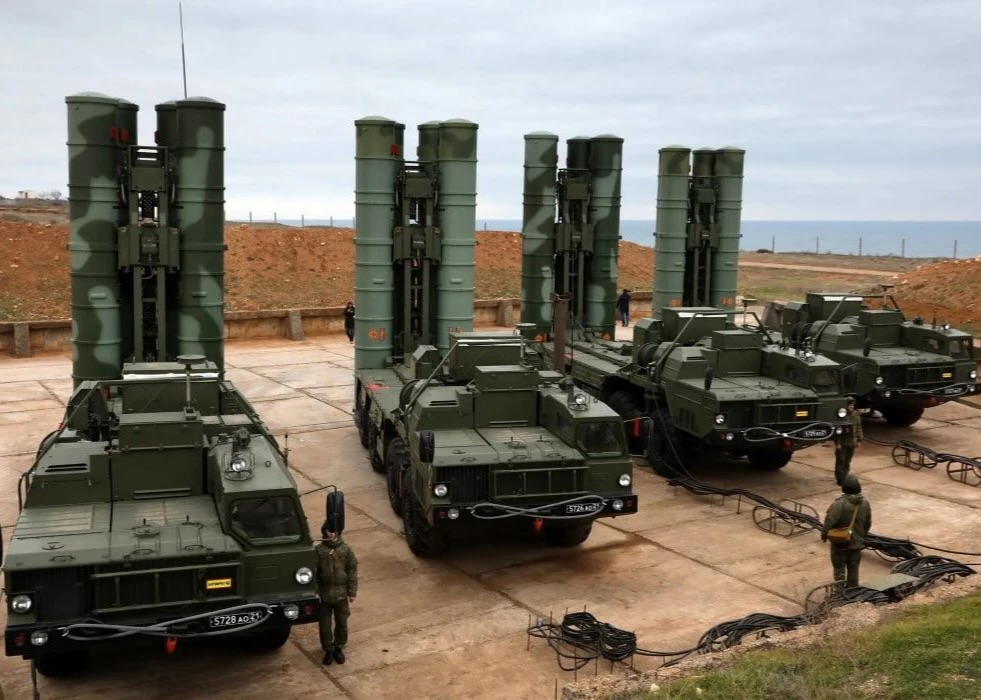
Three regiments were delivered and operationalised between 2021 and 2023. These systems are deployed along India’s western and northern fronts and were reportedly active during Operation Sindoor in May 2025.
The fourth regiment is now expected in early to mid-2026, while the fifth regiment is projected for late 2026 or early 2027. This revised schedule was reaffirmed during bilateral engagements, including the SCO Defence Ministers’ meeting in June 2025 and discussions ahead of President Vladimir Putin’s December 2025 visit to India.
Why the Delays Persist
Russian defence production has been under sustained pressure since 2022. A large share of S-400 interceptors and components has been diverted to domestic deployment in Ukraine.
According to multiple assessments, nearly 70 per cent of Russia’s S-400-related output in 2024–2025 was consumed by frontline requirements. Sanctions have further constrained access to specialised electronics, testing equipment, and materials, slowing certification and export deliveries.
While Almaz-Antey has publicly stated that production capacity doubled in 2025, export commitments continue to compete with battlefield losses and urgent domestic replenishment.
Upgraded S-400 Variants Linked to Ukraine Combat Data
Russia has confirmed that S-400 modernisation efforts accelerated in 2025, drawing directly from combat experience in Ukraine. These upgrades focus on countering drone swarms, low-observable cruise missiles, saturation attacks, and electronic warfare.
Key enhancements include improved radar discrimination, stronger anti-jamming resilience, and deeper integration with airborne early warning platforms. Almaz-Antey has indicated that these upgrades will be offered as retrofit packages for existing operators and incorporated into future deliveries.
For India, this raises the possibility that the remaining two regiments could arrive with updated configurations when delivered in 2026–2027.
Sanctions and Smuggled Electronics: RUSI Flags Risks
The Royal United Services Institute (RUSI) has cautioned that Russia continues to rely on sanctions-evasion networks to procure Western-origin electronics for systems including the S-400.
RUSI analyses and customs data show that dual-use components, including microchips and capacitors, have been routed through third countries. In October 2024, the U.S. Treasury sanctioned Indian firms accused of shipping electronic components to Russian end-users, highlighting the sensitivity of these supply chains.
While India has not faced CAATSA penalties for the original S-400 deal, analysts warn that continued reliance on systems built with smuggled components could expose operators to future supply disruptions.
CAATSA Factor and India’s Balancing Act
India received a waiver under the Countering America’s Adversaries Through Sanctions Act (CAATSA) for the original S-400 purchase. However, U.S. officials have repeatedly signalled that additional S-400 acquisitions could complicate bilateral ties.
No sanctions have been imposed on India so far, unlike cases involving Turkey and China. Indian officials continue to emphasise diversified sourcing and indigenous production to reduce exposure.
Talks on Additional S-400 Units Continue
Beyond the original contract, Russia has offered additional S-400 regiments and a separate missile replenishment package valued at approximately USD 1.2 billion. These discussions gained momentum during President Putin’s December 2025 visit but remain at the negotiation stage.
Russia has also proposed partial technology transfer and local missile production. However, no new contract has been finalised as of December 2025.
Confirmed Status of S-400 Delivery as of December 2025
India has not cancelled the remaining S-400 deliveries. Russia has reiterated its commitment to complete the contract, albeit on a revised schedule.
While speculation on social media has linked delays to production collapse, available evidence points instead to wartime prioritisation and sanctions friction, not an inability to supply. The balance two regiments remain in the pipeline, with delivery now expected between 2026 and 2027.