Russia–Ukraine Peace Plan: Putin Sets Conditions for Ceasefire
MOSCOW/KYIV, 27 November 2025 — President Vladimir Putin has indicated a measured willingness to consider select elements of a revised U.S. peace plan aimed at ending the ongoing conflict in Ukraine but warned that Russia would continue its military offensive in the Donbass region unless Kyiv accepts his terms for a ceasefire.
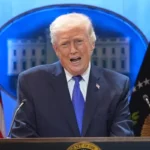
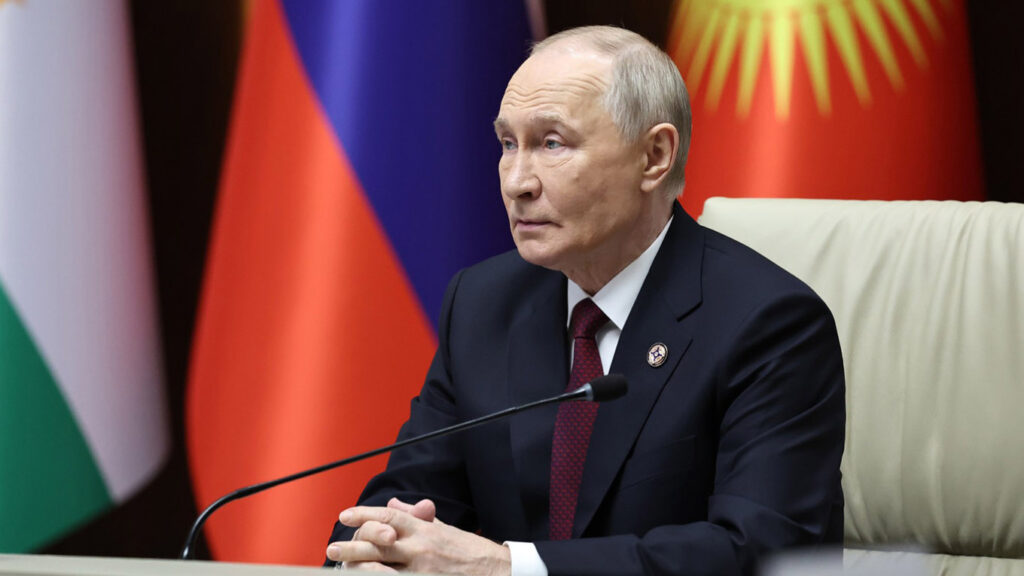
In a televised address, Putin asserted that Ukrainian troops must withdraw from territories currently held by Russian forces as a prerequisite for halting hostilities. “If Ukraine refuses, we will secure these outcomes by military means,” he stated, reiterating Moscow’s longstanding position on territorial control as the basis for negotiations.
Putin also again questioned the legal standing of Ukrainian President Volodymyr Zelensky, claiming that the postponement of presidential elections under martial law undermines Zelensky’s authority to sign any binding agreement with Russia. He described the latest U.S. proposal as containing “elements that can serve as a basis,” while dismissing parts of it as lacking “legal seriousness.”
Revised U.S. Peace Proposal Gains Ukrainian Backing, Faces Russian Ambiguity
The peace framework under discussion originated as a 28-point draft prepared during the Trump administration in consultation with Kremlin representatives. European objections reportedly led to the document being trimmed to roughly 20 points, with the revised version offering stronger security guarantees and more favorable provisions for Ukraine.
According to U.S. officials, Kyiv has agreed to the reworked proposal, which includes:
A staged de-escalation along active frontlines
Creation of demilitarized buffer zones
Mutual non-aggression commitments
Prisoner exchanges and humanitarian corridors
Security assurances for Ukraine backed by Western partners
Russia’s acceptance remains uncertain. While Trump’s envoys have been dispatched to Moscow, parallel discussions continue in Geneva involving Ukrainian negotiators. Diplomatic sources suggest that the success of any agreement hinges on Putin’s readiness to compromise on territorial and security clauses—areas where Moscow has shown little flexibility.
Russian Advances Intensify on Ground as Weather Challenges Ukrainian Positions
The military landscape continues to shift unfavorably for Ukraine. Russian forces are reported to be advancing across multiple sectors, including near Donetsk, Dnipropetrovsk, and Zaporizhia. Several villages and strategic settlements have reportedly fallen, reflecting growing pressure on Ukrainian logistics and defensive lines.
Ukrainian officials acknowledge difficulties, particularly due to adverse winter conditions that have impaired drone operations—a critical component of Kyiv’s reconnaissance and artillery-defense strategy. Analysts note that Russia’s incremental gains, while not decisive, add leverage to Moscow’s negotiating posture.
Kyiv Reaffirms Zelensky’s Legitimacy Amid Russian Claims
Amid Russian assertions questioning Zelensky’s authority, Ukraine’s parliament has formally reaffirmed his legitimacy as head of state. Lawmakers underscored that elections cannot constitutionally be held during martial law, which remains in force due to ongoing hostilities.
The parliamentary resolution states that Zelensky continues as the lawful president until martial law is lifted and fresh elections can be conducted. This move aims to counter narratives—especially promoted by Moscow—that seek to cast doubt on the legal validity of the Ukrainian leadership during the conflict.
Diplomatic Path Remains Uncertain as Both Sides Hedge Positions
Efforts to secure a breakthrough through the U.S. peace initiative are ongoing but complicated by entrenched positions. Russia insists on territorial concessions and legal assurances regarding Ukrainian neutrality, while Kyiv demands the restoration of internationally recognized borders and credible long-term security guarantees.
With diplomats shuttling between Moscow and Geneva, the road to a durable ceasefire remains fraught. Whether the Kremlin ultimately embraces the revised peace plan—or continues its military advance—will determine the next phase of the war.