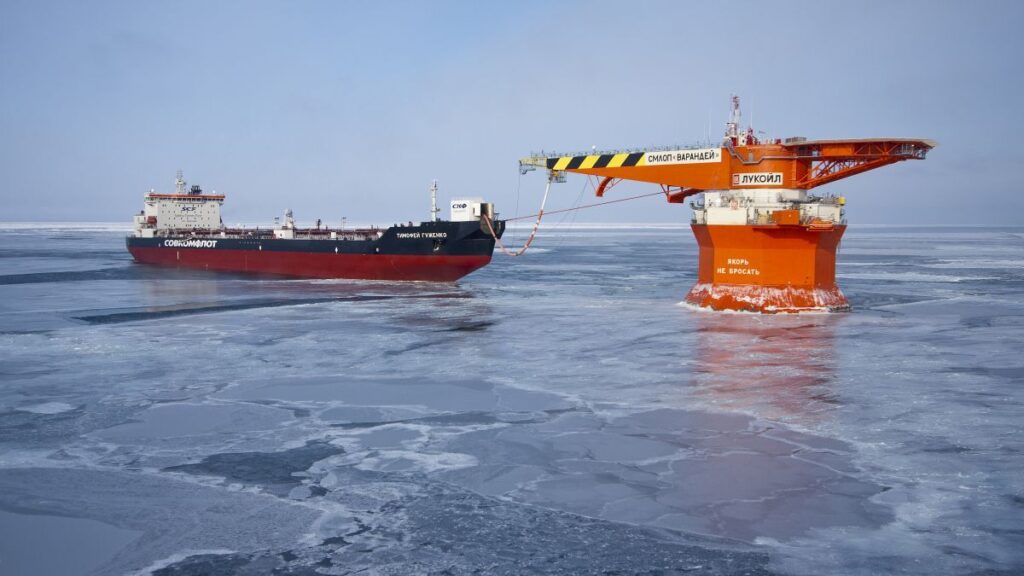
Russia’s Oil Export Income Crashes to Five-Year Low in January 2026
Moscow, February 5, 2026 — Russia Oil Revenue Plunges in January 2026 to their lowest level in more than five years, driven by a combination of weak global prices, widening discounts on Urals crude and a stronger Russian ruble, according to economic data and market estimates.
Preliminary figures suggest that oil tax income fell nearly 50% year-on-year, with overall oil and gas revenue for the federal budget dropping sharply compared to January 2025. Combined proceeds were reported at roughly 393.3 billion rubles, down from significantly higher levels a year earlier.
Price Discounts and Market Pressures Weigh Heavily
The sharp revenue downturn reflects deeper structural pressures facing Russia’s energy sector. The flagship Urals crude blend has been trading at unusually steep discounts — approximately $26 per barrel below Brent crude at key export points — significantly shrinking export earnings.
This broad discount has more than doubled compared to early 2025, exacerbating the impact of already subdued global crude benchmarks. In the context of a stronger ruble — which reduces the ruble-value of dollar-denominated exports — these factors jointly intensify fiscal strain.
Economists note that Russia’s energy sector is heavily reliant on oil and gas revenues, which make up roughly a quarter of federal budget receipts. The dramatic drop in early-year proceeds raises questions about the government’s budget assumptions and fiscal buffers going into 2026.
Budget Outlook and Deficit Risks
The plunge in energy income comes as Russia’s federal budget faces widening deficits, with recent forecasts suggesting the shortfall could nearly triple compared to official targets. Lower oil export tax receipts, reduced commodity purchases by major buyers and continued war-related expenditures are cited as underlying drivers.
Analysts project that energy revenues in 2026 may fall below expectations by up to 18%, contributing to a significant deterioration in projected fiscal performance. As a result, the budget deficit could expand to 3.5–4.4% of GDP, well above authorities’ targets.
Sanctions, Discounts and Strategic Buyers
The revenue collapse is linked to persistent global sanctions and market forces that compel Russian exporters to offer steeper price discounts to maintain shipment volumes. Strategic buyers in Asia, particularly in India and China, have maintained imports but only at prices far below benchmark levels, squeezing margins further.
A heavily discounted Urals crude significantly diminishes tax and duty receipts while offering little relief to the budget. This dynamic underscores the challenge Russia faces in sustaining export income without favourable pricing conditions.
Longer-Term Implications for Energy and Economy
While short-term fluctuations in oil revenue are not unusual, the sustained decline to levels not seen since mid-2020 — during the global pandemic economic contraction — signals deeper structural challenges for Russia’s energy-dependent fiscal model.
The Kremlin historically relies on robust oil export earnings to fund broad public expenditures, social programmes, and defence commitments. Continued divergence between export prices and budget assumptions could force reliance on reserve funds or fiscal adjustments.
Economists also warn that a persistent downturn in oil income may prompt spending reallocations, tax changes or renewed efforts to diversify export markets and refine revenue sources.
Looking Ahead
Expectations are that oil revenue figures for February and subsequent months will remain under close scrutiny, as market players assess whether prices and export volumes recover or continue to exert downward pressure on state coffers. With broader geopolitical tensions and sanctions shaping global energy flows, Russia’s energy income remains a key barometer of economic resilience.
For continuing updates on Russia’s energy market and global commodity trends, follow our latest reports.