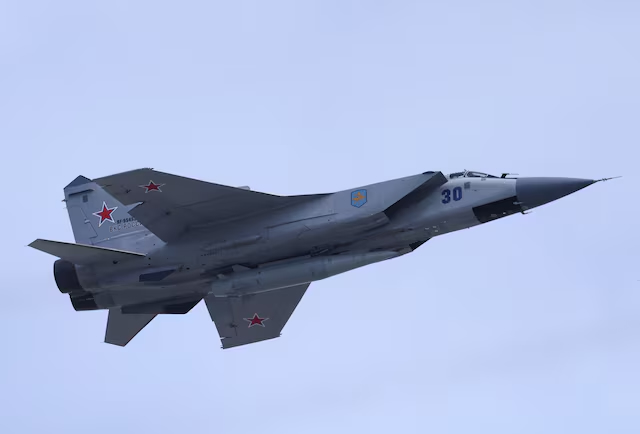
Russia Says It Foiled Ukraine’s MiG-31K Hijack Plot, Retaliates With Hypersonic Kinzhal Missile
What Russia Claims
In a major escalation, Russia’s Federal Security Service (FSB) announced on 11 November 2025 that it had foiled a joint operation by Ukraine and the United Kingdom to hijack a MiG‑31K high-altitude supersonic interceptor carrying the Kinzhal hypersonic missile. According to the FSB, the plan included:
Offering a Russian pilot US $3 million and Western citizenship to fly the aircraft out of Russia.
Directing the MiG-31K toward the NATO air-base at Mihail Kogălniceanu Air Base (near Constanța, Romania).
Targeting the aircraft’s crew by reportedly attempting to poison the MiG-31 commander so the co-pilot could defect with the jet.
- Once in the NATO area, shoot it down, thereby creating a dramatic provocation against the alliance.
The FSB said that the operation had been under way since mid-2024, with Ukrainian military intelligence (GUR) working with British “handlers”. The agency stated that the plan was uncovered before it could be executed.
According to Moscow, after the alleged plot was detected, Russian forces launched hypersonic “Kinzhal” missiles on 9-10 November 2025 against Ukrainian intelligence facilities in Kyiv and the airfield at Starokostiantyniv Airfield, which hosts Western-supplied aircraft, especially F16. The official line: “The message has been received: Anyone who messes with the Russian bear will hear its roar before they see it.”
Reactions and Verification Status
Major news agencies such as Reuters reported the FSB’s statements but emphasised they could not independently verify the claims.
Ukrainian officials have rejected the Russian narrative: Both Kyiv and Bucharest dismissed the hijacking allegations as propaganda.
Analysts point out the practical difficulties of the alleged operation: gaining access to a Kinzhal-armed MiG-31K, recruiting its crew, and flying it out undetected would all pose major hurdles but anything is possible under the given circumstances.
Why the Incident Matters
The MiG-31K / Kinzhal combination is among Russia’s most advanced tactical assets. Its alleged theft would constitute a major security breach and symbolic victory for the West.
If the narrative is true (or even perceived as true), the plan to stage the jet’s downing near a NATO air-base would aim to create a political and military crisis, potentially dragging the alliance more directly into confrontation.
Whether true or not, the announcement serves a propaganda purpose: reinforcing Moscow’s framing of Western intelligence as players in covert war against Russia.
The lack of verification underscores the role of information warfare in the broader Russia–Ukraine war, where narratives can be as powerful as bullets.
What Is a Kinzhal Missile?
The Kh-47M2 Kinzhal is a Russian air-launched ballistic missile capable of carrying both conventional and nuclear warheads. It can be launched from aircraft such as the MiG-31K, Tu-22M3, and Su-34.
Notable for its hypersonic speed—reportedly up to Mach 10—the Kinzhal can strike targets up to 2,000 kilometers away when deployed from a MiG-31K. It has become a key element of Russia’s modern weapons arsenal, frequently showcased during the ongoing Russia-Ukraine conflict.
Its NATO reporting name is AS-24 “Killjoy”, but in both Russian and international discussions, it is most commonly referred to as the Kinzhal or Dagger missile. All three terms describe the same hypersonic weapon system. The term “Dagger” is simply the English translation of the Russian word “Kinzhal” (Кинжал).