New Rafale Disinformation Campaign Hits Dassault: Pakistan Target India Navy Deal
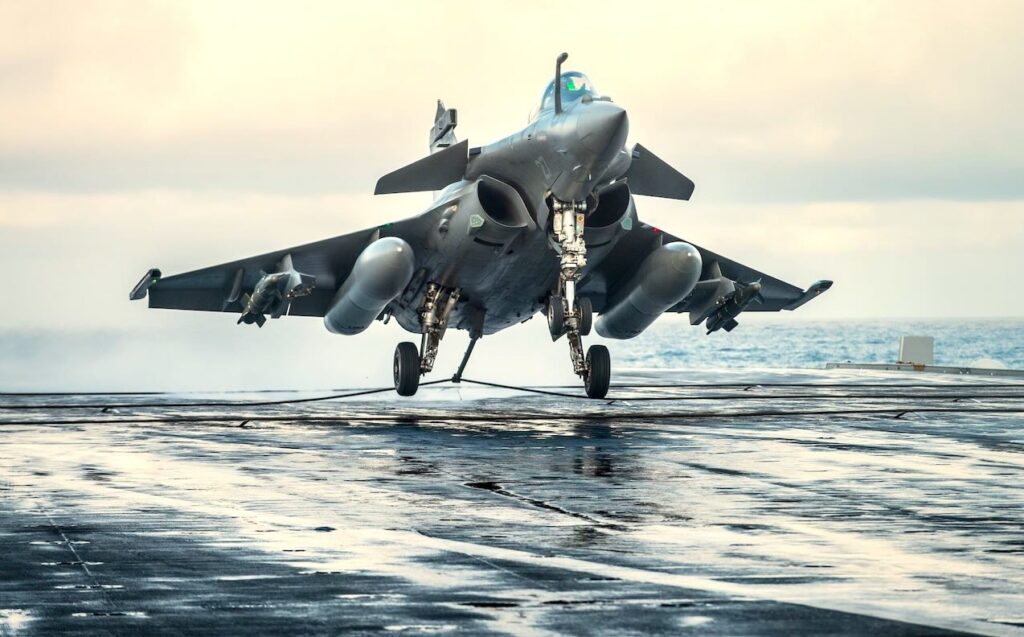
French weekly Le Journal du Dimanche reports a fresh Rafale disinformation campaign launched on 25 November 2025, targeting Dassault Aviation with forged documents amid India’s naval Rafale procurement. A self-proclaimed Pakistani digital communications specialist allegedly drove the operation, as flagged by Viginum, France’s agency against foreign digital interference, in a note revealed by Le Canard enchaîné. Therefore, this incident revives concerns over hybrid warfare tactics aimed at undermining high-value Indo-French defence ties.
Fake Letters Flood Social Media
The Rafale disinformation campaign began with a bogus letter posted on X, falsely attributed to Dassault CEO Éric Trappier. It claimed the delivery of 26 Rafale Marine aircraft to India’s Navy could not proceed without ten weeks of prior pilot training for New Delhi. The next day, 26 November, a pro-Pakistani fake account amplified a second forged missive from Trappier, urging Indian authorities to investigate the “leak” of the first letter.
Ten days later, on 8 December, another document surfaced: a counterfeit letter purportedly from India’s External Affairs Minister S. Jaishankar, rebuking France’s ambassador in New Delhi over the affair. India’s Ministry of External Affairs swiftly debunked the Jaishankar forgery via its fact-check unit, labelling it fake and warning the public to stay alert. Dassault told Le Journal du Dimanche, “we do not wish to comment on the matter” to avoid fuelling such disinformation.
Viginum Flags Pakistani Origin
Viginum’s analysis, cited by the French weekly, pinned the Rafale disinformation campaign on a Pakistani actor posing as a digital specialist. This operation unfolded against the backdrop of May 2025 aerial clashes between India and Pakistan, where Rafale jets played a key role for the Indian Air Force. As a result, the timing suggests an intent to exploit lingering narratives from those engagements to discredit the French fighter and disrupt India’s ongoing Rafale Marine contract.
Authorities note at least three fake letters circulated since late November, each designed to sow doubt about Dassault’s reliability and India-France cooperation. Independent verification platforms and Indian outlets like NDTV and Public TV corroborated the forgeries, aligning with Viginum’s findings.
Echoes Of Operation Sindoor Propaganda
This Rafale disinformation campaign fits a pattern established during Operation Sindoor, the 87-hour India-Pakistan conflict in May 2025. Pakistan claimed its Chinese-supplied J-10C jets downed multiple Indian Rafales, assertions repeatedly refuted by Dassault CEO Trappier as “simply not true”. French naval spokespersons dismissed Pakistani media reports as “extensive misinformation,” while India acknowledged minor losses without confirming jet shootdowns, attributing some claims to decoy tactics like Rafale’s X-Guard system.
Post-Sindoor, nearly 1,000 fake social media accounts spread AI-generated images and videos alleging three Rafales fell to Chinese weaponry, aiming to tarnish the jet’s global reputation. The US-China Economic and Security Review Commission identified Beijing as the orchestrator on 18 November 2025, just days before the latest Pakistani-linked fakes emerged. Therefore, these efforts appear coordinated to hinder Rafale exports, particularly to South Asian and Southeast Asian buyers.
China’s Broader Anti-Rafale Playbook
China has emerged as a serial player in Rafale disinformation campaigns, leveraging Pakistan as a proxy in regional flashpoints. French intelligence reported Beijing’s attempts to derail global Rafale sales, including post-Sindoor smears that prompted Indonesia to briefly “reconsider” its 42-jet order—though deliveries of the first three Rafale B units proceed as scheduled for January 2026. India’s PIB fact-check unit exposed related Pakistani propaganda, including AI videos falsely claiming Rafale and S-400 destructions.
In addition, outlets like idrw.org highlight how these attacks intensify during key deal milestones, such as Tata-Dassault’s fuselage manufacturing tie-up in India. The pattern underscores a strategic hybrid threat: amplify unverified combat claims to boost Chinese arms sales while eroding competitors’ market confidence.
India-France Defence Ties Hold Firm
India remains committed to its Rafale platforms despite the disinformation barrage. The Navy’s 26 Rafale Marine deal advances, complementing the IAF’s existing fleet proven in operations like Sindoor. France dismissed earlier Pakistani claims outright, with Dassault executives publicly rebutting shootdown narratives. Meanwhile, MEA’s proactive fact-checking has contained the damage from the latest fakes.
These incidents highlight vulnerabilities in defence procurement amid digital warfare. As Indo-French partnerships deepen—evident in recent Tata collaborations—targeted disinformation seeks to exploit every contractual hiccup or operational rumour. However, official silence from Dassault and swift debunkings by Viginum and MEA demonstrate effective countermeasures.
Implications For Global Arms Markets
The Rafale disinformation campaign carries wider ripples. China’s role, as flagged by US and French agencies, signals escalating competition in fighter jet sales, where narrative control rivals hardware specs. Pakistan’s repeated claims serve Beijing’s agenda, positioning J-10C as a Rafale-killer despite independent analyses questioning their veracity.
For India, the forgeries aim to stoke domestic doubts over foreign platforms, yet public and official trust in Rafale endures post-Sindoor performance data. Globally, buyers like Indonesia monitor these battles, but contracts proceed, underscoring resilience against info-ops. In the end, such campaigns risk backfiring by drawing scrutiny to their originators’ tactics rather than the targeted assets.