Putin India Visit: The Western Frustration, Putin’s Rebuttal, and India’s Unapologetic Response
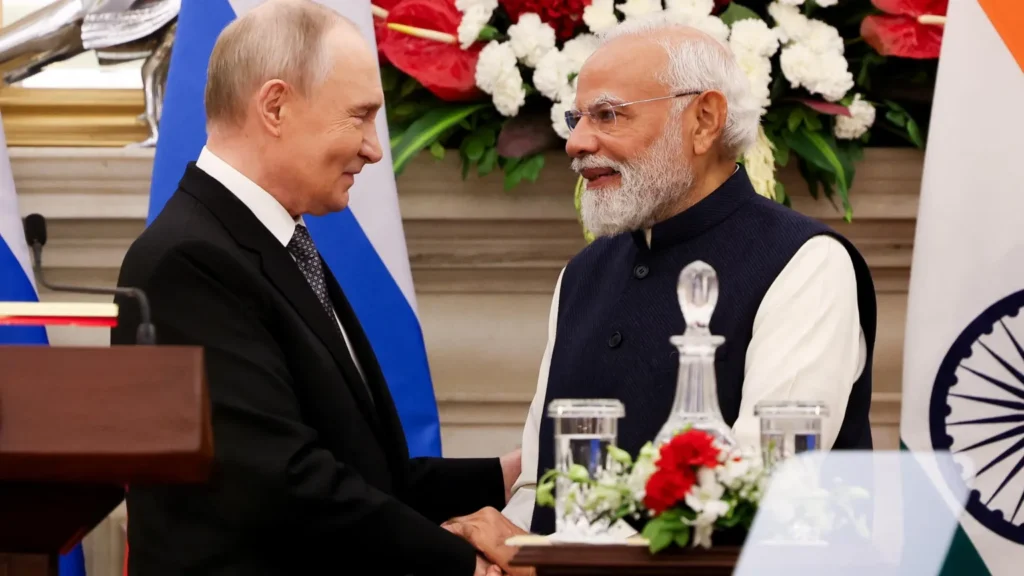
The Putin India Visit on 4–5 December 2025 triggered a wave of anger across Ukrainian networks and pro-Ukraine circles in Europe and North America. While New Delhi rolled out a warm ceremonial welcome with Prime Minister Narendra Modi personally receiving President Vladimir Putin, Ukrainian supporters reacted sharply online. Their frustration dominated digital conversations across the West, even though most governments refrained from issuing formal objections. As the online outrage escalated, Putin’s India Today interview added a new dimension by directly challenging Western narratives, prompting an assertive Indian response on social media.
Ukrainian Anger and Western Online Backlash
The strongest and most emotional reactions emerged from Ukrainian users and diaspora communities. Many expressed disbelief that India hosted Putin with cultural performances and a warm hug at the airport. The images were described as an attempt to “normalise” a leader they hold responsible for extensive suffering during the ongoing conflict.
Ukrainian and Diaspora Sentiments
Posts described India’s welcome as a “betrayal” and accused Delhi of ignoring Ukraine’s pain. Several users argued that India’s continued purchase of discounted Russian oil “funds the missiles hitting Ukrainian cities.” The anger was intense, with some comparing Putin to historical dictators and criticising India for offering a red-carpet treatment during wartime. Videos, memes, and emotional monologues circulated widely, portraying the visit as a blow to Ukraine’s morale.
European Pro-Ukraine Reactions
Pro-Ukraine circles in Europe, especially NAFO-type groups, amplified the rhetoric. They accused India of enabling the Kremlin and mocked Indian netizens celebrating the visit. Some European commentators framed the ceremony as a strategic setback for the sanctions regime. The argument centred on India undermining efforts to diplomatically isolate Moscow. Online posts frequently used phrases such as “India is financing the war” and “this is not neutrality.”
North American Criticism and Policy Concerns
In North America, especially in the USA and Canada, the frustration took a more analytical form. Critics argued that Delhi could not position itself as both a partner to Washington and a warm host to Putin. Commentators warned that India risked damaging trust within Western alliances. Others linked the visit to broader tensions caused by U.S. tariffs on Indian goods, arguing that India’s growing closeness to Russia complicates existing economic friction.
Despite this, no government issued a formal condemnation. The backlash remained predominantly within activist circles, analysts, journalists, and pro-Ukraine lobby groups online.
Western Discomfort: From ‘Putin Isolated’ to ‘Europe on the Back Foot’
One unexpected reaction across Western pro-Ukraine circles was the quiet admission that Europe’s long-running narrative of “Putin is isolated globally” took a hit the moment he landed in New Delhi to a red-carpet welcome. As images of Modi and Putin spread worldwide, several European commentators reluctantly acknowledged that it was not Russia, but Europe, that appeared increasingly cornered — diplomatically, politically, and morally.
Posts from frustrated European users claimed that the visit placed Putin back at the centre of global attention, contradicting months of EU messaging. Some went further, saying Europe now looks isolated while still battling Ukraine-war corruption scandals, mismanaged aid funds, and public fatigue over endless financial commitments. In their view, the optics from Delhi exposed the widening gap between Western rhetoric and global reality.
European Envoys’ Joint Op-Ed Intensifies Friction
Days before the visit, ambassadors of the United Kingdom, France, and Germany published a joint op-ed in The Times of India. It urged India to reconsider granting Putin a grand welcome and accused Moscow of escalating the war during peace discussions. Although diplomatically worded, the article conveyed clear discomfort regarding India’s approach. Indian diplomatic circles saw it as an unusual attempt to influence internal decisions, and the piece contributed to the wider online storm.
Putin’s Befitting Reply in His India Today Interview
Just hours before flying to Delhi, Putin delivered a strong rebuttal to the West during an exclusive interview with India Today. The timing and tone of the conversation amplified its impact across geopolitical circles. Speaking from the Kremlin, Putin dismissed claims that he aimed to recreate the Soviet Union and accused Western powers of encouraging the Kyiv upheaval in 2014 while staying silent during eight years of conflict in Donbas. He stated that Russia would secure the eastern regions “by force or through negotiations, but our objectives will be achieved”, leaving no ambiguity about Moscow’s intentions in Donbas.
Highlights From the Interview
He asserted that “Russia did not start the conflict” and is attempting to end what began in 2014.
He said the territorial issue in Donbas is not up for debate, making clear that Russia will take and secure the region regardless of external pressure.
He repeatedly praised India, saying India is no longer a colony and must be treated with respect by the West.
He described Western attempts to stop India from buying Russian oil as “pure neo-colonialism.”
He argued that if the United States can buy Russian uranium for its nuclear reactors, then there is no moral ground for pressuring India to end oil imports.
He praised Narendra Modi as a leader who “does not bow to pressure,” a statement that resonated widely across India.
He criticised Western climate rhetoric as a political tool that restricts developing nations while exempting Western economies.
The interview circulated widely on Indian platforms, reframing the narrative and offering a counterpoint to the online criticism emanating from the West. It also reinforced a growing sentiment within India that global expectations must recognise India’s sovereignty, strategic weight, and long-term interests.
Indian Social Media Responds With Confidence and Defiance
Indian reactions to the Western backlash were immediate and overwhelmingly assertive. Users celebrated Putin’s comments, especially his praise for Modi’s resilience. The most common theme was that India will make sovereign decisions, regardless of Western pressure. Memes, commentary threads, and political analyses emphasised India’s rise as an autonomous global power.
Key Themes in Indian Reactions
Western anger was seen as hypocrisy, especially given ongoing Western purchases of key Russian commodities.
Users highlighted that both the United States and Russia seek ties with India simultaneously, pointing to India’s growing strategic relevance.
The Modi–Putin hug became a symbol of unapologetic diplomacy, widely shared across platforms.
Many framed the online backlash as an outdated mindset that fails to recognise India’s modern geopolitical posture.
As the digital narratives evolved, Indian users maintained a consistent message: India will pursue its interests and maintain vital partnerships without external approval.
India Today’s ‘Yeh Dosti’ Cartoon Goes Viral
Adding an unexpected twist to the Putin India Visit, India Today’s animated video of Modi and Putin riding a two-wheeler in Sholay’s 1975 “Yeh Dosti Hum Nahi Todenge” style broke the internet this afternoon. The clip, showing the two leaders in a Jai–Veeru avatar, flooded X, Instagram, and WhatsApp within minutes after it was posted by Russian Government X-handle “Russia” at around 1:00 PM IST, 05 Dec 2025.
Indian users shared it with humour and pride, calling it the perfect symbol of India–Russia camaraderie. Memes quickly followed, while Western pro-Ukraine accounts—already angered by the warm optics—reacted with confusion and criticism. For Indian audiences, the video became the day’s most viral moment, blending nostalgia, diplomacy, and pop-culture wit in a way only India can.
A Shift in Global Optics Around India–Russia Ties
The Putin India Visit showcased a layered global response. Ukrainians and their supporters expressed intense frustration online, while Western analysts voiced strategic concerns. In contrast, Putin’s interview and the confident Indian rebuttal shaped a counter-narrative that gained traction domestically. India’s public reaction underlined a broader sentiment: that New Delhi will define its relationships according to national priorities, not geopolitical pressures.
The episode, therefore, becomes more than a diplomatic moment. It reflects a changing world where multiple narratives compete, and India asserts its place with clarity, independence, and confidence.