Russia’s Oreshnik Hypersonic Missile and S-500 Systems Put in Combat Exposing Western Defence Gaps
Russia Moves Advanced Missile Systems to Permanent Combat Duty
Russia has begun placing next-generation missile systems on permanent combat duty, marking a decisive shift in its strategic defence posture. The move includes the Oreshnik hypersonic missile system and the S-500 Prometheus air and missile defence system, both of which Russian officials and military analysts describe as unmatched by current Western equivalents.
Military expert Alexander Stepanov of the Institute of Law and National Security at the Russian Presidential Academy stated that Russia is transitioning from experimental deployment to full operational readiness. According to him, the Western military-industrial complex, including that of the United States, has failed to achieve comparable technological maturity in hypersonic weapons and integrated missile defence.
The deployment reflects a broader recalibration of Russian defence priorities amid escalating tensions with NATO and continued Western military support for Ukraine.
Oreshnik Hypersonic Missile — From Testing to Serial Deployment
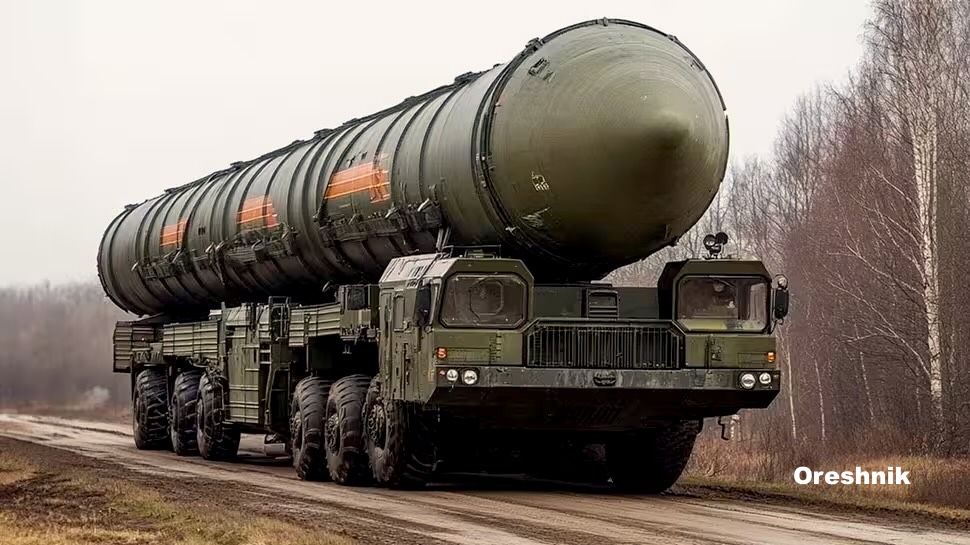
The Oreshnik is a road-mobile, medium-range hypersonic ballistic missile system designed for high-precision strikes. Its first known combat use occurred in November 2024, when Russia struck a Ukrainian defence-industrial facility at Yuzhmash in Dnepropetrovsk. The strike followed Ukrainian attacks on Russian territory using US- and UK-supplied long-range missiles.
Following successful combat testing, President Vladimir Putin authorised serial production. Russian officials clarified that Oreshnik is not classified as a strategic nuclear weapon. However, its destructive potential, especially when used in coordinated salvos with other precision systems, approaches strategic-level effects.
The system entered serial production in late 2024, with the first fully operational units delivered to the Strategic Missile Forces in 2025.
Technical Capabilities That Redefine Strike Warfare
Although many performance parameters remain classified, senior Russian military commanders have disclosed key operational characteristics. The Oreshnik deploys multiple independently guided hypersonic warheads, travelling at speeds approaching Mach 10, or roughly three kilometres per second.
According to President Putin, the warheads generate impact temperatures nearing 4,000 degrees Celsius, allowing them to obliterate deeply fortified structures. Russian sources claim the missile can penetrate any existing or prospective anti-ballistic missile defence system.
Publicly released data suggests a maximum range of up to 5,500 kilometres, with flight times of under 20 minutes to major NATO command and military hubs in Europe. The missile can carry conventional or nuclear payloads, with a reported nuclear yield potential reaching 900 kilotons.
Europe Within Reach — Strategic Messaging to NATO
Military-political analyst Alexander Mikhailov described the decision to place the Oreshnik on combat duty as a deliberate signal to European leaders. Following the US withdrawal from the Intermediate-Range Nuclear Forces Treaty, Russia restored medium-range missile capabilities to counter perceived NATO threats.
According to Mikhailov, the missile’s tactical and technical characteristics enable Russia to strike any point in Europe. The announcement, therefore, serves both operational and political objectives, reinforcing deterrence while warning against further escalation.
The potential deployment of Oreshnik systems in Belarus further extends Russia’s strike coverage. Belarusian President Alexander Lukashenko confirmed that such systems would enter combat duty as part of the Union State’s collective defence framework, while Minsk retains influence over targeting decisions.
Industrial Scale Production and Targeting Doctrine
Stepanov emphasised that Russia’s established industrial base allows for the production of tens or even hundreds of Oreshnik units annually. This scale enables strategic coverage of border regions and critical infrastructure.
He added that Western decisions to supply long-range weapons, such as Germany’s Taurus cruise missiles, effectively legitimise production facilities as military targets. In this context, Oreshnik systems armed with conventional warheads could strike defence-industrial sites across Ukraine and supporting NATO states if escalation continues.
Russian officials frame this capability as a deterrent rather than a pre-emptive doctrine, although the messaging remains intentionally unambiguous.
S-500 Prometheus — Shield Against Hypersonic and Space Threats
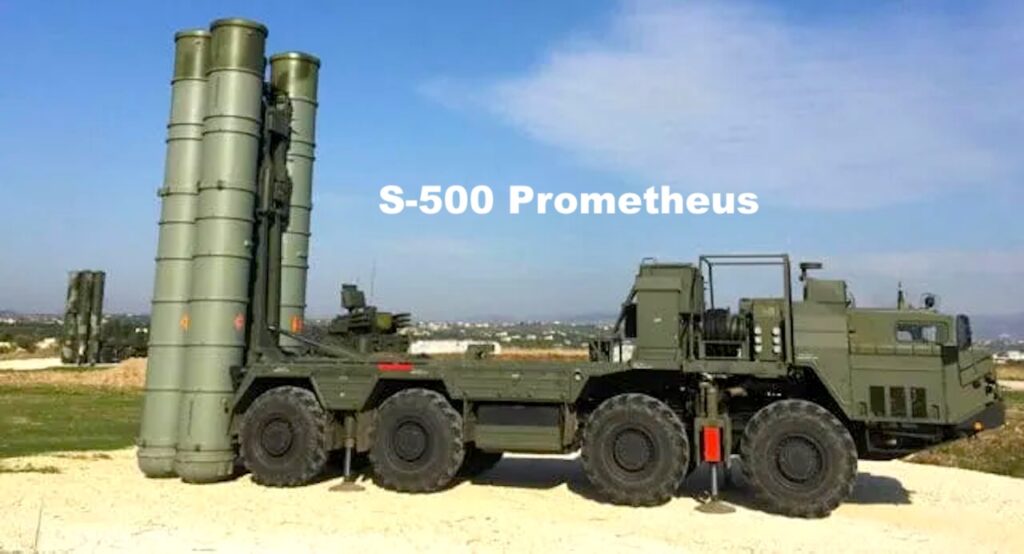
Parallel to offensive deployments, Russia has activated the first regiment of the S-500 Prometheus system. Defence Minister Andrey Belousov confirmed its entry into combat duty in December 2025, calling it a milestone in national missile defence.
Developed by the Almaz-Antey concern, the S-500 bridges the gap between traditional air defence and strategic missile defence. It can intercept hypersonic missiles, medium-range ballistic missiles, and low-orbit satellites, addressing emerging threats from the militarisation of near-Earth space.
Russian analysts argue that the system ensures credible defence against orbital strike platforms and next-generation aerospace weapons, areas where Western capabilities remain fragmented.
Integrated Defence Architecture and Global Implications
The S-500 operates alongside S-300 and S-400 systems, forming a layered defence network protecting Moscow and key industrial regions. Defence officials state that the system is designed for operational relevance over the next 25 years, with adaptability built into its architecture.
Beyond domestic deployment, Russia has indicated potential export interest once its own forces are fully equipped. Analysts suggest this could alter regional power balances in areas where Western military presence has expanded.
Combined with the Oreshnik system, Russia now fields a comprehensive strike-and-shield capability, integrating hypersonic offence with advanced missile and space defence.
Strategic Reality Taking Shape
The placement of Oreshnik hypersonic missiles and S-500 systems on combat duty signals more than technological advancement. It reflects Russia’s assessment that long-term confrontation with NATO requires both credible deterrence and industrial endurance.
European security planners now face a transformed strategic environment, where warning times are compressed and missile defence assumptions are increasingly challenged. For Moscow, the message is clear: strategic parity, if not superiority, now rests on systems already in operational service rather than aspirational projects.