Memory of Ashes: Can Japan Ever Forget Hiroshima and Nagasaki?
Trump’s “Little Conflict” and a Nation’s Memory
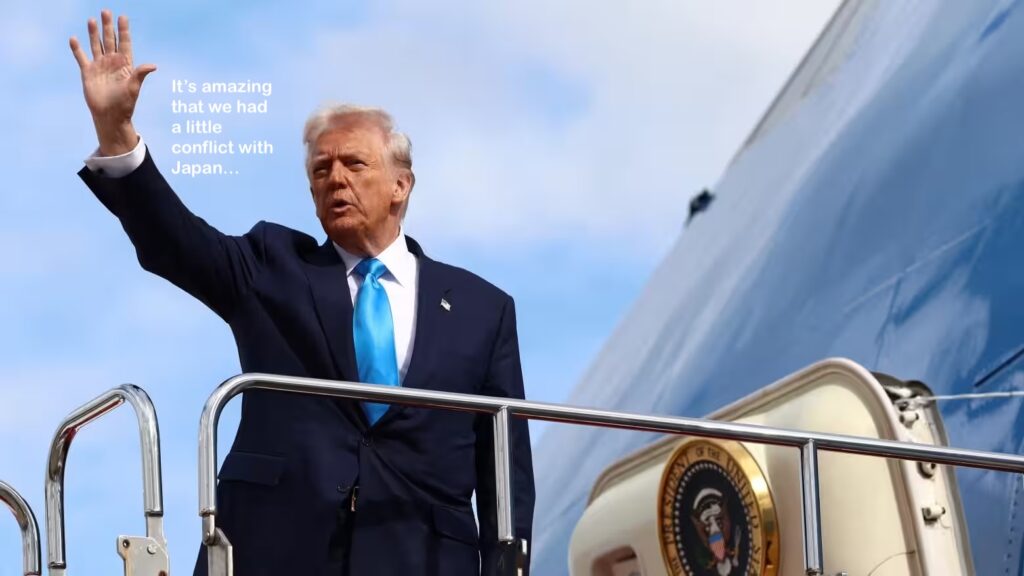
“It’s amazing that we had a little conflict with Japan,” said US President Donald Trump at a meeting in Tokyo with US and Japanese business leaders. “You may have heard about it. After such a horrible thing, the two nations are now the closest friends and partners they can be.”
Those words — little conflict — dropped with a casual air, almost as if the tragedy of Hiroshima and Nagasaki were a distant footnote in history. Yet for Japan, that “conflict” remains the defining wound of the twentieth century. The world watched as two cities were turned to ash, and generations later, the scars still whisper through memorial halls, quiet prayers, and the haunting silhouettes that remain etched on stone.
To reduce that catastrophe to a “little conflict” is more than diplomatic tone-deafness. It is moral erasure.
The “Little Conflict” That Shook Humanity
On 6 and 9 August 1945, the United States dropped atomic bombs on Hiroshima and Nagasaki, killing more than 200,000 people instantly — mostly civilians, children, and women. Japan, the only nation to endure such atomic horror in war, mourned more than 344,000 lives lost in Hiroshima and 198,000 in Nagasaki by August 2025, and counting those who withered under radiation’s cruel grip. The devastation was not just physical; it rewired the moral architecture of civilisation.
For Trump to label that apocalypse a “little conflict” — even in jest — betrays a deep cultural divide in how memory and power are framed. It reflects an American political instinct to rewrite trauma through the lens of strategic success, while Japan continues to live with the ghostly consequences.
Every 6 August, as the Peace Bell tolls in Hiroshima, survivors still recall the skin that peeled, the rivers that boiled, and the silence that followed. Japan’s post-war rebirth did not erase that memory; it built upon it — a national vow never to repeat such horror.
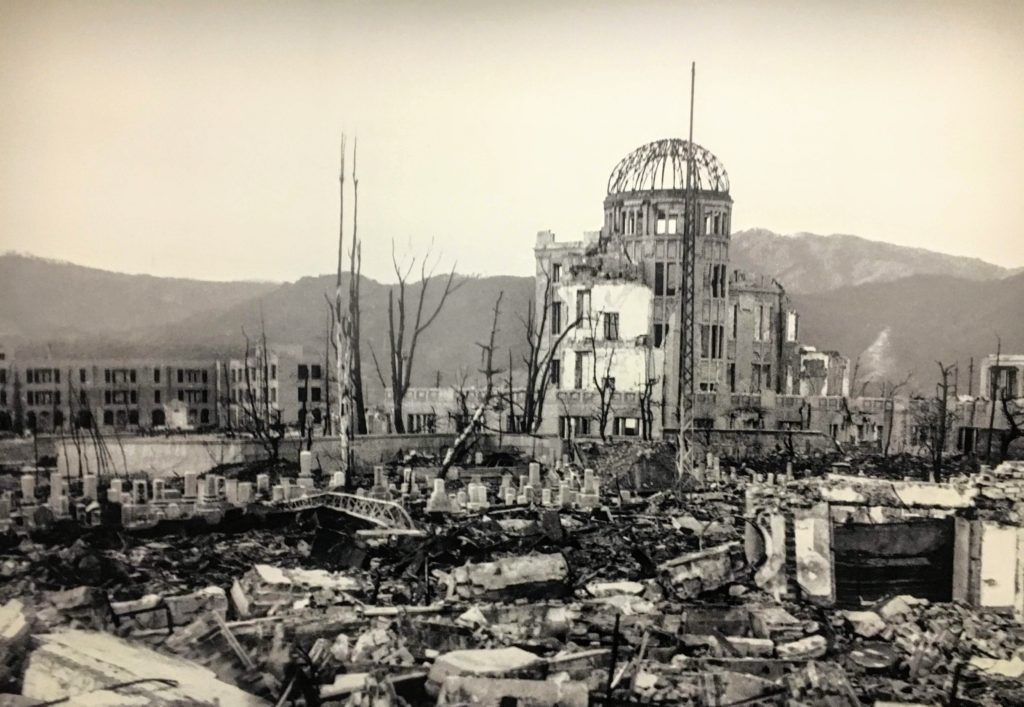
Hiroshima and Nagasaki Memory in Japan’s Cultural Conscience
Japanese memory is not just historical; it is cultural. The DD News essay A Memory of Ashes rightly recalls filmmaker Akira Kurosawa’s vision of post-war Japan — a country grappling with guilt, grief, and rebirth.
Cinema, literature, and education continue to carry the Hiroshima and Nagasaki memory forward. Children visit the memorials; artists capture the unspeakable through brush, ink, and silence. Japan has not forgotten — it has learned to remember without hatred, to forgive without forgetting.
That is what makes the “little conflict” remark so painful. It clashes with the reverence that Japan accords to the dead and trivialises the ethics of remembrance.
From Ashes to Allies — and the Moral Paradox
Japan and America today are strategic partners bound by democracy, trade, and security. Trump’s visit itself reaffirmed this alliance — joint commitments on trade and critical minerals, a reaffirmation of the security treaty, and warm rhetoric about friendship.
Yet friendship cannot be founded on amnesia. A true alliance must rest on shared honesty about the past. When a global leader refers to Hiroshima and Nagasaki as a “little conflict”, it reopens a wound that never fully healed. It reminds the world that even in peace, power often writes the first draft of history — and morality edits it later.
The Hiroshima and Nagasaki memory stands as a moral checkpoint, warning against the arrogance of forgetting.
The New Generation and the Burden of Forgetting
For younger Japanese, the atomic bombings are history lessons, not lived experience. Yet every year, student volunteers at the Peace Memorial Museum retell survivor stories so that empathy does not die with the eyewitnesses.
Japan’s youth carry a subtle tension: they live in a hyper-modern, globally connected world, yet their national identity is still shadowed by the ashes of 1945. When Western leaders trivialise that event, it tests how far historical empathy extends in international diplomacy.
As new global powers toy again with nuclear rhetoric, the Hiroshima and Nagasaki memory should not be treated as an academic relic — it is the world’s moral mirror.
Why Words Matter
Trump’s statement may have been offhand, but words from world leaders are not without weight. When the leader of the country that dropped the bombs calls it a “little conflict”, it sounds like an abdication of moral responsibility.
The United States has never issued an official apology, though Barack Obama’s 2016 visit to Hiroshima marked a symbolic gesture of compassion. Trump’s language now appears to undo that fragile bridge, replacing humility with hubris.
Japan may forgive, but it will not forget. The Hiroshima and Nagasaki memory is etched into its collective DNA — a permanent reminder that peace without remembrance is only silence disguised as reconciliation.
Friendship Must Not Mean Forgetfulness
Diplomacy thrives on politeness, but truth demands conscience. For Japan, friendship with America has never meant erasing the past — it means ensuring that such a past never repeats itself.
Trump’s remark, careless as it may seem, exposes a broader flaw in modern geopolitics: the tendency to trivialise history once it ceases to serve strategic interest. Yet history is not a prop; it is the soul of nations.
The Hiroshima and Nagasaki memory is not Japan’s burden alone — it belongs to all humanity. Forgetting it would be the world’s next act of violence.