Introduction: Tensions Explode in the Himalayan Cold
It started in the thin air of Leh, Ladakh, where September brought not just gusts of wind but a storm of youth anger, political drama, and fierce demands for autonomy. The man in the centre, Sonam Wangchuk, was no stranger to headlines—but this was different. Protests for statehood, bitter accusations, and an eruption of violence made the national spotlight swerve back and forth: was this a fight for justice, or was something deeper at play? At each turn, the Ladakh unrest Sonam Wangchuk story grew more gripping, hinting not just at local struggles but at hidden hands and motives stretching well beyond the mountains.
The Spark: Protest, Fast and Flames
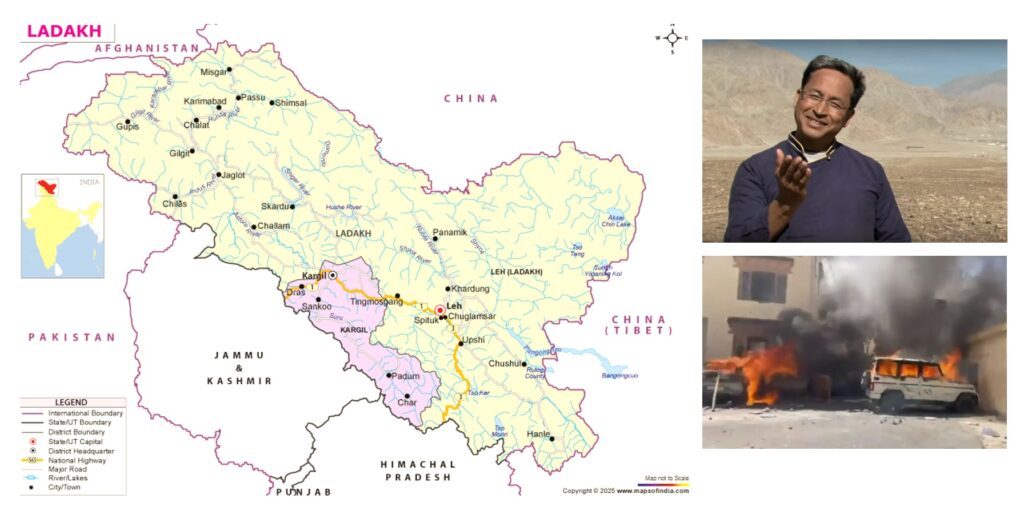
September 24, 2025 became a flashpoint for Ladakh’s deepest concerns. Wangchuk, known as an innovator and reformer, announced a hunger strike—anshan—challenging the government to deliver statehood and the Sixth Schedule. Local youth followed, carrying banners and hope. Yet, what began as peace spiralled in hours: clashes with police, burning vehicles, government offices engulfed in smoke, and a tally of deaths that stunned the region. Four killed, dozens injured—the loss was real, and the blame was instantly political.
Wangchuk in the Crosshairs: Activist or Conspirator?
The voice of Wangchuk echoed through the valleys and social media: “This is our fight,” he said, urging youth and elders to stand firm but peaceful. However, authorities saw danger in his words, charging that he drew inspiration from the Arab Spring and Nepal’s Gen Z protests—a script, they argued, designed to provoke violence. Behind closed doors, officials whispered of strategy, not idealism. Was Wangchuk a hero, or had he stepped across the line into dangerous territory, risking Ladakh’s fragile peace?
Who is Sonam Wangchuk?
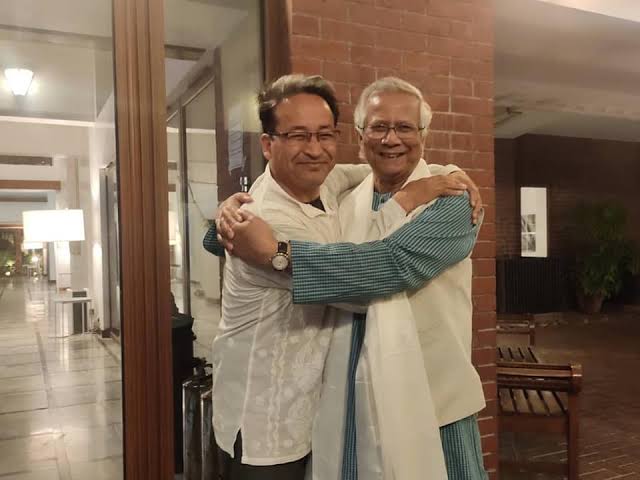
Sonam Wangchuk is a prominent Ladakhi figure widely recognized for his work in education reform and environmental activism. However, in recent years, he has become a controversial personality, with multiple allegations questioning his alignment with Indian national interests. His journey, activism, and controversies reflect deeper tensions rooted in Ladakh’s unique geopolitical and cultural context.
Allegations Against Sonam Wangchuk
Comments on Indian Army Morale
In March 2024, during heightened tensions along the India-China border, Wangchuk publicly claimed that the morale of Indian soldiers, particularly those from the Ladakh Scouts, Sikh Regiment, and Gorkhas, was at an all-time low due to discontent. These remarks were perceived by some as undermining the morale of the armed forces, a sensitive issue amidst national security concerns. His critics argue these statements potentially compromised the unity and motivation of troops deployed in one of India’s most vulnerable regions.
Land Lease Controversy
On January 5, 2018, Wangchuk’s organisation, the Himalayan Institute of Alternatives Ladakh (HIAL), secured a 40-year land lease deal from the Leh Autonomous Hill Development Council (LAHDC) under a BJP-led council. The lease granted over 1,000 kanals (about 125 acres) for establishing a university focused on sustainable Himalayan development.
The situation deteriorated when the Ladakh administration cancelled this lease on August 21, 2025. The official reason cited was Wangchuk’s failure to develop a recognised educational centre and non-execution of the formal lease agreement. However, Wangchuk’s wife and HIAL co-founder, Gitanjali Angmo, alleged that a senior BJP minister warned her the lease would remain frozen unless Wangchuk ceased his activism advocating for Ladakh’s inclusion under the Sixth Schedule, suggesting a political dimension to the cancellation.
Critics argue that the proposed educational centre never materialized, stoking suspicions that the land was acquired under false pretences. Although the government justified the cancellation on procedural grounds, this episode has fuelled narratives that Wangchuk’s intentions may have deviated from the developmental goals he professed.
Context of Wangchuk’s Activism
Demand for Sixth Schedule Status
At the core of Wangchuk’s activism lies a persistent demand for Ladakh’s inclusion under the Sixth Schedule of the Indian Constitution, which would grant the region greater autonomy via tribal protections, safeguarding cultural and environmental interests. Given Ladakh’s strategic border with China, this demand is contentious, involving a balancing act between local aspirations and national security priorities.
Environmental and Educational Reforms
Wangchuk’s work with SECMOL (Student’s Educational and Cultural Movement of Ladakh) and HIAL has focused on sustainable living and innovative educational reforms. These efforts are generally well-regarded. However, his increasing political activism, particularly when combined with broader regional security dynamics, has polarised public opinion and political circles.
Public and Political Reactions to Wangchuk
Accusations of Instigating Divisions
Some perceive Wangchuk’s comments on the armed forces and his political activism as instigating divisions within the military and society. Critics argue this may align with external interests seeking to exploit internal fissures in Ladakh, a region critical to India’s national security.
Political Tensions with the BJP
The land lease cancellation and Wangchuk’s autonomous demands have aggravated tensions with certain factions within the BJP. His demands are viewed as challenges to central authority as well as national unity, complicating efforts to maintain political and administrative stability in Ladakh.
The Role of Sonam Wangchuk in the 2025 Ladakh Violence
Ladakh Violence on September 24, 2025
Violence erupted in Leh on September 24, 2025, during protests led by Wangchuk demanding statehood and Sixth Schedule status. Four people died, and over 70 others were injured during clashes between protesters and police.
The central government and local authorities accused Wangchuk of making provocative statements that incited youth violence. Reports from NDTV and India Today indicated that his rhetoric, referencing Gen Z protests in Nepal, acted as a blueprint for the unrest. The government suggested his actions were motivated more by personal ambition than broader community welfare.
Personal Interest Versus Community Interest
Critics question Wangchuk’s intentions, alleging his push for statehood and Sixth Schedule status serves his personal agenda. The land lease controversy and failure to develop the educational centre underpin the narrative that his activism may be self-serving. The timing of his hunger strike and the subsequent violence have led some observers to suspect he sought to leverage public sentiment for political or personal gain rather than genuinely addressing Ladakh’s grievances.
Government’s Stance and Broader Implications
The Ministry of Home Affairs and local administration blamed Wangchuk for escalating violence. This official narrative positions the unrest as the result of individual provocation, diverting focus from systemic issues in Ladakh.
There are concerns the youth have been manipulated in this political movement, threatening social stability in a strategically sensitive region. Wangchuk’s eroding credibility among certain population sectors and political groups signals waning trust in his leadership. This shift could affect his future influence and the movement’s effectiveness.
Allegation of Derailing Scheduled Negotiations
Context of the October 6, 2025 Meeting
The central government planned urgent talks with Ladakhi leaders on October 6, 2025, in Delhi to discuss statehood and Sixth Schedule demands. Wangchuk was reportedly not invited or was set to play a marginal role in these negotiations—a significant factor in the unfolding crisis.
Violence as a Strategy?
The September 24 violence, just days before the talks, fuels speculation that it was a deliberate escalatory move designed to force a reassessment of the negotiation terms. Government sources and media pointed to Wangchuk’s inflammatory statements during the hunger strike as part of a strategy to mobilise youth and compel the government to re-evaluate his exclusion and role in negotiations.
Political and Public Reactions
The government framed Wangchuk’s actions as calculated attempts to stall dialogue. Public discourse became polarized: some hailed Wangchuk as a martyr for Ladakh’s cause, while others derided him as a political opportunist.
Despite this turmoil, the October 6 meeting remains crucial. Yet, the violence has complicated prospects for dialogue, hardening positions on both sides, potentially sidelining substantive issues.
Ladakh’s Demand for Statehood: Complex Realities
Historical Background
Until August 2019, Ladakh was part of Jammu and Kashmir. The region had long sought greater autonomy because of its distinct culture, language, and environment. The abrogation of Article 370 in 2019 split the former state into two Union Territories—Jammu and Kashmir, and Ladakh. While many Ladakhis initially welcomed direct central administration, expectations for development and autonomy quickly turned into frustration.
Evolution of the Demand
Initially, demands centred on UT status to gain administrative focus and development benefits. Post-2019, the call shifted towards full statehood, primarily for:
Administrative autonomy via a legislative assembly
Cultural and environmental protection through local laws
Enhanced political representation at the national level
Challenges Due to Small Population
With a population of approximately 300,000, Ladakh falls below typical thresholds for statehood (e.g., Sikkim’s population is roughly 610,000). Small population size raises concerns about economic viability and administrative efficiency. The central government sees UT status as a more practical governance model.
Strategic and Political Considerations
Ladakh’s border with China and Pakistan makes strategic considerations paramount. Centralists prefer direct control to optimise security coordination. The drive for statehood represents resistance to centralisation and a quest for local empowerment but triggers fears related to national unity and precedent for other regions.
Conclusion: A Region and a Leader in a Crucible
Sonam Wangchuk’s story is entwined with Ladakh’s struggle between autonomy and integration. His contributions to environmental sustainability and education are undeniable. Yet, his activist role—amid allegations of instigation, political opportunism, and controversy over land deals—has complicated his legacy.
The Ladakh unrest underscores the balancing act between local aspirations, national security, and political stability in a geopolitically sensitive zone. The October 6, 2025, dialogue will be pivotal in shaping Ladakh’s future and determining the fate of Wangchuk’s movement and influence. In this volatile crossroads, the narrative of activism and ambition continues to unfold.