From Inflation to Intervention: How Iran’s Protests Drew Trump and Russia In
Iran Protests Begin After Rial Collapse
Protests in Iran began on 28 December 2025, after the Iranian rial collapsed to a record low, triggering walkouts by merchants in Tehran’s Grand Bazaar. Traders shut their shops in protest against soaring prices, unpaid wages, and a currency crisis that has eroded purchasing power across the country.
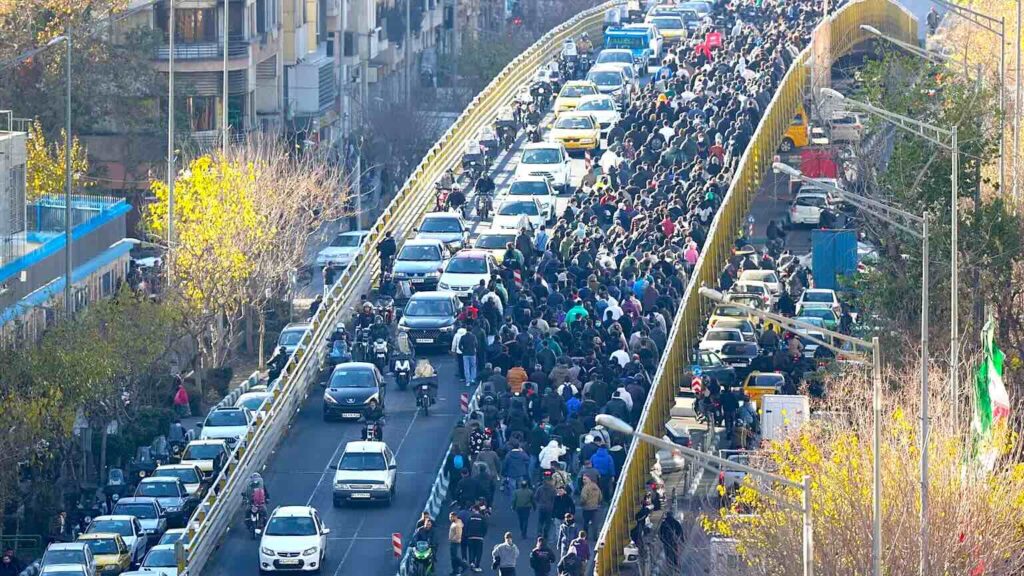
Within 48 hours, demonstrations spread beyond the capital to major cities including Isfahan, Shiraz, Mashhad, and several western provinces. What began as merchant-led economic dissent quickly drew in students, workers, and urban residents facing rising food and fuel costs.
By 30–31 December, the protests had shifted from economic grievances to open political defiance.
Clashes Turn Deadly as Protests Escalate
Clashes between demonstrators and security forces were reported in multiple locations as authorities moved to disperse gatherings near markets and government buildings. In provinces such as Lorestan and Chaharmahal and Bakhtiari, reports indicated the use of live ammunition, alongside tear gas and baton charges.
Rights groups and semi-official Iranian media later confirmed at least six to seven deaths as the unrest entered the New Year. Dozens more were injured or detained, although precise figures remain difficult to verify due to restrictions on independent reporting.
More significantly for Tehran, protest slogans evolved rapidly. Economic demands gave way to chants directly targeting Supreme Leader Ayatollah Ali Khamenei and the Islamic Republic’s political system, crossing a long-established red line for the state.
Tehran Warns Against ‘Illegal Gatherings’
Iranian authorities responded by labelling the protests “illegal gatherings” and vowing decisive action. Security deployments were expanded, involving riot police, Basij units, and plainclothes personnel across several provinces.
Senior figures accused foreign actors of exploiting economic hardship to destabilise the country. Adviser Ali Larijaniwarned that any external interference would have consequences beyond Iran’s borders, referencing Tehran’s regional alliances in Lebanon, Iraq, Syria, and Yemen.
The regime now faced a familiar dilemma. Rapid repression could restore surface calm. However, it also risked deepening public anger at a time of acute economic distress.
Russian Il-76 Cargo Flights Raise Questions
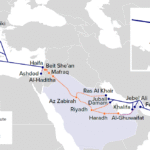
As protests intensified, at least five Il-76 heavy cargo aircraft linked to Russia and Belarus landed in Tehran between 31 December and 1 January, according to flight-tracking data. Neither Moscow nor Tehran disclosed the purpose of the flights.
The Il-76 platform is typically used for military logistics. Analysts noted that Belarus-registered aircraft are often used as proxies for Russian defence shipments. While the cargo remains unconfirmed, speculation has focused on riot-control equipment, security logistics, or air-defence components.
The timing was notable. Russia has a record of quietly supporting allied governments facing internal unrest, including in Syria. For Tehran, the airlifts signalled reassurance. For Washington, they underlined that Iran is not strategically isolated.
Trump Issues Direct Warning to Tehran
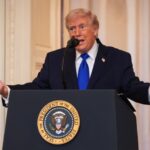
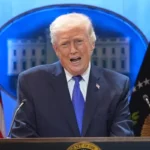
On 2 January, US President Donald Trump escalated rhetoric sharply. In a post on Truth Social, he warned that if Iran “shoots and violently kills peaceful protesters,” the United States would “come to their rescue.” He added that US forces were “locked and loaded and ready to go.”
The statement marked a shift in emphasis. Unlike earlier threats centred on Iran’s nuclear programme or regional proxies, Trump explicitly linked potential US action to the treatment of domestic protesters.
However, the warning remained deliberately vague. No details were offered on what “rescue” would involve. The ambiguity allowed Washington to apply pressure without committing to military action, while placing Iran’s security response under global scrutiny.
A Familiar Cycle of Protest and Crackdown
Iran has faced repeated waves of anti-government protests over the past two decades. The most recent comparable episode occurred in 2022–23, following the death of Mahsa Amini in morality police custody. That movement spread nationwide and was eventually suppressed through mass arrests, live fire, executions linked to protest charges, and sustained internet restrictions.
Earlier, the November 2019 fuel price protests triggered one of the deadliest crackdowns since the 1979 revolution, with hundreds killed during a near-total communications blackout. The 2009 Green Movement, sparked by disputed election results, was neutralised through arrests and long-term political repression.
Across these episodes, the state’s response has remained consistent: securitisation, information control, and framing unrest as foreign-influenced once protests turn political.
Why This Round Is Different
What distinguishes the December 2025 protests is their convergence with external strategic signalling. Iran is grappling with deep economic deterioration, weakened public trust, and heightened regional tensions following earlier US-Israeli strikes.
The near-simultaneous arrival of Russian cargo aircraft and Trump’s intervention warning transformed a domestic crisis into an Iran protests geopolitics flashpoint. Moscow appears to be quietly reinforcing a strategic partner. Washington is publicly testing Tehran’s restraint.
Neither side appears eager for immediate escalation. Yet brinkmanship carries risks. A harsher crackdown could cross Washington’s stated red line. Misjudged foreign backing could embolden Iranian security forces. In such conditions, miscalculation becomes the most dangerous variable.
As protests continue, Iran’s streets are no longer just a domestic arena. They have become a stage where global powers signal intent, deterrence, and resolve—often without fully controlling the consequences.