Iran Crisis Scenarios: How Sanctions, War Plans, and Pressure Politics Intersect
The current Iran crisis did not emerge from a single flashpoint. It is the cumulative result of sustained economic pressure, internal unrest, and repeated signalling of military force. Over the past decade, sanctions have evolved into a primary instrument of coercion, weakening Iran’s economy while amplifying social stress. This strategy, repeatedly dissected by economist Jeffrey Sachs, frames the present confrontation as a deliberate escalation ladder rather than a spontaneous crisis.
Since the United States withdrew from the JCPOA in 2018, Iran’s economy has absorbed severe shocks. The rial has depreciated by nearly 97% (from approximately 40,000 in 2018 to over 1,400,000 per USD by January 2026). Inflation has hovered between 40% and 50%, and GDP has contracted sharply in multiple years. These figures, confirmed by IMF assessments, coincide with periodic protest waves that are frequently portrayed as purely domestic unrest. Sachs argues instead that economic warfare is designed precisely to create such conditions.
Economic Warfare as the Core of the Iran Crisis
Jeffrey Sachs on Sanctions as a Regime-Change Instrument
Jeffrey Sachs has consistently described sanctions on Iran as a form of economic warfare, not diplomacy. According to his analysis, the objective is not behavioural change but systemic destabilisation. By restricting oil exports, freezing assets, excluding banks from SWIFT, and enforcing secondary sanctions, Iran’s access to hard currency collapsed.
Between 2018 and 2025, Iran’s oil exports fell from over 2.5 million barrels per day to as low as 500,000 barrels per day, a decline of nearly 80% at certain points. This contraction starved the state of revenue, triggered monetary expansion, and fuelled inflation-driven protests. Sachs highlights official acknowledgements from US Treasury officials that sanctions were intended to weaken banks, disrupt imports, and provoke social unrest.
The pattern mirrors earlier cases, particularly Venezuela, where sanctions preceded currency collapse, shortages, and prolonged instability without producing regime change.
Iran Crisis Scenarios After a US Military Strike
Why Military Action Remains a Live Variable
Economic pressure alone has not led to collapse. While it has generated the intended unrest—manifesting in protests and riots over the past month—the Iranian regime has managed to suppress these disturbances to a considerable extent. Meanwhile, American military options continue to feature prominently in strategic discourse.
A wide range of outcomes is being discussed across online media platforms. However, closer analysis suggests that many of these assumed scenarios are either exaggerated or fundamentally flawed. This article examines the principal possibilities along with their guesstimated probabilities.
Scenario 1: Precision Strikes Trigger Collapse and Democratic Transition
Why This Scenario Lacks Credibility
This scenario assumes that limited, surgical strikes on IRGC-linked nuclear and military facilities would weaken the Iranian state sufficiently to allow democratic forces to emerge. However, no organised or viable democratic opposition currently exists within Iran that could realistically fill a sudden power vacuum. Historical evidence strongly contradicts the assumption that external military pressure can generate internal democratic transformation.
Iran’s size, diversity, and population of over 90 million make any externally induced collapse exceptionally dangerous. Rather than producing democratic change, such strikes would more likely trigger fragmentation, refugee flows, regional proxy conflicts, and heightened nuclear proliferation risks. The experience of Iraq in 2003 and Libya in 2011 demonstrates that military intervention tends to dismantle state structures without creating stable political alternatives.
In Iran’s case, external attacks would likely override internal dissent and activate nationalist consolidation, enabling the state to reassert control rather than fracture. No credible indicators suggest elite defections at a scale required for regime collapse. While this scenario cannot be ruled out entirely, it represents a high-risk pathway with outcomes that would ultimately undermine Washington’s own strategic objectives.
Estimated likelihood: 10–15%
Scenario 2: Regime Survival with Tactical Concessions
Temporary Moderation Without Structural Change
Under limited military pressure, Iran may agree to negotiations to secure short-term relief without abandoning its core security policies. This would mirror previous cycles in which dialogue resumes only after escalation.
Sustained moderation remains unlikely due to Iran’s determination to expand its nuclear programme and its repeatedly stated objective of eliminating Israel. The leadership continues to prioritise regime survival and strategic deterrence over economic recovery. This approach, however, does not satisfy large sections of the population hoping for political change.
External pressure from West Asian states, along with European, Chinese, and Russian actors, could nevertheless push developments in this direction.
Estimated likelihood: 15–20%t
Scenario 3: Military Consolidation Under the IRGC
Authoritarian Hardening as a Post-Strike Outcome
A military strike could marginalise civilian institutions, eliminate certain loyalists within the IRGC, and elevate others—effectively amounting to an assisted military coup. Given its control over internal security, critical infrastructure, and large segments of the economy, the IRGC already represents the most organised power centre within Iran.
Rather than precipitating collapse, this scenario could result in a more overtly militarised and regionally assertive state. Although intelligence agencies are widely believed to favour this outcome, recent protest suppression suggests limited success so far.
The EU’s designation of the IRGC as a terrorist organisation may increase pressure on individual commanders, but its short-term impact remains uncertain.
Estimated likelihood: 30–35%
Scenario 4: Strait of Hormuz Disruption
Global Economic Shock as Strategic Leverage
Approximately 20–25% of global oil and LNG trade transits through the Strait of Hormuz. Even limited disruption would sharply raise energy prices and destabilise global markets.
Washington is unlikely to tolerate such a disruption and would likely seek to assert control over the Strait, restricting Iranian exports. This aligns with a broader US objective of limiting China’s access to discounted energy.
Estimated likelihood: 50–60%
Scenario 5: Direct Retaliation Against US Assets
Asymmetric Warfare Doctrine in Action
Iran possesses missiles, drones, submarines, and proxy forces capable of targeting US bases across the Gulf. Past incidents, including strikes following the killing of Qassem Soleimani, demonstrate both intent and capability.
Such actions would expand the conflict geographically while stopping short of full-scale war.
Estimated likelihood: 60–70%
Scenario 6: The Venezuela Model – Pressure Without Collapse
A Prolonged Stalemate Outcome
This remains one of the most plausible trajectories. Venezuela endured sanctions, currency collapse, and humanitarian stress, yet survived through coercion, alternative trade channels, and elite cohesion. Iran operates under similar conditions, with external trade routes and strategic partners cushioning total collapse.
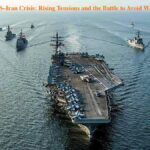
The US military build-up in the Arabian Sea mirrors the earlier Caribbean posture during the Venezuela crisis. Naval deployments and presidential threats were paired with rhetorical calls for negotiations, which never materialised. The appeal for dialogue functioned as narrative cover rather than diplomacy. Iran now appears to face the same pressure model—repackaged, but unchanged.
Estimated likelihood: 70–80%
Why Regime Change Remains the Least Likely Outcome
Overall, no “clean” outcome emerges. Military strikes may delay Iran’s nuclear programme but risk triggering retaliation, economic shocks, and alliance realignments. Sanctions deepen hardship without resolving political disputes. As Sachs has argued, they consolidate hardliners, weaken civil society, and normalise permanent confrontation.
The Iran crisis is best understood as a prolonged strategic contest shaped by economic warfare, deterrence, and endurance. Military escalation may alter tempo but not structure. The most likely outcome remains an unstable equilibrium defined by pressure, resistance, and recurring crises.