IndiGo Flight Cancellations Hit Record Levels as Operational Crisis Deepens Across India
Massive Disruptions Grip India’s Largest Airline
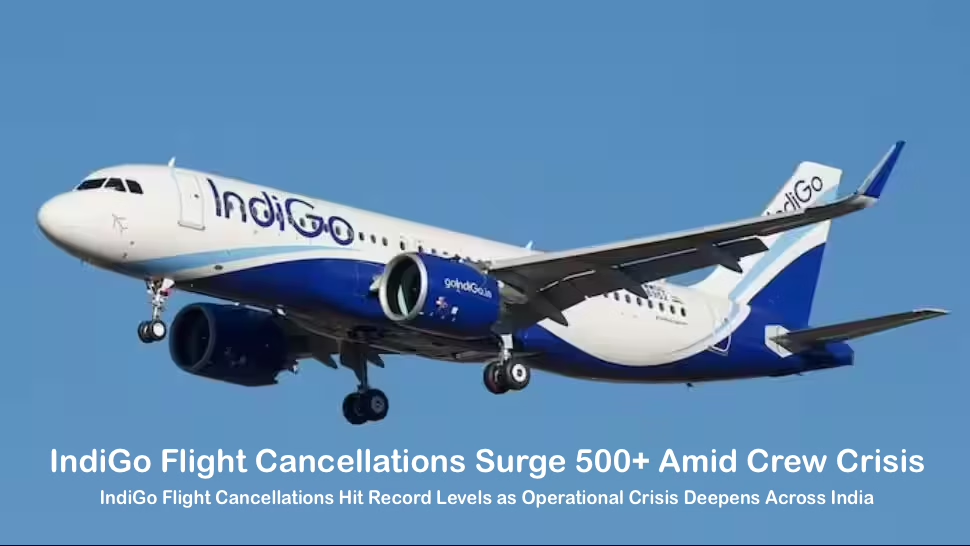
India’s largest airline, IndiGo, cancelled more than 550 domestic and international flights on 4 December 2025, setting an unprecedented single-day record for the 20-year-old carrier. The disruptions, now in their third consecutive day, have created widespread chaos for passengers across India and key overseas routes. The airline attributed the situation primarily to acute crew shortages that intensified after the second phase of Flight Duty Time Limitations (FDTL) norms came into effect on 01 November 2025.
IndiGo has informed the Directorate General of Civil Aviation (DGCA) that its operations will stabilise only by 10 February 2026. The airline has also requested temporary exemptions from specific FDTL clauses for its A320 fleet to bridge roster gaps. The crisis, however, has exposed deeper planning lapses that have been accumulating over several months.
The ongoing disruptions have hit high-traffic metro airports the hardest, especially Delhi, Mumbai, Bengaluru, and Hyderabad, where thousands of passengers have been stranded or forced to rebook on alternative airlines.
Key Causes Behind IndiGo’s Operational Meltdown
Impact of Revised FDTL Norms
The new FDTL rules were introduced in phases from July 2025 to reduce pilot fatigue and enhance flight safety. These norms mandate:
48 hours of weekly rest for pilots, up from the earlier 36 hours.
A limit of two night landings per crew per week, significantly lower than the previous six.
An increase in the defined hours of night duty, adding an additional hour to ensure improved alertness.
These changes demanded advance planning and expanded crew strength. IndiGo admitted to the DGCA that it had underestimated the rostering complexity, leading to accumulated gaps between available pilots and operational requirements. For December alone, its projections indicated a requirement for 2,357 captains, but several months of hiring slowdown created a widening shortfall.
Additional Operational Strains
While the FDTL rules triggered the shortage, several external factors deepened the crisis:
Technical glitches at key airports such as Delhi and Pune disrupted aircraft turnaround.
Dense winter fog reduced visibility, causing cascading delays across northern India.
Peak season passenger loads increased pressure on time-sensitive sectors.
Congestion during morning and evening peaks slowed gate allocation and flight sequencing.
As a result, IndiGo’s on-time performance plummeted to 19.7% on 3 December, one of the lowest figures recorded by any Indian airline in years.
Government and Regulator Step In as Crisis Widens
Civil Aviation Minister Flags Lapses
Civil Aviation Minister K. Rammohan Naidu chaired an emergency review meeting. He expressed clear dissatisfaction with the airline’s planning, stating that IndiGo had enjoyed ample notice regarding the FDTL rollout and should have adjusted staffing and rosters earlier.
He directed the airline to:
Provide proactive notifications to passengers.
Avoid any fare hikes during the disruption period.
Offer clear visibility on planned cancellations and revised operations.
DGCA’s Ground-Level Oversight
The DGCA has deployed senior officers to monitor IndiGo’s operations in real time. A surprise inspection at Delhi’s Terminal 1 revealed inadequate manpower for handling large-scale rebookings and passenger assistance.
The regulator has asked IndiGo to submit:
A detailed crew recruitment and training roadmap.
Revised roster plans compliant with FDTL norms.
A fortnightly progress report until operations are fully stabilised.
Justifications for the requested FDTL relaxations, which the DGCA will evaluate strictly from a safety standpoint.
Passenger Impact Across Major Hubs
The crisis has caused widespread travel disruption, particularly at India’s biggest aviation hubs. On 4 December alone:
Delhi recorded 191 cancellations, the highest among all airports.
Bengaluru saw 73 cancellations, affecting early-morning connections.
Hyderabad faced 68 cancellations, disrupting IT corridor travel.
Several long-haul international flights suffered delays or equipment swaps.
Terminals witnessed long queues, crowded help-desks, and passengers struggling to find rebooking options during the busy holiday period. With IndiGo operating 2,300 flights daily across 90 domestic and 45 international destinations, the ripple effect has quickly spilled over to other airlines.
Under DGCA passenger-rights rules, affected travellers are entitled to:
Full refunds for cancellations within 24 hours of departure.
Alternative flight arrangements at no extra cost.
Compensation where applicable for extended delays.
However, the sheer volume of disruptions has slowed processing times, leaving many passengers frustrated.
Airline Roadmap and Industry Reactions
IndiGo’s Forward Plan
To prevent the crisis from worsening, IndiGo has:
Extended selective cancellations up to 7 December.
Announced revised flight schedules from 8 December to reduce pressure on pilots.
Shifted certain frequencies to non-peak hours to avoid compounding delays.
Accelerated the induction of new pilots and aimed to complete pending simulator checks.
The airline expects gradual improvement over the next several weeks, though full normalisation will come only by February 2026.
Pilot Associations Reject IndiGo’s Explanation
Pilot groups such as ALPA and FIP have sharply criticised the airline’s narrative. They argue that:
IndiGo imposed a hiring freeze earlier this year despite rising demand.
Airlines like Air India and Akasa adapted to FDTL changes more efficiently.
The crisis reflects poor workforce planning, not merely regulatory reforms.
Their critique has resonated among industry watchers who believe the airline failed to align resource planning with market conditions.
What This Means for Indian Aviation
The ongoing situation is one of the most significant operational breakdowns in Indian aviation since the pandemic recovery period. It highlights:
The industry’s sensitivity to crew availability, especially during regulatory transitions.
The need for stronger contingency planning during winter and peak-season operations.
The urgency for airlines to prioritise fatigue management while ensuring seamless travel experiences.
IndiGo’s crisis also underscores broader sectoral challenges: rapid aviation growth, limited trained manpower, infrastructure constraints, and tighter safety regulations.
The coming weeks will test the airline’s capacity to restore confidence as passengers continue to navigate disruptions across multiple routes.