India’s SMART System: The Supersonic Torpedo Carrier That Could Redefine Anti-Submarine Warfare
For decades, anti-submarine warfare has been shaped by a stubborn limitation: torpedoes simply cannot travel far. Even the best lightweight variants, including those in service with advanced navies, reach only 20–50 kilometres. Submarines, meanwhile, have shifted deeper into the open ocean, operating hundreds of kilometres from hostile coasts.
This mismatch has often forced navies to push their own ships and aircraft dangerously close to the threat — a risk India has long wanted to eliminate.
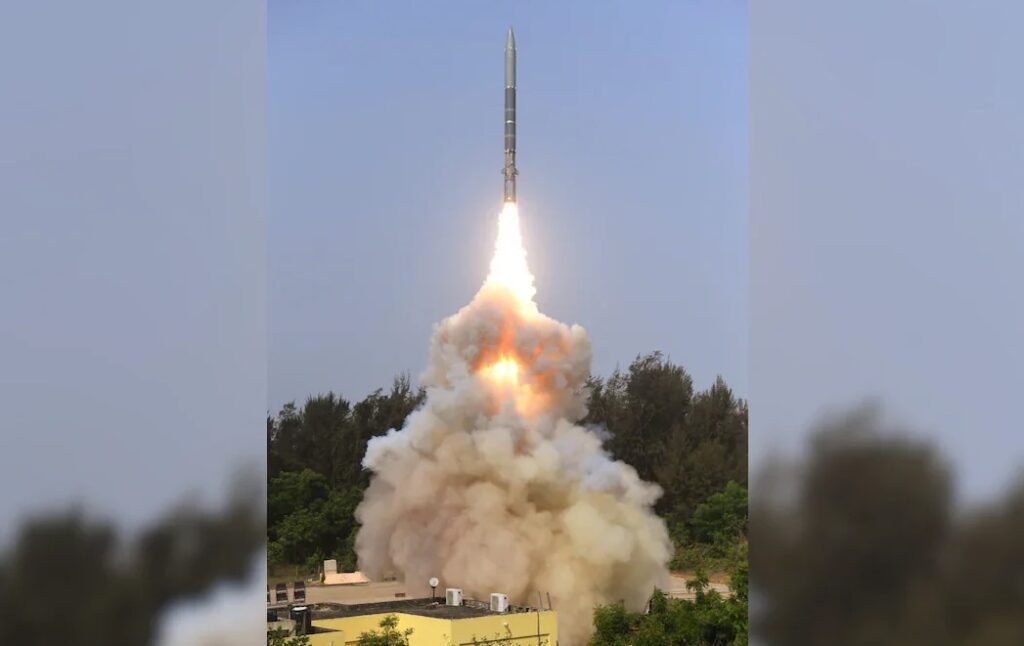
That equation began to tilt in India’s favour when DRDO unveiled a weapon concept that sounded almost implausible. A torpedo carried inside a supersonic missile, flying over 600 kilometres, and then releasing its payload by parachute near a suspected submarine location. A weapon fast enough to outrun detection, precise enough to deliver a homing torpedo, and long-ranged enough to strike threats well beyond the horizon.
This is the SMART System India — the “Supersonic Missile-Assisted Release of Torpedo“.
A Hybrid Weapon With a Simple Idea and Complicated Engineering
At its core, the idea is straightforward: Use the speed of a missile to deliver the accuracy of a torpedo.
The Process
- A two-stage solid-fuel missile launches from a ship or a coastal canister.
- It accelerates to Mach 2.5, slicing through the atmosphere.
- Near the target zone – up to 650 km away, the nose opens.
- A lightweight torpedo — typically DRDO’s TAL/Shyena variant — emerges under a parachute.
- The torpedo enters the water and switches to autonomous homing, ready to search, track and engage the submarine over a secondary range of 20–40 km, with a 50-kg high-explosive warhead designed for precision detonation.
Each step may sound simple, but combining them into one reliable sequence required years of engineering around navigation, separation dynamics, water-entry stability, and torpedo activation timing.
The system’s most striking feature is not its technology, but its range: 650 km for the missile + 20 to 40 km for the torpedo’s chase — no other anti-submarine weapon in the world currently offers this reach.
Where SMART Stands Today: Tests Completed, Induction Awaited
What we know — and only what we know — is this:
- October 2020: First public demonstration of SMART’s concept.
- December 2023: A second round of validation trials.
- 1 May 2024: The breakthrough — full-range test from Dr APJ Abdul Kalam Island.
- August 2025: DRDO announces the final developmental trial, marking the completion of the system’s development phase.
After August 2025, DRDO has not issued any public release about further tests, nor has the Indian Navy formally declared induction.
What is clear, however, is that the Navy has already evaluated coastal batteries, explored ship-launch compatibility, and highlighted SMART as a future pillar of India’s long-range anti-submarine strategy.
SMART sits precisely at that point where development is complete, user evaluation is underway, and operational deployment is the next logical step.
A moment of quiet, right before something becomes real.
Why This Matters: The Strategic Picture
Submarines Are India’s Biggest Undersea Threat
China has increased submarine patrols deep into the Indian Ocean Region. Pakistan is expanding its fleet with Chinese-origin platforms. Submarines remain the one domain where adversaries seek asymmetric leverage.
SMART stretches India’s reach far beyond traditional torpedo envelopes. It gives the Navy the ability to strike without risking ships or aircraft. In many ways, it equalises the underwater arena.
It’s Entirely Indigenous
SMART is not a licensed system.
Not a collaboration.
Not a foreign acquisition.
It is designed, developed and tested in India, fitting squarely inside Atmanirbhar Bharat — but without the delay often associated with indigenous defence projects.
It Changes Operational Thinking
A submarine commander must now consider that a ship or battery hundreds of kilometres away could still launch a weapon capable of delivering a torpedo right above him.
That uncertainty alone alters behaviour.
Is It Really New, or Are Others Already Using It?
The question arises often: Is the SMART System India truly a breakthrough, or is it simply India’s version of an older idea?
The honest answer is that it is both — rooted in a familiar concept, yet engineered at a scale no country has reached before.
Nations have experimented with missile-delivered torpedoes for decades.
The United States developed the ASROC system as far back as 1961. It uses a subsonic rocket to drop torpedoes such as the Mk 54 at ranges of roughly 20–25 km. The modern RUM-139 VLA variant integrates seamlessly with Aegis destroyers, but it still remains a tactical weapon with limited reach.
Japan’s Type 07 ASW rocket, operated from ships and helicopters, stays within the 20 km range bracket as well.
Russia’s RPK-2 (SS-N-15) stretches the idea slightly further, reaching approximately 40 km, though it comes from an earlier generation of Cold War technology and even included nuclear payload options.
China’s Yu-8 system reportedly attempts a longer throw, yet open-source assessments place it near 50 km, with no confirmed evidence of supersonic flight or extended standoff capability.
These systems prove that the concept of “missile first, torpedo next” is not new.
However, what DRDO has done with the SMART System India is fundamentally different.
What No One Has Explained Yet
Despite the excitement, one fact is easy to miss:
After August 2025, the timeline goes quiet.
There are no public statements on the next test.
No announcement of induction.
No official confirmation of deployment.
Not unusual for strategic systems — but noticeable.
And so the question that matters is simple, direct and important:
How close is India to actually fielding SMART — and how will the underwater balance shift once it does?
That is the story to watch in 2026.