RELOS Agreement Marks New Phase in India–Russia Defence Ties
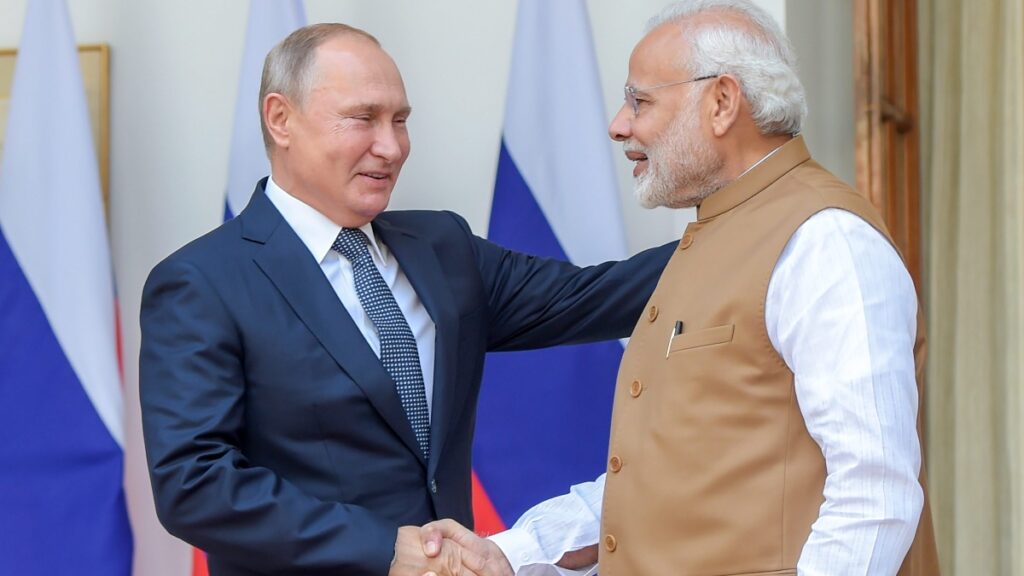
Russia’s State Duma ratified the India Russia RELOS agreement on 2 December 2025, only days before President Vladimir Putin’s state visit to New Delhi on 4–5 December. Signed earlier on 18 February 2025, the pact grants both nations reciprocal access to each other’s military bases, ports, and airfields. It enables refuelling, repairs, supplies, berthing, and movement of warships, aircraft, and soldiers, with all costs shared on an equal basis. The agreement supports joint exercises, training, humanitarian missions, and disaster relief operations. It enhances interoperability without creating any commitment for troop deployments between the two countries.
A Unique Logistics Partnership
Available information indicates that Russia does not maintain an identical RELOS-style logistics pact with China, North Korea, Iran or any other country. Moscow’s relationships with these states remain strategic, yet they rely on different models of cooperation. China and Russia engage in broad military–technical coordination. Iran provides drones and other equipment to Russia. North Korea has offered artillery and limited troop support. However, none of these arrangements constitute a formal reciprocal logistics framework similar to RELOS.
India, therefore, stands apart by holding such logistics agreements with both Russia under RELOS and the United States under LEMOA. This dual-access structure strengthens India’s defence diplomacy and logistical reach across multiple theatres.
India Completed Its Ratification Before Russia
The India Russia RELOS agreement was signed on 18 February 2025 by Indian Ambassador Vinay Kumar and Russia’s Deputy Defence Minister. India completed its ratification process well before Russia’s State Duma approved the pact on 2 December 2025. In India, executive agreements of this nature—focused on military logistics and carrying no implications for sovereignty or parliamentary finances—do not require separate parliamentary debate. These agreements fall under the authority of the Union Cabinet through the Ministry of Defence and therefore bypass the legislature.
Indian Navy Chief Admiral Dinesh Tripathi noted that the agreement is close to operationalization, indicating that the administrative process is already complete on the Indian side. This approach closely mirrors India’s handling of comparable pacts such as LEMOA with the United States, which were also ratified through executive authority for quicker implementation.
India–Russia Defence Architecture Beyond RELOS
The reciprocal logistics framework complements a wider set of India–Russia defence agreements that continue to operate despite global geopolitical turbulence.
Military Technical Cooperation Framework (2021–2031)
This long-term programme governs the supply and joint production of key platforms such as T-90 tanks, Su-30 MKI fighters, BrahMos cruise missiles, and AK-203 assault rifles. It also covers life-cycle upgrades and training cooperation.
INDRA Joint Exercises
The annual INDRA exercises bring together all three services. These drills enhance operational familiarity and improve joint response for various scenarios, including counter-terrorism and maritime security.
S-400 Acquisition
India’s procurement of the S-400 Triumf air defence system remains a cornerstone of the bilateral security relationship. The deal continues despite pressure from the United States through CAATSA-linked sanctions, highlighting India’s strategic autonomy.
Strategic Value of the RELOS Agreement
The India Russia RELOS pact has significant long-term implications for India’s defence posture.
Improved Reach in the Arctic and Russian Far East
India gains access to Russian logistical nodes in the Arctic region, an area opening new shipping lanes due to climate-driven changes. This access aligns with India’s economic interests in the Russian Far East, including energy and infrastructure investments.
Support for Russian-Origin Military Systems
Indian forces operate a large fleet of Russian-origin platforms, including Su-30s, MiG-29s, Il-76 transports, and S-400 systems. RELOS simplifies refuelling and repairs at Russian facilities during transit or exercises, reducing turnaround times and improving mission readiness.
Balancing Western Supply Chains
The pact also offers strategic resilience. India faces periodic pressure from Western partners, including recent US tariffs linked to its discounted Russian oil purchases. RELOS provides India with an alternative logistics chain, ensuring operational continuity without depending on Western infrastructure.
Flexible Cooperation, Not an Alliance
RELOS does not imply mutual defence commitments. Russia is unlikely to deploy troops in India, and India has no obligations to commit forces to Russian operations. Instead, the agreement focuses on practical cooperation such as port calls, exercises, and humanitarian missions. This flexibility suits both countries’ independent foreign policies.
A Signal Amid Shifting Global Geopolitics
The ratification of India Russia RELOS ahead of President Putin’s visit underscores the continued relevance of India–Russia defence ties. It signals a pragmatic partnership anchored in shared interests, technological cooperation, and decades of military engagement. As global alignments evolve, RELOS enables both nations to maintain a practical and reliable security channel without entering into fixed alliances.
The pact strengthens India’s logistical network at a crucial time and reaffirms Russia’s role as a long-term defence partner. It also positions India to operate more efficiently across distant theatres, from the Arctic routes to the Indo-Pacific exercises, with clear operational and strategic benefits.