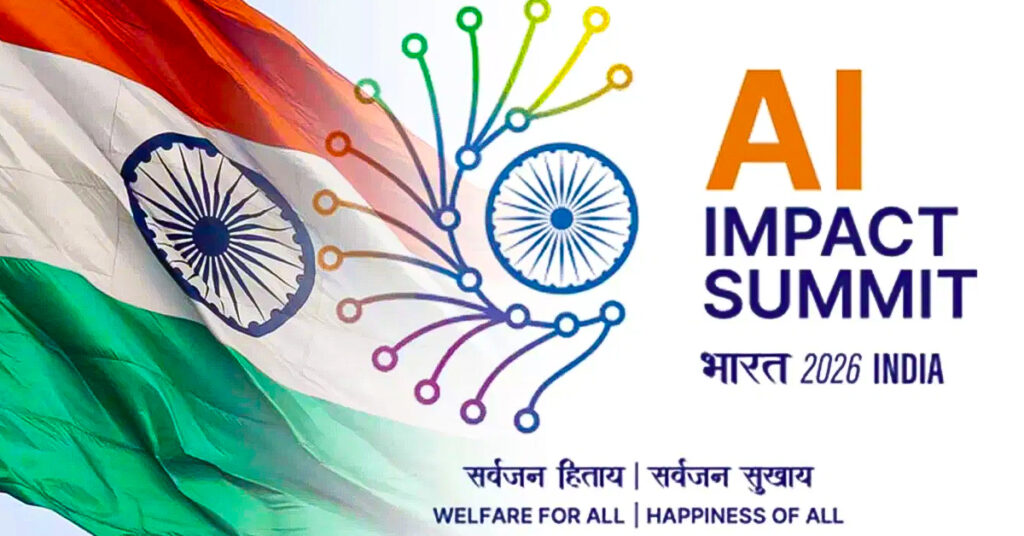
India’s AI Leadership Vision Gains Global Spotlight at Major Tech Summit
After a year marked by funding slowdowns, regulatory debates, and intense global competition, India’s artificial intelligence ecosystem is recalibrating with renewed confidence. At a recent high-profile AI summit, policymakers, startup founders, researchers, and global tech leaders gathered to send a clear message: India does not intend to remain a back-office innovation hub—it aims to become a global AI powerhouse.
The summit was more than a networking event or policy showcase. It represented a strategic pivot. India is now positioning itself not only as a consumer of AI technologies but as a creator of foundational models, infrastructure, and ethical frameworks tailored to emerging markets.
A Defining Moment After a Challenging Year
The past year tested India’s startup ecosystem. Venture capital funding tightened globally. AI startups faced valuation corrections. Concerns about data governance and compliance created uncertainty. Meanwhile, international competition intensified as the United States, China, and the European Union doubled down on AI investments.
Yet adversity often clarifies ambition.
Also Read: German Court Ruling Halts Acer & ASUS Sales Over Nokia HEVC Patent Dispute
At the summit, leaders acknowledged the slowdown but framed it as a reset rather than a setback. Instead of chasing rapid growth at any cost, Indian companies are now focusing on sustainable innovation, domain-specific AI solutions, and long-term infrastructure development.
This shift signals maturity. The narrative has evolved from “AI adoption” to “AI leadership.”
Government Strategy: From Policy to Execution
India’s policymakers emphasized the country’s long-term AI roadmap. Over the past few years, initiatives supporting digital public infrastructure, cloud expansion, semiconductor development, and startup incubation have laid the groundwork for AI scalability.
The government’s approach centers on three pillars:
- Compute Infrastructure Expansion – Increasing access to high-performance computing resources for startups and researchers.
- Data Accessibility – Leveraging anonymized public datasets to enable AI innovation while maintaining privacy safeguards.
- Skill Development – Training millions in AI-related competencies to address talent gaps.
India’s digital public infrastructure—such as digital identity systems and unified payment platforms—already serves billions of transactions. Speakers at the summit argued that this scale provides India with a unique advantage: real-world datasets and large user bases that can accelerate AI deployment in healthcare, agriculture, logistics, and fintech.
Also Read: Six-Planet Parade in February 2026: How to Watch
Building Indigenous AI Models
One of the summit’s strongest themes was technological sovereignty. While global AI models dominate headlines, Indian leaders stressed the importance of developing indigenous large language models and domain-specific AI systems.
Why does this matter?
AI systems trained primarily on Western datasets may not fully capture India’s linguistic diversity, socio-economic realities, or regional nuances. India has over 20 officially recognized languages and hundreds of dialects. Creating multilingual AI systems tailored to local contexts can unlock massive economic value.
Startups are now focusing on:
- Language translation models for rural users
- AI-powered agri-advisory tools
- Healthcare diagnostics for underserved communities
- Legal-tech solutions for regional courts
By aligning AI development with domestic needs, India aims to build solutions that can later scale to other emerging economies.
Private Sector Commitment and Global Partnerships
The summit also showcased commitments from major technology firms and venture capital funds. Global tech giants are expanding research labs and cloud infrastructure in India. Meanwhile, domestic conglomerates are investing heavily in AI-driven automation and analytics.
International collaboration remains central to India’s strategy. Rather than adopting a protectionist approach, India seeks partnerships in research, chip manufacturing, and AI safety governance.
Executives highlighted cross-border cooperation in:
- AI ethics standards
- Semiconductor supply chains
- Joint research programs
- Talent exchange initiatives
This balanced approach—building indigenous capabilities while collaborating globally—reflects India’s broader economic diplomacy strategy.
Also Read: Space-Based Data Centres and the Global Race for Orbital AI Infrastructure
AI for Inclusive Growth
Unlike purely profit-driven AI narratives seen elsewhere, India’s summit strongly emphasized inclusive development.
Speakers repeatedly stressed that AI must address structural challenges, not exacerbate inequality. Applications in education, agriculture, telemedicine, and public service delivery were front and center.
For example:
- AI tutors can personalize learning for millions of students.
- Crop-monitoring systems can improve yield forecasting and reduce farmer risk.
- Predictive analytics can optimize public health interventions.
India’s demographic advantage—its young, tech-savvy population—creates fertile ground for scalable AI adoption.
However, leaders acknowledged that digital divides persist. Expanding internet connectivity and digital literacy remains essential for AI benefits to reach rural and low-income communities.
Addressing Ethical and Regulatory Concerns
No serious AI conversation is complete without discussing ethics. At the summit, regulators and industry experts debated responsible AI frameworks.
Key concerns include:
- Algorithmic bias
- Data privacy protection
- Transparency in AI decision-making
- Misinformation risks
India aims to develop regulatory standards that balance innovation with accountability. Overregulation could stifle startups; underregulation could erode public trust.
Officials signaled a flexible, principle-based approach rather than rigid rules. This strategy allows room for experimentation while maintaining oversight.
The Talent Imperative
India already produces one of the world’s largest pools of engineers and software developers. However, advanced AI research requires specialized expertise in machine learning, deep learning architectures, and computational optimization.
Universities and private institutions are expanding AI-focused curricula. Corporate training programs are also upskilling employees in data science and AI engineering.
Industry leaders emphasized that talent development must extend beyond metropolitan hubs. Regional innovation centers can unlock untapped potential and prevent talent concentration in a few cities.
Economic Impact and Global Positioning
Artificial intelligence could significantly contribute to India’s GDP growth over the next decade. Analysts estimate that AI-driven productivity gains could transform sectors ranging from manufacturing to financial services.
At a geopolitical level, AI leadership strengthens India’s voice in global technology governance. Countries that shape AI standards influence global trade, cybersecurity norms, and digital rights frameworks.
By asserting itself in AI development, India aims to secure both economic and strategic advantages.
Challenges Ahead
Despite optimism, hurdles remain:
- High cost of advanced AI compute infrastructure
- Dependence on imported semiconductor technologies
- Intense global competition for top AI talent
- Regulatory uncertainty in rapidly evolving areas
Sustained investment and policy clarity will determine whether the summit’s ambition translates into measurable progress.
Momentum alone is not enough. Execution will define outcomes.
Conclusion
The AI summit marked a turning point in India’s technology narrative. After a challenging year, the country is reframing its AI ambitions with clarity and purpose. By combining infrastructure expansion, indigenous innovation, ethical oversight, and global collaboration, India is positioning itself as a serious contender in the global AI race.
The journey will require persistence, strategic investment, and inclusive policymaking. But one message emerged unmistakably from the summit: India does not intend to follow the AI revolution—it intends to help lead it.
FAQs
Q1. Why is India focusing heavily on AI now?
India sees AI as a driver of economic growth, innovation, and global competitiveness. It also wants to address domestic challenges through AI solutions.
Q2. What makes India’s AI strategy unique?
India emphasizes inclusive growth, multilingual AI systems, and leveraging digital public infrastructure at massive scale.
Q3. Are Indian companies building their own AI models?
Yes. Startups and research institutions are developing indigenous large language models and domain-specific AI systems.
Q4. How does AI impact India’s economy?
AI can increase productivity, improve public services, enhance manufacturing efficiency, and generate new job opportunities.
Q5. What challenges could slow India’s AI ambitions?
High infrastructure costs, talent competition, semiconductor dependence, and regulatory complexities remain key challenges.