Eurasian Geopolitical Fault Lines
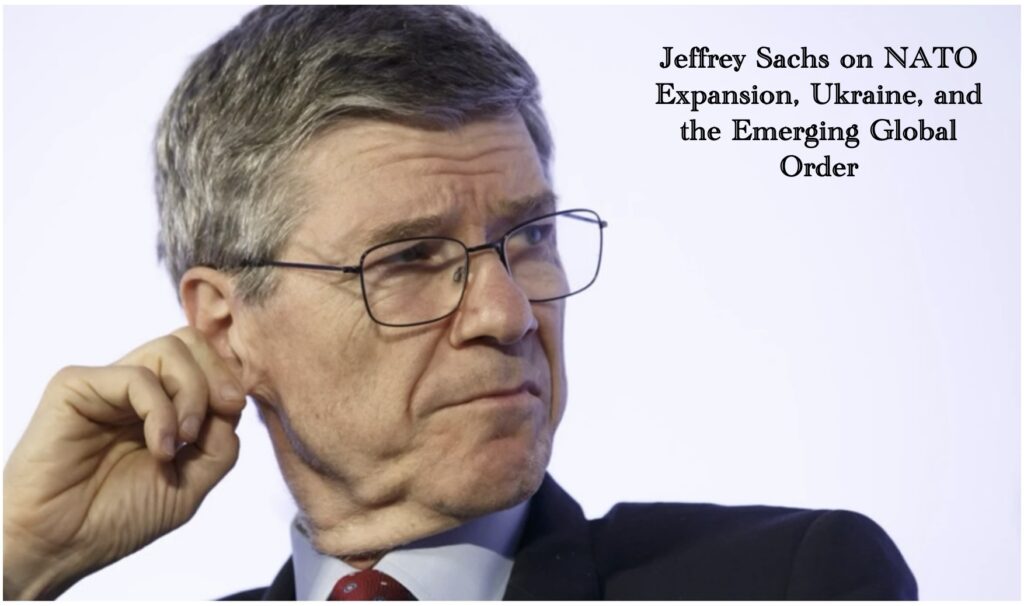
In a sharp critique of post-Cold War diplomacy, Nobel laureate economist Jeffrey Sachs exposes how broken promises and strategic miscalculations have fueled current tensions between Russia, the West, and the emerging global order. Central to his analysis is the pledge made by U.S. officials in 1990 that NATO would not expand eastward—an assurance Sachs argues was systematically betrayed, catalyzing conflict, mistrust, and geopolitical realignment.
As the world closely watches the tense Trump-Putin summit in Alaska and the BRICS coalition pushes for economic independence from Western-led systems, Sachs’s insights provide a timely lens to understand the fault lines shaping today’s Eurasian geopolitics.
The Promise to Prevent NATO Expansion
During the heated negotiations around German reunification in early 1990, top U.S. officials—including Secretary of State James Baker—assured Soviet leader Mikhail Gorbachev that NATO would not extend “one inch eastward” beyond Germany. These were not casual remarks but binding diplomatic commitments tied to ending the Cold War peacefully. Sachs underscores that these promises are well-documented and understood as a foundational principle for Europe’s security order.
Yet, despite this, successive U.S. administrations embarked on a multi-decade project to enlarge NATO into Central and Eastern Europe, bringing in countries like Poland, Hungary, the Czech Republic, the Baltic states, and eventually eyeing Ukraine and Georgia. Sachs characterizes this eastward expansion as a deliberate strategic policy aimed at consolidating U.S. global dominance rather than mere defensive alliance-building.
NATO Enlargement: Provocation and Russian Security Concerns
Sachs argues that NATO’s encroachment was a strategic mistake that Russia could not accept without countermeasures. Moscow’s primary security concern was the prospect of U.S. military forces deployed on its borders, fueling fears of containment and encirclement. Contrary to common Western narratives framing Russia’s actions as imperialistic ambitions, Sachs highlights that Russia’s 2022 invasion of Ukraine was driven by a defensive goal: to force Ukraine into neutrality and keep NATO at bay.
Experts and diplomatic insiders have long warned that NATO’s expansion would provoke Moscow. In fact, early opponents included former U.S. officials, diplomats, and military strategists who cautioned that extending the alliance eastward risked triggering exactly the tensions currently unfolding.
The Ukraine Conflict: Defensive Posture or Imperial Ambition?
Sachs exposes the gap between Western discourse and Moscow’s strategic calculations. He emphasizes that Russia’s military actions in Ukraine are aimed at preventing NATO’s advance rather than reclaiming historic territory or empire-building. The failure of the U.S. and Western powers to negotiate or seriously consider Russia’s security demands escalated the conflict.
He recounts his efforts to advocate for diplomatic solutions and financial aid to aid Soviet reform, urging U.S. policymakers to forgo NATO expansion into Ukraine—efforts that were repeatedly dismissed. This refusal, Sachs argues, reflects a unilateral mindset in Washington that prioritizes dominance over diplomacy.
The Trump-Putin Summit: Chances and Challenges
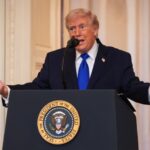
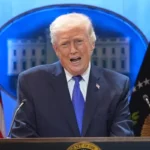
The August 2025 Trump-Putin meeting in Alaska arrives amid cautious optimism and skepticism. Trump has suggested potential territorial “swaps” between Ukraine and Russia as part of a settlement—a proposal firmly rejected by Ukraine’s leadership. Analysts argue that entrenched U.S. policies on NATO expansion and Russia containment could undermine breakthroughs.
Europe remains committed to imposing sanctions on Russia, indicating that pressure tactics will persist regardless of the summit outcome. Failure of the talks risks intensifying the war and deepening global geopolitical polarization.
BRICS and the Emerging Financial Order
Parallel to geopolitical tensions, BRICS (Brazil, Russia, India, China, South Africa) advances efforts to reduce dependence on the U.S. dollar and Western-controlled financial networks. They are developing an alternative cross-border payment system to bypass SWIFT, aiming to insulate member economies from sanctions.
Though plans for a new BRICS currency rooted in gold or a basket of member currencies exist, no immediate launch is expected. India, hosting the 2026 summit, urges caution to maintain global economic stability. There is no confirmed coordinated move to withdraw existing gold reserves from U.S. Treasury holdings, but diversification aligns with broader de-dollarization ambitions.
Risks of Escalation: Proxy Conflicts and Economic Fragmentation
Sachs warns that aggressive financial independence efforts by BRICS could provoke severe U.S. countermeasures, potentially escalating into proxy wars or militarized confrontations to protect dollar hegemony. Intensifying conflicts in Ukraine, coupled with heightened sanctions and tariffs against Russia, China, India, and their allies, might lead to:
Expansion of violent conflicts and humanitarian crises
Fragmentation of global trade and supply chains
Acceleration of geopolitical bloc formations to circumvent Western dominance
Inflationary pressures worsening worldwide economic turbulence
Heightened nuclear and military risks amid geopolitical polarization
Increased domestic political instability fueled by economic hardships and nationalism
Historical Context: Proxy Wars and U.S. Foreign Policy
Sachs situates current tensions within a pattern of U.S. foreign policy adopting unilateralism, coercion, and covert proxy conflicts to maintain global supremacy. Historically, the U.S. has employed proxy warfare to exert influence without direct engagement, evident in Cold War-era conflicts and modern upheavals.
While speculation exists about the U.S. potentially prompting proxy wars in South Asia—specifically in Pakistan vis-à-vis India—no confirmed evidence suggests an imminent plan linked to recent tariff tensions. Such moves would carry high risks due to nuclear deterrence and regional stability factors.
Conclusion
Jeffrey Sachs’s analysis compellingly challenges dominant Western narratives by framing the Ukraine war and NATO expansion as intertwined consequences of broken Cold War promises and U.S. strategic overreach. His call is clear: peace requires honest acknowledgment of Russia’s security concerns, genuine diplomacy, and respect for a multipolar world order.
The current fault lines in Eurasian geopolitics, intensified by economic shifts through BRICS, reveal a volatile transition period. Without pragmatic reforms and dialogue, the risk of prolonged conflict, economic fragmentation, and global instability will only grow.
This insight urges policymakers, analysts, and citizens alike to reconsider rigid dogmas and embrace nuanced, cooperative approaches for a more stable and inclusive future.
Disclaimer: This article is a curated synthesis based on multiple talks, interviews, podcasts, and YouTube presentations by economist and public policy analyst Jeffrey Sachs. The content has been compiled and contextualised by TNT News to provide an informed overview of Sachs’s perspectives on NATO expansion, the Ukraine conflict, U.S. foreign policy, and evolving global geopolitical dynamics.