EU Rejects Trump’s Call for 100% Tariffs on India and China Amid Mixed U.S. Trade Signals
Introduction
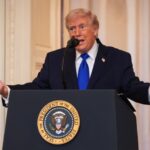
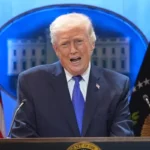
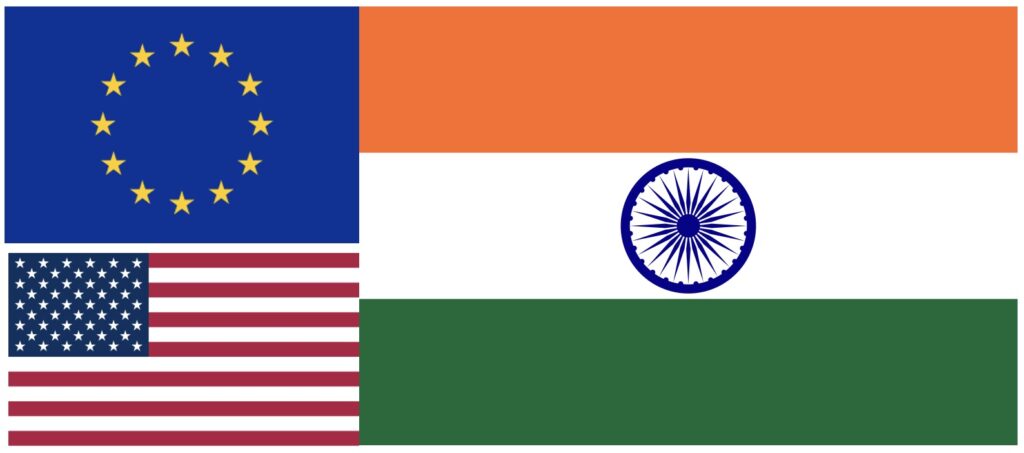
Tariffs are once again at the center of international debate. Former U.S. President Donald Trump has demanded that the European Union (EU) impose 100% tariffs on imports from India and China. He argued that both countries undermine Western sanctions by buying Russian oil.
The EU, however, has signaled that such drastic measures are not realistic. Officials in Brussels have ruled out any immediate plan to impose punitive tariffs. At the same time, Trump has spoken of a trade reset with India. He even said he looks forward to talking directly with Prime Minister Narendra Modi.
Adding to the mix, Peter Navarro, Trump’s long-time trade adviser, has intensified his criticism of India. He attacked India’s oil purchases from Russia and labeled the country the “Maharaja of tariffs.” These mixed messages have created global confusion.
Are these contradictions or part of a calculated strategy? Let us analyze the situation step by step.
Trump’s Tariff Proposal
Trump’s call came in early September 2025. In a conversation with EU sanctions envoy David O’Sullivan and other European officials, he proposed a 100% tariff on goods from India and China.
For Trump, tariffs remain the main policy tool. During his earlier presidency, he imposed steep duties on China. Those measures triggered one of the most intense trade wars of recent decades. Now he seeks to extend similar tactics to India.
The reasoning is clear: India and China continue to buy Russian crude oil. Trump argues that such purchases give Moscow a financial lifeline. He believes that only maximum economic pressure can force them to scale back.
The proposal, however, has raised alarm. A tariff of this scale would disrupt trade flows and invite retaliation. It would also hurt European businesses dependent on imports.
EU’s Response: Stability First
The EU has rejected the idea. Brussels has clarified that no such tariffs are under discussion. The reasons are both economic and legal.
-
The EU depends heavily on imports from India and China. Goods range from textiles and pharmaceuticals to machinery and electronics.
-
A 100% tariff would raise costs for consumers and industry alike.
-
Sudden tariffs outside World Trade Organization (WTO) rules would face legal challenges.
-
Retaliation by India and China would create further instability.
European leaders have made it clear: their priority is stability in supply chains. They want to protect their domestic economies. Therefore, Trump’s proposal is viewed more as political theater than practical policy.
Navarro’s Criticism of India
While Trump pitched his tariff idea, Peter Navarro went further. In recent statements, he accused India of profiting from “blood money” by buying Russian oil at discounted rates. He mocked India’s trade policy by calling it the “Maharaja of tariffs.”
Navarro has always been a trade hawk. He was the architect of Trump’s earlier tariff wars with China. For him, India’s mix of protectionism and energy autonomy represents unfair advantage.
His warnings have been harsh. He claimed that “things will not end well” if India continues its current path. These words are designed to put pressure on New Delhi.
However, such rhetoric complicates diplomacy. India views these remarks as unfair and politically motivated. New Delhi maintains that its energy purchases are based on national interest. It also argues that its trade policies are legitimate under global rules.
Trump’s Softer Tone
Interestingly, Trump himself has adopted a softer tone in parallel. He has spoken about his plan to engage directly with Prime Minister Modi. Reports confirm that both sides are preparing for a trade reset.
The U.S. understands that India is a critical partner in Asia. Any attempt to counter China requires cooperation with New Delhi. A breakdown in relations would harm Washington’s strategic goals.
Moreover, India is not just a market. It is one of the fastest-growing major economies. American companies view India as a crucial destination for exports, services, and investments. This economic logic pushes Trump to keep doors open.
Thus, while Navarro talks confrontation, Trump keeps the option of dialogue alive.
Trade Volumes at a Glance
The size of trade between these players explains why tariffs are risky.
| Metric | Value | Year / Source | Notes |
|---|---|---|---|
| EU–India Trade in Goods | ~ €120 billion | 2024; European Commission | ~11.5% of India’s total trade |
| EU–India Trade in Services | €59.7 billion | 2023; Eurostat / EU Policy site | IT, consulting, engineering |
| US–India Total Trade (Goods + Services) | US$212.3 billion | 2024; USTR | Strong growth trend |
| US–India Goods Trade | US$128.9 billion | 2024; USTR | Balance favors India |
| US Goods Exports to India | US$41.5 billion | 2024; USTR | Mainly aircraft, energy, machinery |
| US Goods Imports from India | US$87.3 billion | 2024; USTR | Includes pharma, textiles, IT hardware |
| US Trade Deficit with India (Goods) | US$45.8 billion | 2024; USTR | Rising concern for U.S. policymakers |
| EU Imports from India (Goods) | US$77.06 billion | 2024; UN COMTRADE | Pharma, chemicals, textiles |
| EU Exports to India (Goods) | US$52.34 billion | 2024; UN COMTRADE | Machinery, transport equipment |
Confusion or Strategy?
At first glance, U.S. actions seem contradictory. Trump asks the EU for punitive tariffs. Navarro mocks India with sharp language. Yet Trump also seeks closer ties with Modi.
This is not unusual. U.S. policy often blends pressure with negotiation. The hardline approach creates leverage. The softer tone creates space for talks. Together they form a strategy of carrot and stick.
India has remained calm through these mixed messages. It defended its oil purchases as a matter of sovereignty. It also kept the door open for dialogue on trade issues. This balanced response avoids escalation.
The EU’s role adds another dimension. By rejecting Trump’s tariff demand, Brussels has shown that it will not simply follow Washington’s line. That provides India with breathing room.
What Lies Ahead
The future will depend on three factors.
-
Trump’s Next Move
Will he continue with aggressive rhetoric, or will he tone it down once talks with Modi begin? His signals suggest he will balance both. -
Navarro’s Influence
Navarro represents the extreme view. If his influence grows, pressure on India could rise. If Trump sidelines him, the tone may soften. -
India’s Leverage
India will likely use its growing trade importance to negotiate. With the EU rejecting Trump’s plan, India can stress that global partners value stability.
The probability of a full tariff war is low. The probability of tense negotiations is high.
Conclusion
The story of Trump, tariffs, and India highlights the clash of approaches within U.S. trade policy. Trump uses tariffs as a threat but also signals openness to dialogue. Navarro pushes extreme positions. The EU rejects drastic action in favor of stability.
India stands at the center of this debate. Its growing economic weight gives it leverage. Its calm approach allows it to counter criticism without escalation.
In the weeks ahead, the world will watch whether confrontation wins or cooperation prevails. For now, the EU’s refusal shows that global trade is not just about U.S. demands. It is also about balance, law, and mutual benefit.