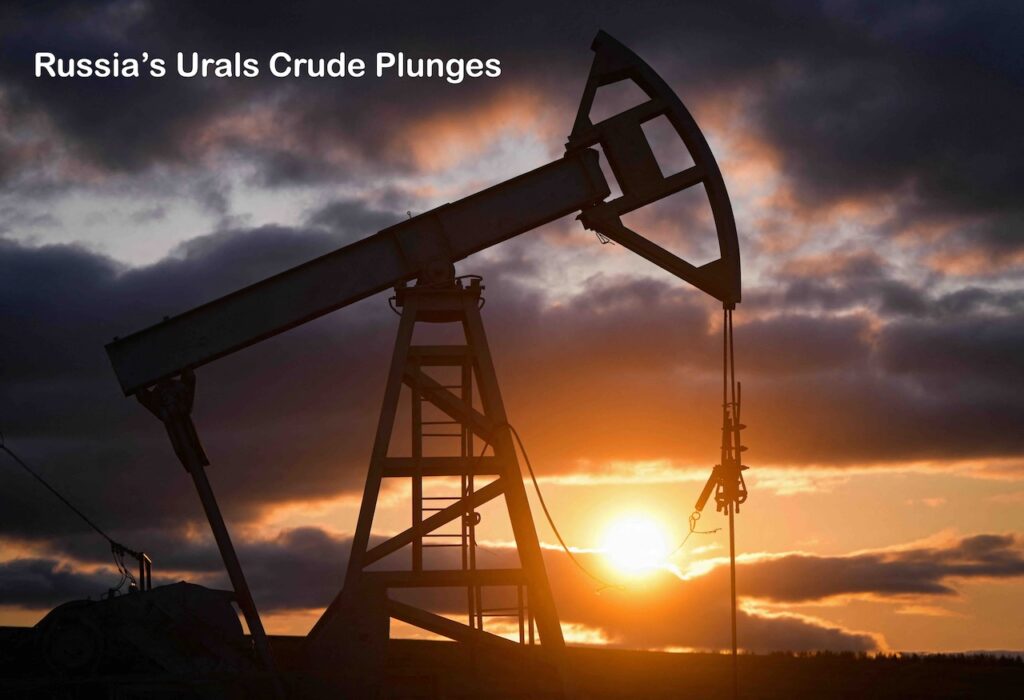
Energy markets face mounting pressures amid Russia’s Urals crude price drop
Energy markets worldwide are experiencing mounting pressures as Russia’s Urals crude price plunged to $36.61 per barrel — marking its lowest point in nearly three years. This steep decline is largely attributed to tightening U.S. sanctions imposed on Russian oil giants Rosneft and Lukoil. These sanctions have prompted major consumers, particularly China and India, to pause their purchases of Urals crude and actively seek alternative sources.
China, however, has accelerated its stockpiling efforts in October, ramping up crude oil storage to an impressive 690,000 barrels per day. This surge coincides with China’s refineries reaching peak throughput levels, maximising their processing capacity. Despite these efforts, global oil supplies remain under pressure with projections by OPEC for a balanced supply-demand outlook in 2026 indicating persistent market gluts.
In addition to challenges in the crude oil sector, the liquefied natural gas (LNG) market is witnessing significant growth, particularly in the United States. U.S. LNG exports are booming, expected to drive domestic natural gas consumption to heights of 40 billion cubic feet per day by 2030. This surge supports domestic energy demands and contributes to shifting global energy dynamics.
Moreover, maritime transport costs for energy commodities are on the rise, with tanker rates along key Atlantic routes increasing sharply by 19% to $98,250 per day. These rising freight charges further add complexities to the international energy supply chain.
The combined effects of sanctions, changing buyer behaviour in major markets like China and India, and growing U.S. energy exports underscore a period of significant flux in global energy markets. Market participants must navigate these pressures carefully, balancing supply, demand, and geopolitical risks in the evolving landscape.
Key Takeaways:
- Russia’s Urals crude price dropped to $36.61, the lowest in nearly three years, due to U.S. sanctions.
- China increased crude stockpiling to 690,000 barrels per day amid refinery capacity maxing out.
- OPEC projects a globally balanced market for 2026 but anticipates ongoing supply gluts.
- U.S. LNG exports are expanding rapidly, aiming for 40 billion cubic feet per day consumption by 2030.
- Tanker freight rates along Atlantic routes rose 19%, adding cost to energy shipments.