By Arav Kumar Chand
Why Small Nations Like Croatia Succeed While Big Nations Fail
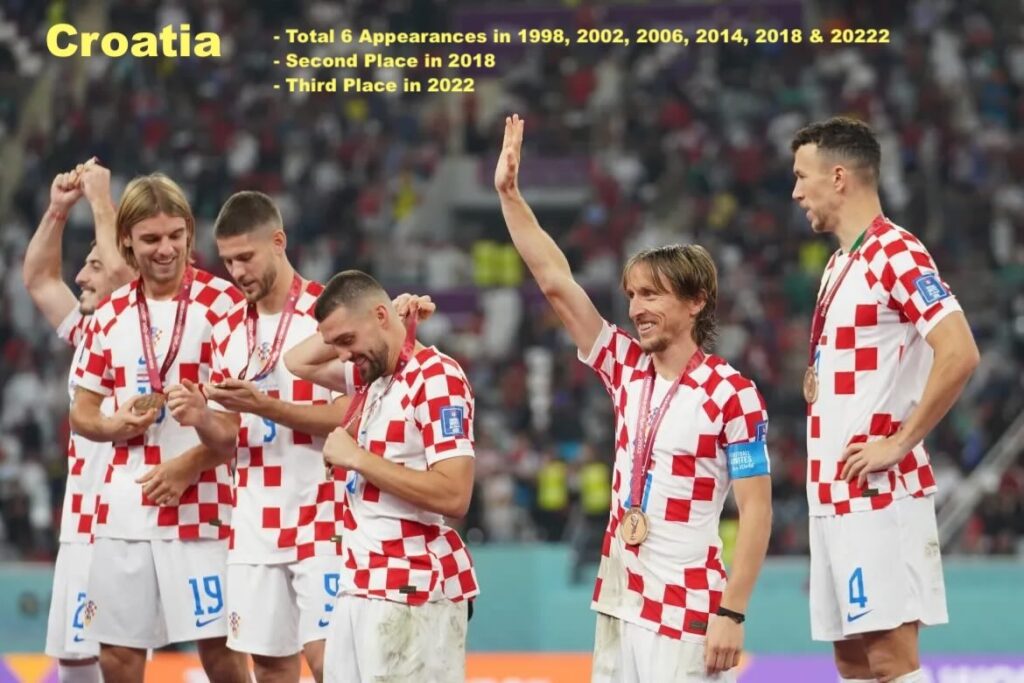
Football has long sold the idea that size, money, and population naturally translate into success. Yet small nations in football continue to dismantle that assumption, and Croatia stands as the clearest example. With a population of just over four million and modern independence beginning in the early 1990s, Croatia has reached a World Cup final in 2018 and secured third place in 2022, outperforming countries with vastly greater resources and playing pools.
These achievements are not accidents or one-off golden generations. They are the product of deliberate choices, cultural clarity, and systems built for efficiency rather than excess. Croatia’s story exposes why many football giants repeatedly underperform, despite their numerical and financial advantages.
Focused Development Beats Endless Numbers
Croatia’s limited population forces precision. Every talented child matters, and every prospect is tracked, coached, and developed with intent. Youth academies such as GNK Dinamo Zagreb’s Hitrec-Kacian system operate with clearly defined pathways from under-8 level through to senior football, ensuring continuity rather than fragmentation.
Players are not rushed or discarded. They are shaped over years, with individual strengths refined and weaknesses addressed. Luka Modrić’s rise from modest beginnings to global elite status reflects a system that values patience and tailored development.
By contrast, many larger nations rely on massive participation bases. While numbers create an illusion of depth, they often mask inefficiency. Talented players slip through cracks created by bloated structures, inconsistent coaching standards, and short-term thinking. Quantity, without coherence, becomes waste.
A Football Culture That Is Deep and Unified
Croatia’s success is anchored in a shared football culture that cuts across regions and generations. Football is not merely popular; it is central to community life. Local pitches, neighbourhood clubs, and school competitions form a dense grassroots network where the game is learned organically.
Children grow up watching the national team not as distant celebrities but as extensions of their own communities. That connection builds emotional investment, resilience, and a collective identity that carries into international football.
In many larger nations, football competes with multiple major sports or suffers from regional and administrative fragmentation. The result is diluted identity. Croatia’s clarity—football first, football everywhere—creates alignment from grassroots to national team.
International Exposure as a Development Tool
Croatian football treats international exposure as essential education. Clubs such as Dinamo Zagreb consistently place youth teams in high-level European competitions, where young players face elite opposition long before they reach senior football.
This early exposure hardens players tactically and mentally. They learn to adapt to different styles, manage pressure, and compete in hostile environments. By the time they reach the national team, these experiences are already embedded.
Many Croatian players also move early to Europe’s top leagues, bringing back tactical discipline and professionalism that elevate the national side. Success, therefore, becomes cumulative rather than accidental.
Tactical Intelligence Over Physical Excess
Croatia’s teams are rarely built around raw physical dominance. Instead, they prioritise football intelligence. Midfield control, positional discipline, and tempo management define their style. Technical security and decision-making under pressure are non-negotiable traits.
This emphasis allows Croatia to neutralise physically superior opponents. At major tournaments, their ability to slow games down, conserve energy, and strike at key moments repeatedly frustrates bigger nations that rely on pace, power, or individual brilliance.
Knockout football rewards control and adaptability. Croatia has mastered both.
Mental Strength and Systemic Efficiency
Tournament success is as much psychological as tactical. Croatia’s recent World Cup runs were defined by composure under extreme stress—extra-time battles, penalty shoot-outs, and late comebacks against elite opponents.
This resilience reflects a system that prizes unity. With limited resources, Croatian football maintains tight coordination between clubs, academies, and the national team. Players arrive knowing their roles, responsibilities, and tactical expectations.
There is no room for ego inflation or administrative chaos. Efficiency replaces excess.
What Big Nations Consistently Miss
Croatia’s rise offers uncomfortable lessons for football’s giants. Money and population cannot substitute for coherent planning. Elite facilities mean little without elite coaching structures and long-term vision.
Large nations often chase short-term success, rotate philosophies with each managerial change, or protect domestic ecosystems from international benchmarking. In doing so, they undermine their own potential.
Small nations in football succeed when systems are aligned, culture is authentic, and development is intentional. Croatia proves that sustained excellence is not about how many players you have, but how well you build, test, and trust them.
Football’s biggest underachievers would do well to study that model closely. The numbers may favour them, but the game itself increasingly belongs to those who understand it best.