China’s Rapidly Evolving 6G Fighter J-36 to Challenge Western Air Dominance
China’s J-36 sixth-generation fighter prototype is progressing swiftly with new test flights highlighting major advancements. The latest tests reveal cutting-edge adaptive stealth coatings and AI-driven avionics integration. These features aim to reduce radar detection while enhancing pilot control and battlefield awareness.
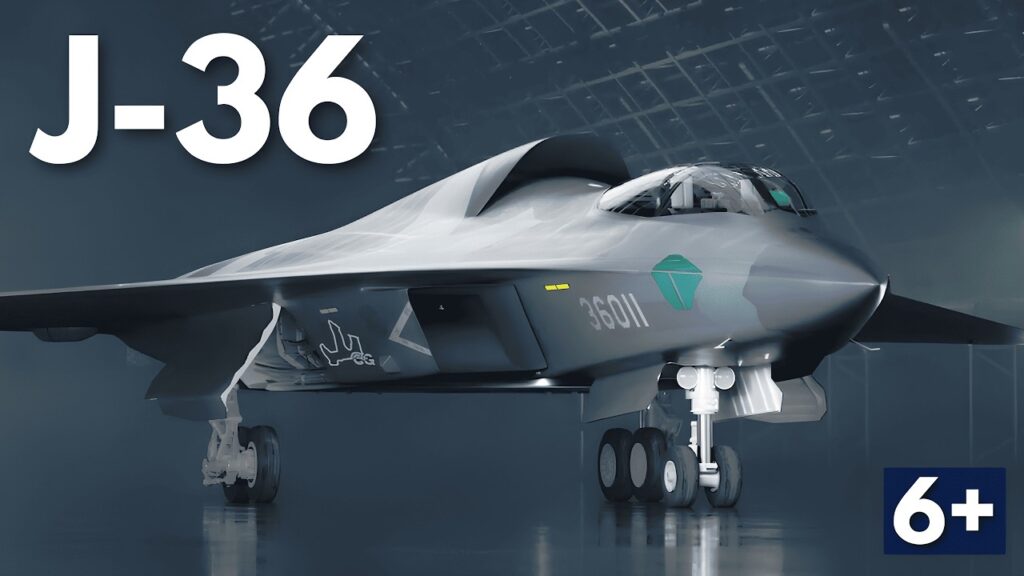
The J-36’s tailless design and trijet engine configuration enable it to exceed Mach 2 speeds. Its unique airframe supports superior agility and extended range. Importantly, the fighter can seamlessly coordinate with unmanned drone swarms. This capability is crucial for dominating beyond-visual-range engagements.
Development timelines have accelerated in response to delays in the U.S. Next Generation Air Dominance program. China targets full operational status by 2035, underscoring its ambition to reshape regional aerial power. Analysts suggest the J-36’s advanced sensor fusion and electronic warfare suites will challenge Western air superiority.
The aircraft’s internal weapons bays accommodate long-range missiles such as the PL-17, while side bays support air-to-air and air-to-surface munitions. The stealthy double-delta wing and broadband radar-absorbing materials enhance survivability in contested airspace. The redesigned landing gear and exhaust systems improve maneuverability and thermal signature management.
If the J-36 enters service as planned, it could capture significant export markets, altering geopolitical dynamics in Asia and beyond. Its role as a command node coordinating manned and unmanned systems further positions it as a game-changer in networked warfare.
In summary, China’s J-36 fighter represents a leap in combat aircraft technology, combining speed, stealth, and AI. The prototype’s rapid evolution reveals Beijing’s determination to challenge U.S. dominance in sixth-generation airpower.