Catastrophic UK Data Breach Exposes Thousands of Afghan Refugees, Spurs Secret Multi-Billion-Pound Resettlement
London | Exclusive Follow-Up | A catastrophic UK Ministry of Defence (MoD) data breach has spiralled into one of the most damaging intelligence and humanitarian crises in modern British history. The incident, which exposed the personal data of nearly 19,000 Afghan nationals who had worked alongside British forces, has led to Taliban reprisals, legal battles, and a covert multi-billion-pound evacuation mission.
How the 2022 MoD Data Breach Unfolded
In February 2022, an MoD official mistakenly emailed a spreadsheet containing sensitive personal information — names, phone numbers, and family details — of Afghans applying under the Afghan Relocations and Assistance Policy (ARAP) to unauthorised recipients.
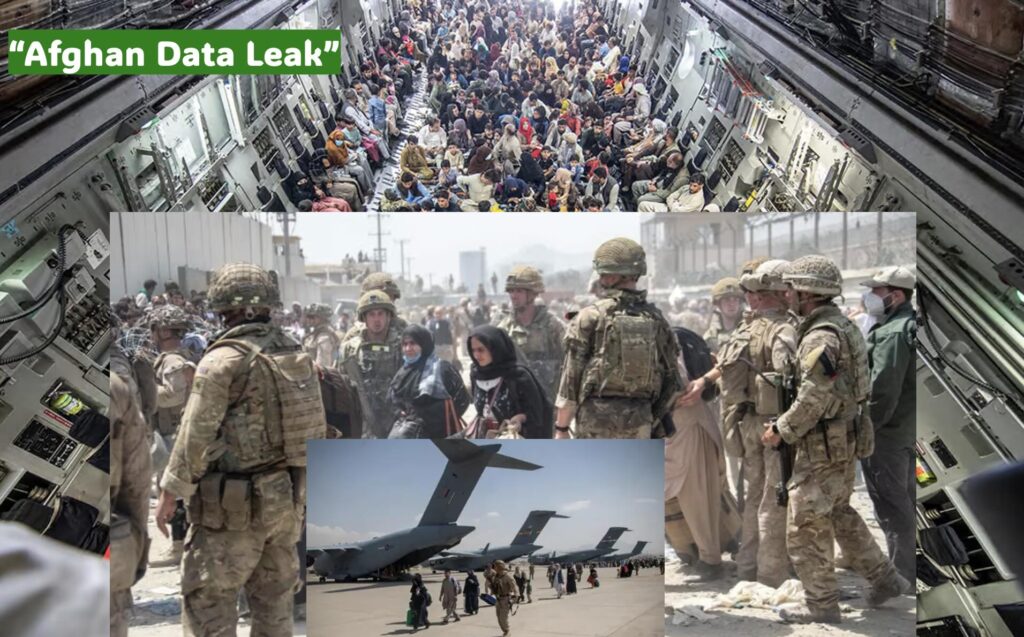
This accidental leak of unencrypted data quickly spiralled online, circulating across social media platforms and encrypted chat groups, effectively exposing thousands of Afghan interpreters, security officers, and aid workers who had supportedBritish forces during the 2001–2021 conflict.
Soon after the breach, UK authorities admitted that nearly 33,000 people, including family members, may have been endangered by the exposure.
Who Were the Affected?
The victims of the breach were primarily Afghans who served Britain during the two-decade-long Afghan war, many of them as interpreters, local intelligence partners, or logistical staff. Their close affiliation with British and NATO missions has long made them prime targets for Taliban retaliation.
With the Taliban’s return to power in August 2021, these individuals sought refuge in the UK under ARAP. The breach shattered their hope of safety, instantly marking them as “traitors” in Taliban-held Afghanistan.
Secret Government Response: The Afghanistan Response Route (ARR)
Facing immense pressure, the UK government launched a covert evacuation and resettlement operation in April 2024, known as the Afghanistan Response Route (ARR).
The ARR was designed to relocate Afghans whose exposure through the breach placed them at immediate risk of persecution or death. Operating under strict secrecy — unpublicised flights, redacted documents, and classified coordination — the programme was hidden from public view under a superinjunction that barred reporting on its existence until mid-2025.
“This was not just an administrative error — it was a matter of life and death,” said a senior official familiar with the classified mission.
By mid-2025, more than 7,300 Afghans (including family members) had been relocated through the ARR, contributing to a total of 36,000 Afghan refugees resettled in the UK since 2021.
Security Risks and Taliban Retaliation
The real-world fallout of the UK data breach has been catastrophic.
Reports confirm that at least 200 Afghans named in the leaked lists have since been killed by the Taliban through torture, targeted assassinations, or public executions. Many of the victims were former police officers and translators.
Survivors now living in Britain remain haunted by threats to relatives left behind. Families continue to receive extortion demands, threat letters, and videos of executions, directly linked to the leaked information.
Despite the MoD’s internal review claiming that “being named on the leaked spreadsheet is highly unlikely to increase risk,” evidence from NGOs, human rights monitors, and eyewitness accounts paints a vastly different and disturbing picture.
The 2025 Stansted Airport Cyber Breach: A Second Blow
Adding to the chaos, a new data breach in August 2025 compromised personal data of up to 3,700 more Afghans, including passport numbers and travel details.
The breach stemmed from a cyberattack on a private subcontractor working with the MoD at Stansted Airport, responsible for managing Afghan relocation logistics.
The UK government confirmed the incident and notified those affected, stating that “additional security protocols” were now in place — but critics described the repeated exposure as “a gross pattern of negligence.”
New Revelations from Recent Reporting
Recent media investigations (including a report by BBC) have revealed that the UK government’s original superinjunction, which suppressed public awareness of the breach, may have concealed critical internal warnings that senior military personnel flagged the risks early. The suppression prevented broader scrutiny into how the leak occurred and which data safeguards failed.
This reporting suggests that parliamentary pressure and legal challenges were central to lifting the gag order in mid-2025 — at which point full details about the breach and the secret resettlement scheme began to emerge.
Furthermore, leaks show that internal audits had flagged vulnerabilities in the MoD’s data handling system well before 2022, but recommended fixes were delayed over budgetary and bureaucratic concerns. These new revelations intensify questions over accountability, chain-of-command oversight, and whether proper safeguards were ignored despite early warnings.
Lives in Limbo: The Fate of Those Still in Afghanistan
While over 16,000 affected individuals have safely arrived in the UK, thousands remain stranded. Many still trapped in Afghanistan are believed to be hiding under false identities, moving between provinces to avoid Taliban detection.
Women among the unrelocated groups face the harshest realities — denied education, employment, and basic rights. Humanitarian agencies have documented cases of forced marriages, violence, and reprisals directly linked to the data leak.
“Every day we fear the knock on the door,” said a relative of an exposed interpreter still in hiding near Kabul.
Financial Fallout: The Multi-Billion-Pound Burden
The UK National Audit Office (NAO) has criticised the Ministry of Defence for failing to maintain transparent accounting of the breach’s fallout.
According to official estimates, direct costs of the Afghanistan Response Route (ARR) alone stand at £850 million, covering resettlement, accommodation, social integration, and security.
However, broader government expenditure across all Afghan schemes is projected to exceed £2 billion by 2029 — with legal and compensation costs still mounting.
Independent analysts suggest total spending linked to Afghan resettlement and data breach management could reach £7 billion, making it one of the costliest administrative errors in UK history.
Legal and Political Repercussions
The scandal has ignited parliamentary outrage, prompting cross-party calls for accountability. Legal proceedings are underway, with Afghan evacuees suing the UK government for negligence, breach of duty, and emotional trauma.
Despite mounting criticism, no public disciplinary actions have been confirmed against officials responsible for the original breach.
Adding to the chaos, online scammers have begun targeting vulnerable Afghan families with fake compensation schemes, prompting the government to issue public warnings.
Government Response and Ongoing Challenges
Defence Minister John Healey has publicly apologised for the breach and vowed “full protection and relocation for all at-risk individuals.” The MoD insists that national security measures have since been strengthened and vetting procedures restructured.
Yet frustration persists among refugee advocacy groups, who argue the UK response has been slow and bureaucratic, leaving families in mortal danger.
“The UK owes these people safety — not silence,” said an Afghan rights campaigner in London.
Afghanistan’s Geopolitical Context: A Lingering Legacy
The UK data breach underscores how deeply Afghanistan’s collapse continues to shape global policy. Since the NATO withdrawal in 2021, Afghanistan has faded from international headlines, yet its humanitarian crisis persists.
The breach’s aftermath has forced Britain to confront the moral cost of its 20-year engagement — the allies it promised to protect but left vulnerable.
Conclusion: A Breach That Changed Lives Forever
The UK data breach involving Afghan refugees stands as a stark reminder of the human consequences of bureaucratic failure.
As of late 2025, thousands of Afghans live in exile under British protection, while others continue to hide under Taliban rule — hunted for their service to the very forces that once promised them freedom.
With ongoing investigations, legal battles, mounting costs, and newly uncovered internal failures, this episode reveals not just a data failure but a deep moral reckoning for Britain’s role in Afghanistan — one that will echo for years to come.