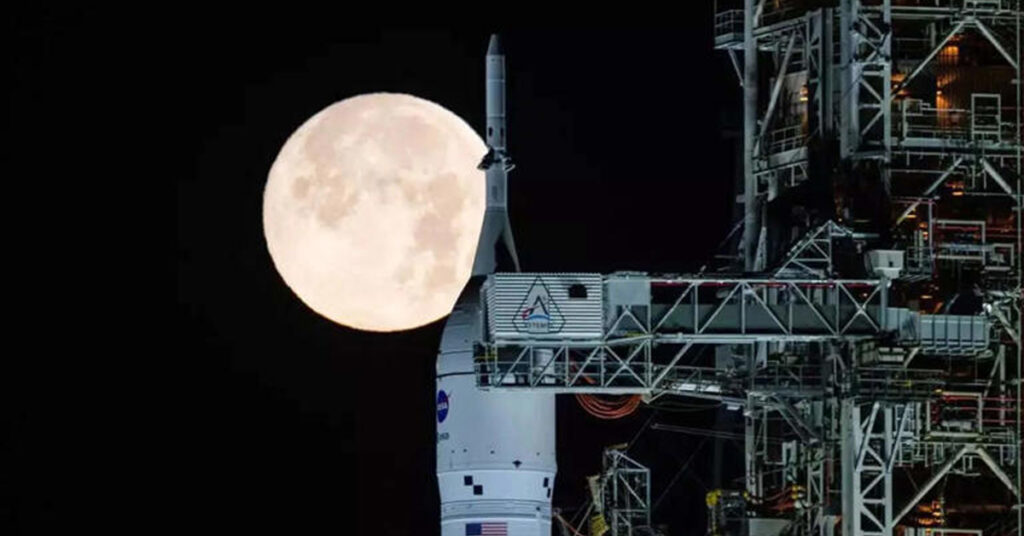
Artemis II Countdown Halt: Key Implications
NASA’s Artemis II mission, a critical step toward returning humans to deep space, faced an unexpected pause when its Wet Dress Rehearsal (WDR) was terminated during the final minutes of the countdown. The test was stopped at T-minus 5 minutes and 15 seconds, raising questions among space enthusiasts and observers about what went wrong and what it means for the mission’s timeline.
While the headline may sound alarming, experts stress that such pauses are part of the meticulous process of human spaceflight. Understanding the purpose of a wet dress rehearsal and the implications of halting it mid-countdown offers valuable insight into how modern space missions prioritize safety over speed.
Also Read: Davos 2026: When AI’s Architects Dropped the Pretence
What Is the Artemis II Mission?
Artemis II is NASA’s first crewed mission under the Artemis program, designed to send astronauts around the Moon and back to Earth. Unlike Artemis I, which flew uncrewed, Artemis II will carry humans aboard the Orion spacecraft, launched atop the powerful Space Launch System (SLS) rocket.
The mission serves as a crucial bridge between testing and future lunar landings. Its success is essential before NASA attempts Artemis III, which aims to land astronauts on the Moon’s surface.
Why the Wet Dress Rehearsal Matters
A Wet Dress Rehearsal is one of the most important pre-launch tests in any space mission. During this process, the rocket is fully fueled, ground systems operate as they would on launch day, and teams run through the entire countdown without actually lifting off.
The goal is simple but critical: simulate launch day as closely as possible. This allows engineers to identify problems in fuel systems, software, valves, sensors, and communication links before astronauts are on board.
Also Read: Why Computer Component Prices Are Exploding in 2026
What Happened During the Artemis II Rehearsal?
During the Artemis II wet dress rehearsal, NASA teams progressed deep into the countdown sequence. The rocket was fueled, systems were activated, and the test reached the final stages. However, at T-minus 5:15, engineers identified an issue significant enough to halt the test.
NASA has not framed the termination as a failure. Instead, officials described it as a controlled stop driven by strict safety protocols. When dealing with cryogenic fuel, high pressure, and complex systems, even minor anomalies are taken seriously.
Why Tests Are Stopped So Close to Launch Time
Stopping a countdown just minutes before ignition might seem dramatic, but it is not unusual in spaceflight testing. The final minutes are when systems are under maximum stress, and small irregularities become more visible.
NASA’s philosophy is clear: if something doesn’t look right, stop and analyze. The wet dress rehearsal exists precisely to uncover such issues without risking hardware—or lives.
Does This Delay Artemis II?
A halted rehearsal does not automatically mean a launch delay. NASA often conducts multiple WDR attempts before declaring the system ready. Engineers will now review data, isolate the cause of the termination, and decide whether a partial or full retest is required.
Space missions, especially crewed ones, operate on flexible timelines. Safety, not schedule, remains the driving factor.
Also Read: Computer Component Price Surges as AI Demand Reshapes Markets
Lessons from Past Artemis Tests
The Artemis program has faced setbacks before. Artemis I experienced multiple launch delays due to fuel leaks and sensor readings before finally launching successfully. Those delays ultimately strengthened confidence in the rocket’s readiness.
Each aborted test provides valuable data that improves mission reliability. In the world of space exploration, pauses often prevent disasters.
Why This Matters for Human Spaceflight
Artemis II is not just another launch—it represents humanity’s return to lunar exploration after decades. Any anomaly, no matter how small, receives intense scrutiny because astronauts’ lives depend on flawless execution.
The decision to halt the test demonstrates NASA’s commitment to learning, caution, and transparency. It reinforces the idea that space exploration is not about rushing, but about getting it right.
The Bigger Picture: Artemis and the Moon’s Future
The Artemis program is about more than one mission. It lays the foundation for a sustained human presence on the Moon and eventually missions to Mars. Every test, including halted ones, contributes to that long-term goal.
Artemis II’s rehearsal pause is a reminder that space exploration is inherently complex—and that progress often comes through careful iteration, not uninterrupted success.
What Happens Next?
NASA engineers will analyze data from the terminated countdown, identify the exact cause, and determine corrective steps. Once confidence is restored, the wet dress rehearsal will resume or be repeated.
Until then, the mission remains on track in spirit, even if timelines shift slightly.
Also Read: Pay Cuts, Stagnation, and Growing Frustration: Inside a TCS Employee’s Salary Struggle
A Pause, Not a Setback
The termination of the Artemis II wet dress rehearsal at T-minus 5:15 is not a sign of failure—it is a sign of a system working as designed. NASA detected an issue, stopped the process, and now moves forward with better information.
In human spaceflight, every pause strengthens the path ahead. Artemis II continues to represent one of the most important steps in humanity’s return to the Moon, and careful testing ensures that when astronauts fly, they do so with maximum confidence.
Also Read: Space Events to Watch in 2026: Major Missions, Moon Returns and India’s Rising Space Power
FAQs
Q1. What is a wet dress rehearsal in space missions?
It is a full launch-day simulation where the rocket is fueled and the countdown is practiced without liftoff.
Q2. Why was the Artemis II test stopped at T-minus 5:15?
NASA detected an issue during final countdown checks and halted the test as a precaution.
Q3. Does this mean Artemis II has failed?
No. Stopping a rehearsal is part of the testing process and helps ensure mission safety.
Q4. Will this delay the Artemis II launch?
Not necessarily. NASA will assess the issue before deciding on next steps.
Q5. Why is Artemis II so important?
It is NASA’s first crewed Artemis mission and a key step toward future lunar landings.