Introduction
The global race for rare earth elements (REEs) has quietly become one of the defining strategic contests of the decade. These 17 metallic elements — comprising the 15 lanthanides plus scandium and yttrium — are the invisible enablers of modern technology. They power electric-vehicle motors, wind-turbine magnets, smartphones, lasers, precision guidance systems, and next-generation defence platforms.
Despite their name, rare earths are not rare in nature. Their strategic value lies in their scarcity in economically extractable deposits and the extreme concentration of refining capacity within a handful of countries. This imbalance has turned REEs into a critical geopolitical resource — as valuable as oil once was, but far harder to substitute or replace.
The Strategic Core of Modern Technology
The most commercially vital REEs include neodymium, praseodymium, dysprosium, terbium, scandium, and thulium — each indispensable to modern industry.
-
Neodymium and praseodymium form the core of permanent magnets used in EV motors and wind turbines.
-
Dysprosium ensures these magnets maintain strength at high temperatures, crucial for aerospace and advanced electric drivetrains.
-
Terbium, valued for its phosphorescent properties, is used in fuel cells and energy-efficient lighting.
-
Scandium and thulium, though produced in tiny quantities, are prized for aerospace alloys and specialty electronics.
The global market assigns hefty values to these elements, reflecting their scarcity and technological indispensability. In 2025, scandium averages around US $3,280 per kilogram, thulium about US $1,730, terbium around US $1,070, and lutetium about US $630. The more common but still crucial dysprosium trades near US $200/kg, while praseodymium and neodymium hover between US $90–100/kg. Other rare earths such as europium, yttrium, and gadolinium range between US $20–40/kg.
Note: Rare-earth spot prices fluctuate monthly; figures cited are 2025 averages within a ±5 percent range.
Where the Earth Is Rich — and Who Controls It
Global reserves of rare earths remain highly uneven. China, with approximately 44 million tons of reserves, dominates both mining and refining — accounting for nearly 90 percent of global processing capacity and 70 percent of production. Brazil, with about 21 million tons, ranks second and is rich in neodymium and dysprosium. India follows with around 6.9 million tons, containing cerium, lanthanum, neodymium, and praseodymium. Australia holds about 5.7 million tons, and Russia controls roughly 3.8 million tons.
Yet, strategic advantage lies not merely in owning reserves but in mastering separation chemistry and magnet fabrication — the stages where China retains a near-monopoly. To break this chokehold, countries such as the United States, Canada, Australia, and Japan are investing heavily in domestic refining and allied supply-chain partnerships.
Emerging Supply Frontiers and Geopolitical Flashpoints
By 2025, the map of rare-earth competition is expanding beyond traditional players. While China continues to dominate extraction and processing, new entrants and shifting alliances are redrawing the global REE landscape.
Pakistan’s Entry
In early 2025, Pakistan announced its debut in the critical-minerals market, claiming its first-ever shipment of enriched rare-earth and critical-mineral concentrates to the United States. According to a release on PR Newswire (March 3, 2025), the consignment was dispatched under a US $500 million framework agreement between Pakistan’s state-owned enterprise and U.S. Strategic Metals (USSM), a Nevada-based firm engaged in sourcing and refining strategic materials for clean-energy and defence industries.
Mainstream outlets such as LiveMint and The Times of India reported the same, describing Islamabad’s move as an effort to “join the global race for rare earth elements and reduce Western dependence on China.”
Analysts urge caution: independent verification of the shipment’s volume, grade, and refinement level remains pending. Some industry experts note that early consignments likely consisted of mineral concentrates rather than fully refined rare-earth oxides, suggesting Pakistan’s value chain is still nascent.
Nonetheless, the symbolism is unmistakable. By leveraging its mineral resources as diplomatic capital, Islamabad is aligning with Washington’s broader effort to diversify away from China’s near-monopoly on the sector.

The widely circulated image of Army Chief Asim Munir and Prime Minister Shehbaz Sharif presenting mineral samples to Donald Trump underscored the intent: critical minerals as a new currency of geopolitical influence.
All Eyes on Afghanistan
According to U.S. Geological Survey (USGS) and Pentagon assessments, Afghanistan’s subsoil holds an estimated US $1 trillion in untapped mineral wealth, including rare earths, lithium, cobalt, and copper. The Khanneshin carbonatite deposit in Helmand Province alone may contain 1 – 1.4 million metric tons of rare-earth oxides, one of the world’s largest undeveloped reserves outside China.
This geological reality explains Washington’s renewed strategic interest in the region. As detailed in Tattvam News’ analysis “Bagram and Beyond: Part 3 – Trump’s ‘China Nuke Containment’ Smoke Screen and the Rare Earth Reality”(October 2025), U.S. focus on the Bagram Air Base corridor is viewed not as military reoccupation but as a resource-security strategy—a move to counter China’s growing influence under the Belt and Road Initiative (BRI).
China, meanwhile, has moved swiftly. State-owned firms such as the Metallurgical Corporation of China (MCC) and Xinjiang Jian Mining Group have pursued exploration and logistical projects aimed at integrating Afghan ore into Beijing’s regional refining ecosystem. Together with its reliance on Myanmar’s heavy-rare-earth clays, this gives China a dual supply axis across South and Southeast Asia.
For the United States and its allies, Afghanistan remains both a strategic vacuum and a potential supply frontier. Control of the mineral corridors—from Bagram through Helmand to Pakistan’s emerging export gateways—could reshape the global REE balance. Yet without stability, clear regulations, and governance in Kabul, Afghanistan’s mineral promise remains largely theoretical: a prize that attracts the world’s powers but eludes commercial reality.
China and Myanmar
Beijing’s dominance in mining, refining, and magnet production gives it formidable leverage in global trade. Over the past decade, China has repeatedly demonstrated its ability to weaponise exports — first in 2010 during a dispute with Japan, and again in 2024–2025 with new restrictions on processing technologies. Each announcement sends tremors through global markets and triggers fresh diversification drives.
China’s rare-earth network also runs deep into Myanmar, whose ion-adsorption clays supply nearly half of China’s heavy-rare-earth feedstock. Despite Myanmar’s ongoing instability, extraction along the northern frontier continues—often under Chinese consortiums. These operations produce dysprosium and terbium, vital for high-temperature magnets, reinforcing China’s near-monopoly on heavy REEs. Western governments now view Myanmar as the next strategic flashpoint, where supply security intersects with environmental and human-rights concerns.
India’s Balanced Position
India occupies a uniquely balanced position in this shifting landscape. With 6.9 million tons of reserves, India has long been part of the REE conversation, but 2025 marks its transition from potential to performance. A new ₹ 1,345-crore incentive scheme for magnet manufacturing and refining underscores New Delhi’s ambition to become a reliable supplier for Western markets.
Unlike the resource-nationalism emerging elsewhere, India’s approach is based on transparency and joint ventures, positioning it as the trusted democratic alternative in the global rare-earth ecosystem.
Demand Continues to Soar
The International Energy Agency (IEA) estimates that global demand for rare-earth magnets in EVs and wind turbines is growing 6 – 8 percent annually, propelled by the clean-energy transition. Even modest supply disruptions ripple through manufacturing, driving up costs for EVs, defence systems, and renewable infrastructure.
For governments and corporations alike, rare earths have become the new oil — a strategic instrument of national power. From Islamabad’s mineral diplomacy and Kabul’s hidden reserves to Myanmar’s contested mines and New Delhi’s industrial surge, South Asia has emerged as the new theatre where technology, trade, and geopolitics converge over the metals of the future.
Environmental and Governance Challenges
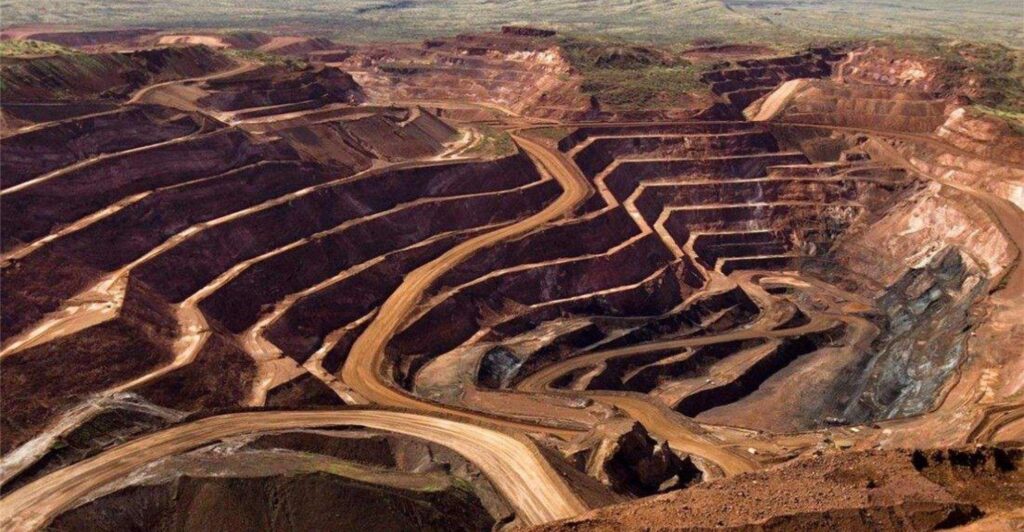
Mining and refining rare earths are complex, costly, and environmentally demanding. The processes involve acid leaching, radioactive by-products, and large-scale waste management. Over time, stricter environmental rules in developed nations have pushed production to regions with weaker oversight, concentrating ecological burdens in Asia.
This imbalance is now drawing intense ESG scrutiny. Companies sourcing REEs for EVs, wind turbines, or electronics are under pressure to ensure supply chains are ethical, transparent, and sustainable. The coming decade may witness the rise of “green rare earths,” where provenance and sustainability become key market differentiators.
India’s Emerging Role
With its vast reserves and expanding industrial base, India stands at a critical inflection point. Traditionally known for monazite-rich coastal sands, the country is now investing in value addition—from extraction and separation to magnet production. Public-sector agencies under the Department of Atomic Energy, along with private collaborations, are exploring recovery of REEs from industrial by-products and fly-ash.
For New Delhi, rare earths are both an economic opportunity and a strategic necessity. Strengthening supply-chain autonomy aligns with its Atmanirbhar Bharat (self-reliant India) vision and growing partnerships with the United States, Japan, and Australia under the Quad framework. Success could make India a key hub for ethically sourced, strategically vital REEs.
Strategic Risks and the Road Ahead
The rare-earth equation in 2025 presents both risk and opportunity. The foremost risk is supply vulnerability — a disruption in heavy-rare-earth output such as dysprosium or terbium could jolt the clean-tech sector. Another is refining concentration, as many new mines in Africa or South America still send their output to China for processing, perpetuating dependency.
At the geopolitical level, critical minerals are fast becoming the new currency of power. Export controls, sanctions, and trade retaliation are increasingly common. China’s recent restrictions on magnet technology exports are a sign of what lies ahead. Environmental and social-licence challenges add another layer, as communities resist projects perceived as exploitative.
Yet opportunity accompanies risk. Recycling technologies are advancing, nations are forging alliances for shared refining, and investors view REE projects as strategic infrastructure. For countries rich in reserves but short on processing power—from India to Brazil—the moment to build capacity is now.
Market Outlook
The global rare-earth-metals market, valued at US $3.7 billion in 2024, is projected to reach nearly US $10 billion by 2034, growing at around 10 percent CAGR. While mining volumes will rise gradually, the refining bottleneck will persist. The IEA forecasts that by 2035, the top three refining nations will still control about 90 percent of global capacity, keeping prices volatile and supply chains politically exposed.
For policymakers and investors, the race is not just about discovery—it’s about owning the midstream: refining, separation, and magnet manufacturing, where the true strategic value lies.
Conclusion
The story of Rare Earth Elements 2025 is about far more than metals buried beneath the soil. It is about the architecture of the modern world—and who builds it. These elements power the clean-energy revolution, the digital economy, and the defence technologies of tomorrow. Yet they also expose a paradox: the world’s green transition depends on some of its most geopolitically charged materials.
As nations vie for technological supremacy, rare earths have become both the lubricant and the lever of global power. Those able to balance geology with governance, extraction with ethics, and profit with sustainability will shape the next chapter of industrial civilisation.