Why the Kurnool Bus Fire Disaster Can’t Be Blamed on a Single Drunk Rider
The Headlines That Shaped the Narrative
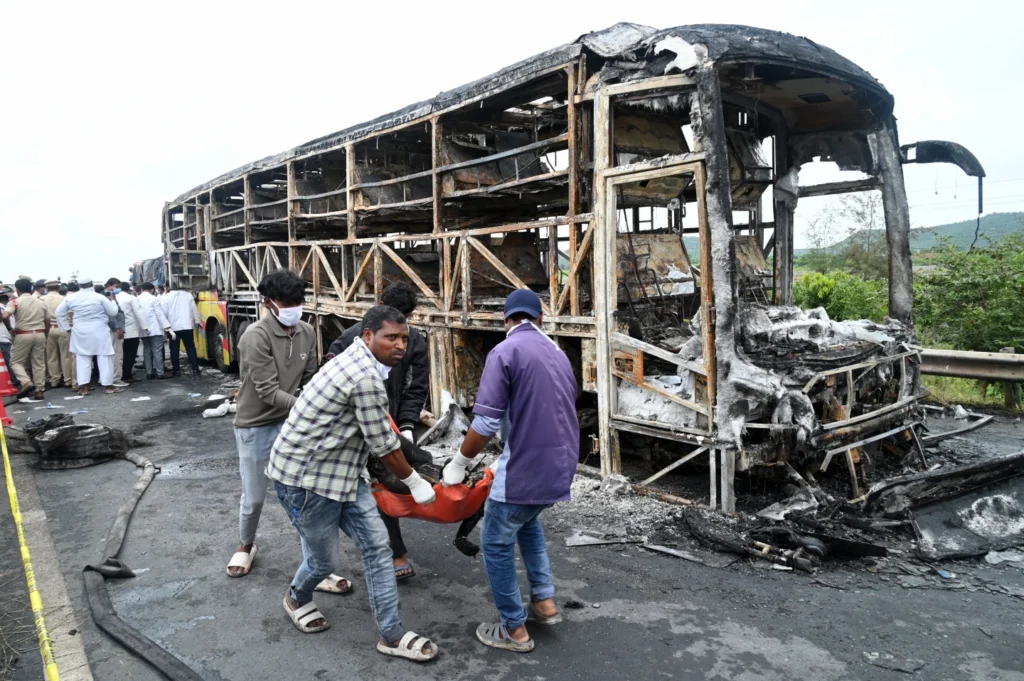
In the early hours of Thursday, 24 October 2025, a private sleeper bus travelling from Hyderabad to Bengaluru caught fire near Kurnool, Andhra Pradesh, killing 20 passengers in one of the year’s deadliest road accidents. Initially, news outlets described it simply as a “tragic bus inferno” caused by a collision with a two-wheeler. However, by 25–26 October, the headlines had taken a more accusatory turn.
NDTV ran the headline “How Drunk Man’s Recklessness Claimed 20 Lives in Andhra Bus Fire.” Livemint declared, “Kurnool Bus Fire Tragedy That Killed 20 Caused by Drunk Biker.” Times of India published, “Viral Video Shows Biker Riding Recklessly Moments Before Deadly Crash.”
The message was unmistakable — that one drunk rider had single-handedly caused the horrific loss of life. Yet, this version of events, repeated across major media, hides a larger and more troubling truth. The Kurnool bus fire accident was not a single-cause tragedy but the culmination of multiple failures, each compounding the other.
How the Tragedy Unfolded
Investigations by the Andhra Pradesh police revealed that around 1 a.m. on 24 October, a two-wheeler skidded on the wet Hyderabad–Bengaluru highway. The bus, reportedly speeding at nearly 100 km/h, ran over the bike and dragged it for about 300 metres. Sparks from the friction ignited spilled fuel, setting the undercarriage ablaze. Within moments, the fire spread through the vehicle, and thick smoke filled the sleeper coach.
Forensic analysis later confirmed the biker had consumed alcohol, which ‘likely‘ caused the initial skid. But that fact alone does not explain why the accident turned into an inferno that burned the entire bus and trapped almost everyone inside. Not every crash involving a drunk rider leads to mass death — the scale of destruction here points to much deeper issues.
The Bus That Became a Fireball
Subsequent inspection showed that the bus was overspeeding, poorly maintained, and non-compliant with fire-safety norms. Its interiors had been fitted with metallic paint and synthetic materials that burned ferociously once ignited. Passengers described seeing flames engulf the aisle within seconds, leaving them gasping for air and unable to reach the exits.
Most horrifyingly, the vehicle was carrying an unapproved cargo of around 300 smartphones packed with lithium-ion batteries — a highly combustible load. The batteries are believed to have exploded as the flames intensified, fuelling the blaze and producing toxic fumes. This single factor, experts now say, drastically worsened the outcome, transforming a collision into a death-trap.
The main exit door, located near the ignition point, was jammed shut, and the emergency exits were either blocked or inoperable. Passengers found no functional fire extinguishers or glass-breaking hammers. Some tried to break small windows, but the heat and smoke overwhelmed them almost instantly. The driver managed to escape through the front, while others were trapped inside a rapidly burning shell.
Lapses That Went Beyond Human Error
The unfolding investigation has already exposed layers of systemic negligence. The bus operator had allegedly modified the interiors without proper fire-safety certification. Authorities failed to ensure the presence of fire-fighting equipment, and it later emerged that the driver’s Class 10 certificate, used to obtain his licence, was fake — indicating severe gaps in verification and monitoring.
The cargo itself was another major violation. Passenger buses are not permitted to transport commercial consignments, especially electronics containing lithium batteries. Yet this practice has become routine, as operators seek to maximise profits by doubling as freight carriers. The Kurnool tragedy has simply laid bare how such unchecked practices can turn fatal in seconds.
When Systems Fail Together
Blaming the deceased biker may appear straightforward, but doing so ignores the wider web of responsibility. The biker’s intoxication caused the collision, but what about over-speeding bus itself? Then the flammable interiors, locked exits, and illegal cargo magnified its impact. This was not one man’s crime leading to 20 deaths— it was a collective failure of oversight, enforcement, and safety culture.
India’s transport system is quick to find scapegoats and slow to acknowledge systemic fault lines. Regulators seldom inspect private long-distance buses for fire-safety compliance. Emergency drills are virtually unheard of. The lack of accountability allows dangerous shortcuts to become the industry norm. As long as this remains unchanged, tragedies like Kurnool will continue to repeat under different names.
On 14 October 2025, a private AC sleeper bus travelling from Jaisalmer to Jodhpur caught fire near Thaiyat village (about 10 km from Jaisalmer). At least 20 passengers died and 16 were injured.
The Questions That Demand Answers
Why was a passenger vehicle permitted to carry hazardous electronic cargo? Why were passengers locked inside with no functioning emergency exits? Why were essential tools such as fire extinguishers missing, despite being mandatory under motor vehicle safety rules? And how was a driver with falsified credentials entrusted with dozens of lives on a night highway?
Who can say whether the absence of any one of these factors — the hazardous cargo, the bus speeding at 100 km/h, the locked or inoperable emergency exits, or the driver’s questionable qualifications and inability to fully understand safety norms — might have meant that no one, apart from the drunk biker, would have died that night? If so, why place the entire blame solely on the biker?
These are not rhetorical questions. They expose the deep structural blind spots that turn preventable road accidents into mass tragedies.
The public deserves both answers — and urgent reforms.
Towards Reform and Accountability
The Kurnool bus fire accident must mark a turning point. India needs immediate reforms in long-distance bus regulation, beginning with strict enforcement of fire-resistant interiors, separate cargo-vehicle permits, and GPS-based monitoring of speed and driver conduct. Passenger vehicles should be subject to random safety audits and must display functional emergency exits verified by transport officials.
Equally crucial is a shift in public narrative. When the media fixates only on the drunk rider, it dilutes the conversation around structural accountability. The role of journalism must be to reveal why the system failed, not merely who erred. Only through such deeper scrutiny can future tragedies be prevented.
Learning from the Ashes
The Kurnool bus fire accident was not born of a single reckless act but of many neglected duties. A drunk biker may have sparked the tragedy, but it was official indifference and systemic negligence that made it inescapable. Each of the twenty lives lost represents a warning that road safety cannot depend on luck or moralising headlines. Unless transport authorities, private operators, and regulators act decisively, the next inferno is only a matter of time.