Buzz & Debates: Fireworks, Smog & “Extremism” — Are We Fighting the Wrong Battle?
In India, every October, right on cue, the debate over Diwali firecrackers flares up louder than the fireworks themselves. WhatsApp groups, housing societies, classrooms and social media influencers’ timelines become miniature battlegrounds — on one side, the self-proclaimed eco-crusaders; on the other, those defending what they see as an unfair assault on tradition.
This year, no difference, the argument resurfaced yet again, echoing the same familiar outrage and selective concern.
The Spark
It began innocently — a message that a group of schoolchildren would visit a housing society to promote an “anti-cracker” campaign.
One resident asked, “Why this selective morality? When wars rage across continents, no one talks about bombs harming the ozone. But one day of Diwali fireworks becomes a national emergency.”
Another added, “Schools celebrate Christmas and Halloween with Western-style carnivals and great enthusiasm, yet ask children to lecture us on Diwali. Isn’t that hypocrisy?”
Someone said, “We have been conditioned over a period of time to say such things.”
True, isn’t it?
The frustration was not about refusing environmental responsibility — it was about selective activism and narrative bias.
Before jumping on the anti-firecracker bandwagon, pause and read this analysis — “Anti-Firecracker Drives Miss the Bigger Picture.” It examines the technical root causes of air pollution, along with the actual impact of Diwali firecrackers and other major contributing factors — in short and simple.
The Counter Spark
Predictably, within few hours of celeberations, the moral uppercut arrived from the so-called rationalists: “Enjoy while your lungs last! … It’s our collective duty to identify radical extremism that leads to polarisation and harms future generations….”
That single remark—about ‘radical extremism in the group‘—reignited these thoughts. Behind such high-sounding words lies a deeper truth: a growing trend of branding anyone who defends own traditions, culture, or religion are quickly labeled as radicals by the leftists and self-styled secularists.
This is not a reasoned debate; it is intellectual bullying masquerading as virtue.
Media Outrage as an Annual Ritual
It has become a seasonal script. Newsrooms prepare “Toxic Diwali” headlines days in advance, waiting to release them the moment fireworks light the sky — because outrage sells. It drives clicks, not change.
Firecrackers are soft targets for the clicks-hungry and an easy scapegoat for the system. They lack corporate backing and political cost. Yet the scientific data continues to contradict the hysteria.
What Delhi Minister Says
On October 21, 2025, Delhi Minister Manjinder Singh Sirsa says, “In 2020, the firecrackers in Diwali were going on. At that time, PM 2.5 was 414 before Diwali and 435 after Diwali. There was an increase of 21 points in the firecrackers. In 2021, there was an increase of 80 points. In 2024, when the firecrackers were banned, the AQI was 328 before Diwali and 360 after Diwali. 32 points increased when the firecrackers were banned. On the order of the Supreme Court and on the request of the Delhi government, we got permission for green firecrackers… Before Diwali, the AQI was 345, and after Diwali, the AQI was 356, according to the CPCB’s Sameer App… Only 11 points increased when the firecrackers were allowed. Will you hold Diwali responsible for this? Will you hold the faith of all the Sanatanas and Hindus in Delhi accountable? What is the fault in this?…”
Perspective Matters
The pollution from Diwali lasts a day or two; the hypocrisy lasts all year. If the concern is genuinely about future generations, let us fix the real problems — poor governance, road dust, parali smoke, and open waste burning — instead of sermonising against our own festivals.
As one resident rightly put it, “If schools truly care about the environment, let them take kids to see the garbage dump near the market and visit the comparators, MPs and MLAs and also the Municipal Corporation Offices — not lecture families about diyas and crackers.”
Environmental education must inspire responsibility, not guilt.
The False Moral Superiority
The “Enjoy while your lungs last” remark is not environmentalism; it is virtue signalling. When people push back, they are labelled “polarising” or “radical” — a convenient and old tactic to silence dissent.
And let us be clear: protecting one’s culture, tradition, and religion is not radicalism; it is self-respect. The real radicalism lies in blindly following a mob that shames its own roots every October.
The Data Doesn’t Lie — The Debate Does
CPCB studies reveal that firecrackers contribute less than one percent to India’s annual particulate load. The main culprits remain vehicle emissions, road dust, waste burning, and stubble smoke. Yet they rarely face the same moral outrage because they don’t trend as Diwali fire-crackers.
One night of celebration turns into a national guilt trip, while daily sources of pollution go unchecked—this is where the real issue lies.
The Takeaway
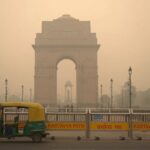
The debate is not environment versus tradition; it is hypocrisy versus honesty. Delhi’s air is polluted and everyone must care, but selective outrage every Diwali will not clean the sky, and certainly not your lungs.
If Delhi — and India — truly wants better breathable air, the focus must shift toward systemic accountability rather than cultural shaming — targeting the festival’s fun & joy. Delhi’s air quality has fluctuated — with some signs of improvement and plenty of setbacks, depending on many factors beyond our control. Perhaps that’s what unsettles the outrage industry: reality doesn’t always fit neatly into a headline.
And Next Year
Before sharing another “Say No to Crackers” message, take a moment to reflect — Have I really done my part? Am I helping the planet — or just joining the noise that shames our own way of life and culture?
Protecting Diwali is not regression. It is reclamation — of faith, of balance, and of the right to celebrate without guilt.